Neighbourhood in Apeldoorn
Osseveld-West is located in the province of Gelderland, in the municipality of Apeldoorn, in the district Oost The neighbourhood has a total area of 54 hectares, of which 53 hectares are land and 1 hectares are water. The neighbourhood is coded as BU02000602. The postcode area is 7321CH-7321LJ.
Osseveld-West has 2.180 residents. Of these, 49,8% are men and 50,5% are women. Most residents are 45 to 65 years (33,9%). The other age groups are 25,2% for '65 years or older', 16,7% for '25 to 45 years', 12,8% for '15 to 25 years' and 11,7% for '0 to 15 years'. Of the residents, 39,2% is unmarried, 49,1% is married, 7,3% is divorced and 4,4% is widowed. 1.805 residents originate from the Netherlands, 80 come from Europe and 295 come from countries outside Europe.
There are 950 households in Osseveld-West. 24,7% of these are single-person households, 40,5% households without children and 34,7% households with children. The average household size is 2,3 persons. The national average is 2,1 persons.
In Osseveld-West there are 1.900 income recipients. The average income per income recipient is €40.500, which is €1.700 (4%) lower than the national average of €42.200. Per resident, the average income is €34.800, which is €100 (0%) lower than the national average of €34.900. Most residents of Osseveld-West are educated to an intermediate level. 39,2% have an intermediate education (HAVO, VWO or MBO 2-4), 36,3% have a university or higher professional education (HBO/WO) and 24,6% have a lower education (VMBO or MBO 1).
Of the 2.180 residents, around 72% are in paid employment, which amounts to 1.570 people. This is 0% lower than the national average of 72%. The majority of workers are in salaried employment (85%), while 15% are self-employed. In Osseveld-West, 29% of residents receive a benefit. The largest group is those receiving a state pension (AOW). 470 people receive this benefit.
In Osseveld-West there are 924 homes with an average assessed value (WOZ) of €427.000. Of these, around 99% are occupied and 1% unoccupied. Most homes are owner-occupied. This amounts to 26% rental homes and 74% owner-occupied homes. Of the homes, 74% privately owned, 25% owned by housing associations and 1% owned by other landlords. The most common construction periods in Osseveld-West are 1990-2000 (77%) and 1925-1950 (12%).
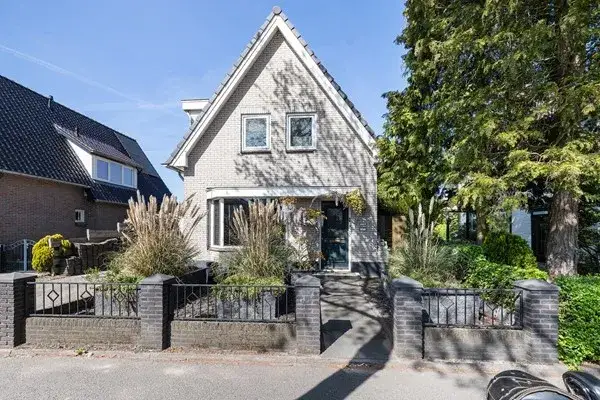
There are currently 6 homes for sale in Osseveld-West. The most recently listed home is Deventerstraat 270 by Koningsstede Makelaardij. Over the past year, 17 homes were sold in Osseveld-West. On average, a home was sold within 30 days.
The average asking price for a home for sale in Osseveld-West over the past year was €571.912. This is 34% higher than the average assessed value (WOZ) of €427.000. The average asking price per m² of plot is €3.999.
There are currently no homes for rent in Osseveld-West. The most recent home is Josine Reulingstraat 61, offered by www.woonkeus-stedendriehoek.nl. Over the past year, 3 homes were let in Osseveld-West. On average, a listing was let within 23 days.
No recent rental data available for Osseveld-West.
In Osseveld-West there are 602 addresses with a registered energy label. The most common labels are B (36%), A (25%) and C (21%). On average, an address in Osseveld-West uses 2.800 kWh of electricity per year. This is 10% above the national average of 2.550 kWh. Natural gas consumption, at 920 m³ per year, is 15% above the national average of 800 m³.
The most common type is terraced houses (43%).
Over the past year a home for sale in Osseveld-West was listed for an average of €587,161 (€4,165 per m²). That is 12% above the Dutch national average. Last quarter prices rose by 9%.
Buurt Osseveld-West has 2,180 residents. The largest age group is 45 to 65 years (34%). Many families: 35% of the households have children.
The housing supply in Osseveld-West is remarkably efficient: 52% has an A, A+ or B label. The average natural gas consumption per household is 920 m³ per year.
From Osseveld-West you can on average reach a supermarket at 1.2 km, a GP at 0.8 km, a railway station at 1.5 km, a primary school at 0.4 km (as the crow flies, source: CBS).