




Zegwaartseweg 78
Akkersbuurt-Oost, Zoetermeer
 Area
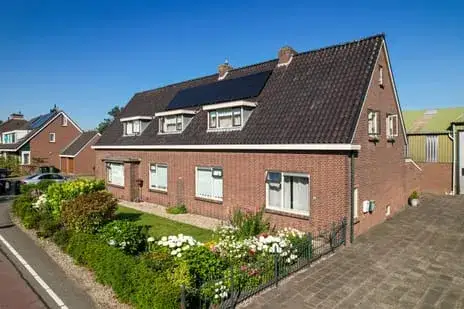
AreaA pre-war terraced house on Zegwaartseweg
This 1936 terraced house on Zegwaartseweg in Zoetermeer has a floor area of 150 m² and a 90 m² plot. With an energy label E, it is one of the older homes in the neighbourhood. At €275,000, it is the cheapest of the 24 homes currently for sale in Seghwaert-Noord-Oost and 43% below the average asking price of €485,083, a keen price compared to other terraced houses in Zoetermeer.
Seghwaert-Noord-Oost: quiet and cosy
Seghwaert-Noord-Oost is a strongly urban neighbourhood (address density 2,666) with mostly families and couples. Two residents reviewed it: one calls it 'quiet' and appreciates the peace, though notes 'there could be more benches'. The other describes it as a 'cosy neighbourhood'. The area has a mix of owner-occupied homes (61%) and social housing, with many properties built between 1970 and 1990. For more context, see the Seghwaert-Noord-Oost neighbourhood.
Daily life on the street
For your morning bread, Lidl and Albert Heijn are both just around the corner. A Jumbo is a ten-minute walk away. Primary schools are close: IKC De Triangel is a five-minute walk, and IKC De Hofvijver is a couple of streets away. Secondary education is available at Oranje Nassau College Parkdreef, also within walking distance. The nearest GP and restaurant are both a five-minute walk. For broader context, the municipality of Zoetermeer offers further amenities.
At the time of writing
At present, the home is listed through several channels, including Schieland Borsboom NVM Makelaars. The asking price is €275,000.
This summary was generated with AI and may contain errors. Always verify the details with the provider.
Features
Details of this home
Transfer
Price
Energy
 Save up to € 400 on your energy billCompare now
Areas and volume
 Insure your home and belongingsGet insured
Layout
Construction
Frequently asked questions
About Zegwaartseweg 78, Zoetermeer
Is €275,000 a fair price for this terraced house?
At €275,000, this is the cheapest home currently for sale in Seghwaert-Noord-Oost and 43% below the neighbourhood average asking price of €485,083. The floor area of 150 m² is 30% larger than the neighbourhood average of 115 m². However, the energy label E is less efficient than most homes in the area, where over 50% have label B or better. The price reflects the older construction and lower energy rating.
What is the neighbourhood like?
Seghwaert-Noord-Oost is a strongly urban area with a mix of families and couples. Residents describe it as quiet and cosy, though one noted a lack of benches. The neighbourhood has a high proportion of owner-occupied homes (61%) and many properties built between 1970 and 1990. The crime rate is moderate, with 312 total offences recorded.
How far is the nearest train station?
The nearest train station is 4.2 km away, which is about a ten-minute drive or a 15-minute cycle.
What supermarkets are nearby?
Lidl and Albert Heijn are both about 500 m away, just a five-minute walk. Jumbo is about 1 km away, a ten-minute walk. Dirk and another Albert Heijn are within 1.3 km. For daily shopping, you have several options within easy walking distance.
What schools are in the area?
Primary schools include IKC De Triangel (352 m), IKC De Hofvijver (669 m), and IKC De Gaerde (733 m). For secondary education, Oranje Nassau College Parkdreef is 707 m away. There is also a special education school, De Schatkist, at 867 m. All are within a ten-minute walk.
What is the energy label and what does it mean?
The home has energy label E, which means it is less efficient than most homes in the neighbourhood. In Seghwaert-Noord-Oost, 21.4% of homes have label A, 28.6% label B, and 39.3% label C. Only 10.7% have label D or lower. With label E, you can expect higher heating costs compared to a more modern home.
How does the floor area compare to other homes in the neighbourhood?
At 150 m², this home is 30% larger than the neighbourhood average of 115 m². It is a spacious terraced house, especially for its price point. The plot is 90 m², which is typical for a pre-war terraced house in this area.
What is the year of construction and how does it affect the home?
Built in 1936, this home is older than most in Seghwaert-Noord-Oost, where 89.3% of homes were built between 1970 and 1990. Pre-war homes often have solid construction but may need updates to insulation and energy systems. The energy label E reflects this.