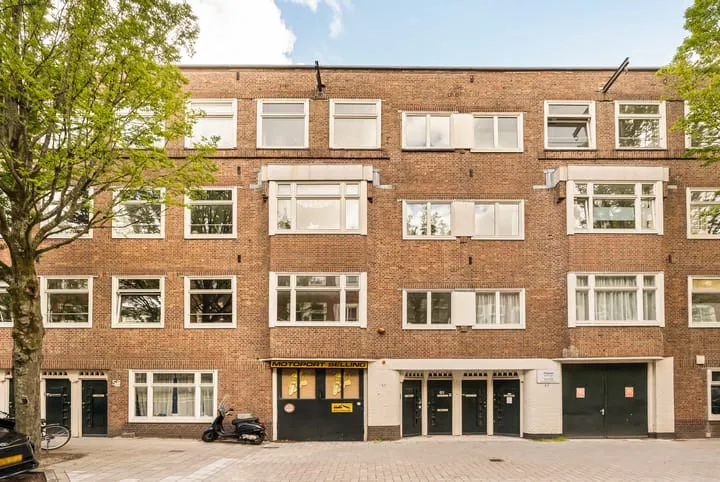
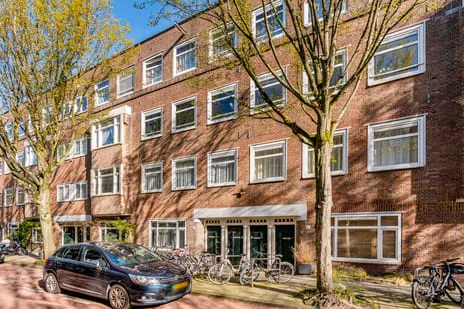
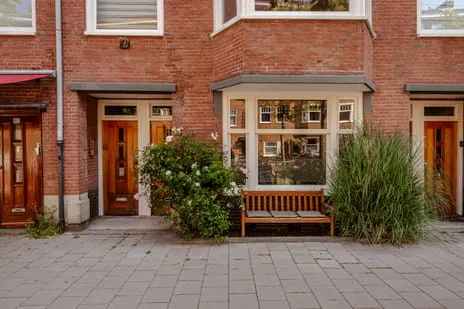
Eemsstraat 21-1
Rijnbuurt-Oost, Amsterdam
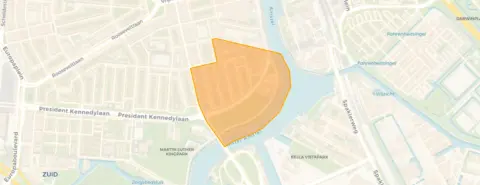 Neighbourhood
A compact apartment in a lively Amsterdam pocket
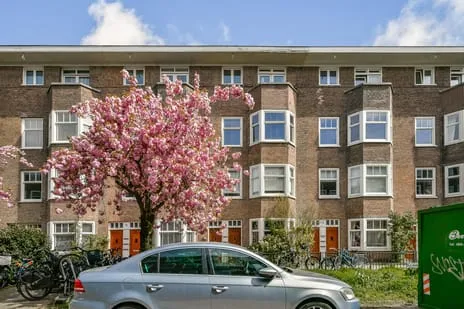
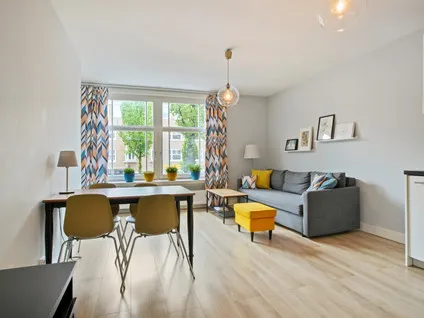
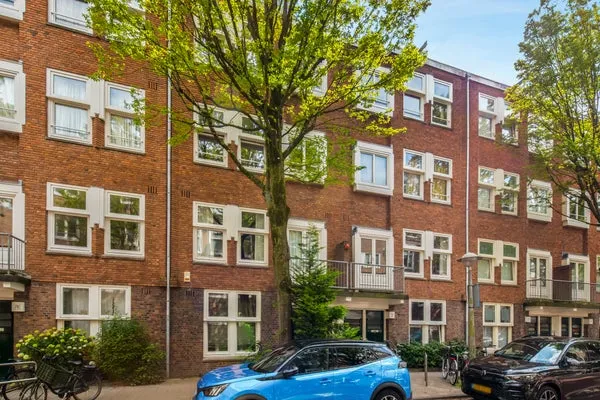
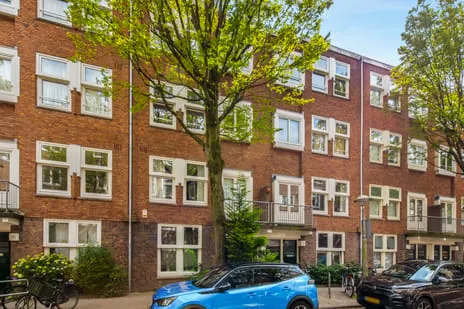
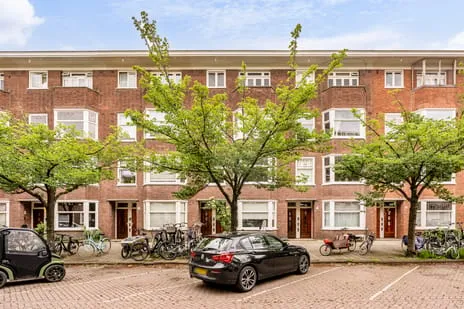
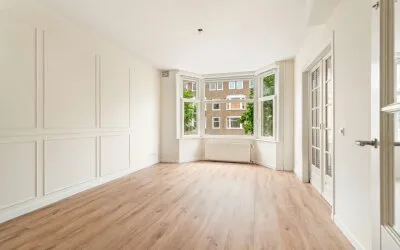
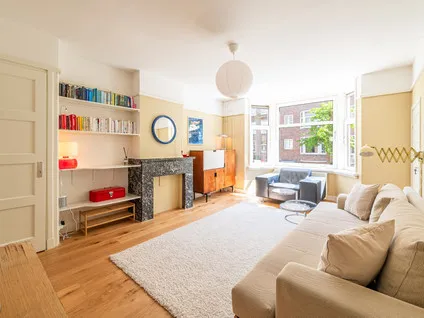
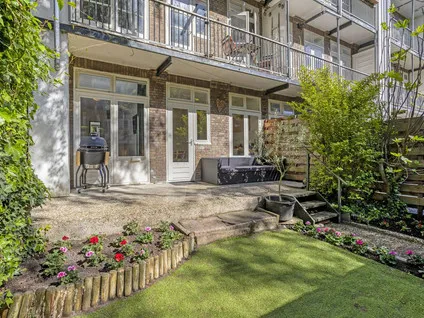
This 50 m² apartment on Eemsstraat sits in the Rijnbuurt-Oost neighbourhood, a part of Amsterdam that feels both urban and settled. The asking price of €425,000 is 38% below the neighbourhood average of €690,087, which makes it a keen entry point into this area, especially given that the average apartment here sells for around €636,559. For context, the supply of apartments in Amsterdam is varied, and this one stands out for its price.
The Rijnbuurt-Oost neighbourhood
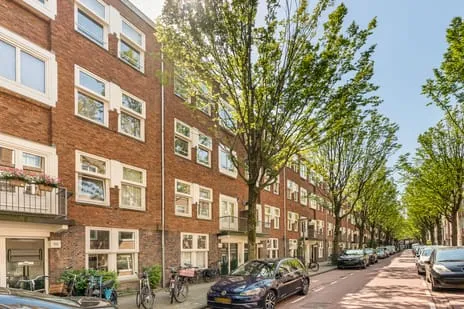
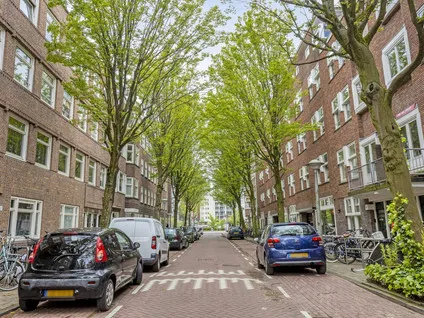
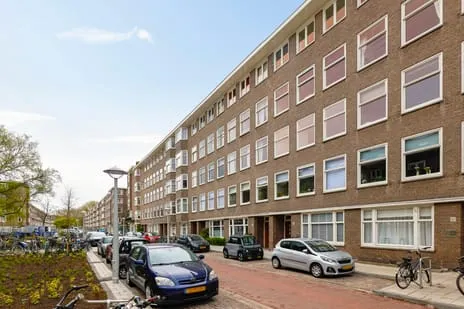
Rijnbuurt-Oost is a dense, city-centre-close pocket with a strong urban feel, address density is 5,846 addresses per km², so you are firmly in the city. The population is 2,695, with a high share of single-person households (915) and a young skew: the largest age group is 25,45 (1,250 residents). Families with children number 250, so it is not a quiet family suburb but a lively, mixed urban area. There are no neighbourhood reviews available, so this picture is based purely on the figures. The Rijnbuurt-Oost neighbourhood is well connected and has a local feel despite its central position.
Life on the street
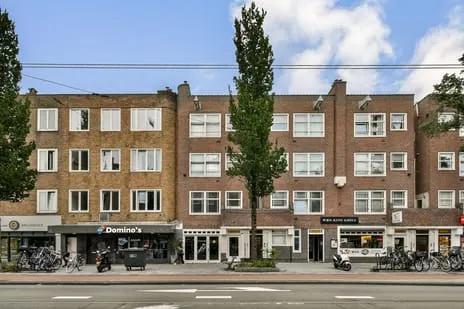
Your daily routine here is straightforward: bread and groceries are just around the corner, Albert Heijn is 145 m away, Aldi 178 m, and Vomar 208 m. For school runs, primary schools are a couple of streets away: Daltonbasisschool De Rivieren and IBS Elif Amsterdam are both about 377 m, and the 15e montessorischool is 565 m. A train station is a ten-minute walk, and a GP surgery is on your doorstep. The area is part of the municipality of Amsterdam, so you have all the city's amenities within reach.
Source and availability
At the time of writing the home is listed through several channels, including Beekman Makelaardij o.g. b.v. The energy label is G, the least efficient label, so expect higher heating costs. The listing is current as of now.
This summary was generated with AI and may contain errors. Always verify the details with the provider.
Features
Details of this home
Transfer
Price

Areas and volume
 Insure your home and belongingsGet insured
Layout
Construction
Frequently asked questions
About Eemsstraat 21-1, Amsterdam
Is €425,000 a fair price for this apartment?
The asking price of €425,000 is 38% below the neighbourhood average of €690,087 and also below the median of €650,000. However, the apartment is smaller (50 m²) than the neighbourhood average (72 m²) and has an energy label G, which means higher energy costs. In the past year, 73 apartments sold in the area at an average of €636,559, so the price is on the low side for the neighbourhood.
What does energy label G mean for my bills?
Energy label G is the least efficient label on the scale. It means the home's energy performance is low, so you can expect relatively high heating and electricity costs compared to a home with a better label. The exact amount depends on usage, but it is something to factor into your monthly budget.
How is the neighbourhood for daily life?
Rijnbuurt-Oost is very urban with a high address density. It has a young population, many single-person households, and good access to shops: three supermarkets (Albert Heijn, Aldi, Vomar) are within a couple of streets away. A GP and restaurants are also on your doorstep. The area is well connected, with a train station a ten-minute walk away.
What schools are near this apartment?
Several primary schools are within walking distance: Daltonbasisschool De Rivieren and IBS Elif Amsterdam are about 377 m away, and the 15e montessorischool is 565 m. There are also special education schools nearby. Secondary education is 0.3 km away on average, so school options are close.
How does the size compare to other apartments in the area?
At 50 m², this apartment is 31% smaller than the neighbourhood average of 72 m². It is a compact living space, typical of older Amsterdam apartments. The floor area is stated in the listing, so you know exactly what you are getting.
What is the public transport situation?
The nearest train station is 1.5 km away, about a ten-minute walk. The area is well connected within Amsterdam.
Statistics for Rijnbuurt-Oost
Figures on residents, liveability and the housing market
| Sale price | €690,087 | €650,000 |
|---|---|---|
| Sale per m² | €9,743 | – |
| Rent price | €2,829 p/m | €2,700 p/m |
| Rent per m² | €38 p/m | – |
Experiences from Rijnbuurt
How residents experience their district
Many activities for children, dog-friendly
Auto-translated to English by AISafe and nice neighbourhood, close to public transport, but the rubbish collectors should come more often to take the rubbish away, they often leave the rubbish behind which doesn't give a nice street view! All supermarkets nearby. Nice playground in the neighbourhood and a football field. The street lighting could be a bit better, quite dark! Good school where my grandchildren attend. In short, a reasonably good neighbourhood. I am satisfied.
Auto-translated to English by AIStatistics for Rijnbuurt
Figures on residents, liveability and the housing market
| Sale price | €836,992 | €595,985 |
|---|---|---|
| Sale per m² | €9,621 | – |
| Rent price | €3,031 p/m | €2,766 p/m |
| Rent per m² | €37 p/m | – |
Experiences from Amsterdam
How residents experience their municipality
IJburg is a new district still under development and it's getting better with all the amenities and a beach nearby. And you're also quickly out of the city and into the greenery.
Auto-translated to English by AIQuiet, peaceful, relaxed, green, social and a nice mix of people
Auto-translated to English by AII lived here for about 12 years. The neighbourhood has clear advantages: good connections by tram, bus and ferry/boat, plenty of supermarkets, gyms and practical amenities nearby. For me, however, there was one major drawback: structural low-frequency noise, demonstrably coming from commercial shipping on the Amsterdam-Rijnkanaal. If you are sensitive to that, it can be very burdensome. In my case, it was clearly noticeable indoors, especially at night. Neighbours said they slept with earplugs and extra insulation offered limited to no solution. The municipality took measurements at the time and acknowledged that the noise was significant, but indicated they could do little or nothing about it because the source fell outside their direct authority. My honest advice: visit this neighbourhood not only during the day, but also in the evening and at night, and pay specific attention to low-frequency humming or vibrations. For people sensitive to noise, I would personally strongly advise against this location.
Auto-translated to English by AINo public transport!
Auto-translated to English by AINice, quiet and reasonably cosy neighbourhood. Good accessibility, the Amsterdam Forest nearby. Lots of different facilities within walking distance. Nice to live here with a family and pets! Quite a few schools within cycling distance. Hygiene in the neighbourhood is above the average level in Amsterdam. VUmc very close by.
Auto-translated to English by AIAt the end of the Silodam lies the striking MVRDV building. Surrounded by water on all sides. Every apartment has a view of the IJ and/or the Oude Houthaven. The views are therefore phenomenal and every day is different due to the weather. The sunrises and sunsets are unbeatable. Because the building is at the end of the Silodam, there is no through traffic and every person is either a resident or a visitor. This makes it, by Amsterdam standards, an exceptionally safe living environment. There is little turnover. The residents of this building form a close-knit community. A nice mix of families with and without children and single people who help each other where needed. And that too is a special quality in an increasingly transient Amsterdam. Within walking distance are the Haarlemmerdijk and the markets where you can find all the hustle and bustle if you feel like it. On the Silodam there is peace and quiet, a delight for body and mind. The wind, the seagulls, the waves on the IJ, the boats, occasionally a cruise ship, and every 5 years Sail! A little paradise in Amsterdam? Absolutely!
Auto-translated to English by AIBecause we are on the outskirts, there is no through traffic. In the middle of the street a large playground with a table tennis table and a small football pitch. And playground equipment. Behind our house only meadows.
Auto-translated to English by AIIt's a nice quiet neighbourhood on the edge of the city but still close to many good amenities that a city has to offer. The neighbourhood is still becoming more beautiful.
Auto-translated to English by AIStatistics for Amsterdam
Figures on residents, liveability and the housing market
| Sale price | €822,940 | €695,417 |
|---|---|---|
| Sale per m² | €8,920 | – |
| Rent price | €2,802 p/m | €2,604 p/m |
| Rent per m² | €34 p/m | – |
Location and amenities
Eemsstraat 21-1, Amsterdam






Risks and environmental factors
Noise, foundation and climate around this address
Noise levels
Foundation risk
Rainwater flooding
Flooding
Heat stress
Similar homes
View more homes nearby