Maastricht has a reputation as a calm, easy-going city. Put the figures on nuisance and crime side by side, though, and the picture changes: as a whole, the municipality scores better than only 13 percent of all Dutch districts on this measure. That does not mean you cannot live there safely. It does mean the differences between neighbourhoods are large, and it pays to know where you are looking.
One caveat up front. The ranking below comes from the Leefbaarometer, the Dutch government's liveability monitor, not from our own reviews. In Maastricht only a handful of neighbourhoods have three or more reviews with a safety score, and we use those as a second opinion only. Treat what residents say as a voice from the street, not as a measurement.
What does the Leefbaarometer measure?
The Leefbaarometer scores every neighbourhood in the Netherlands on a few themes. One of them is "nuisance and insecurity". It draws on recorded crime, vandalism and reports of anti-social behaviour, among other things. We turn that score into a percentile: a neighbourhood at 80 does better than 80 percent of all Dutch neighbourhoods. So it tells you how often things happen, not how a street feels when you walk down it at night.
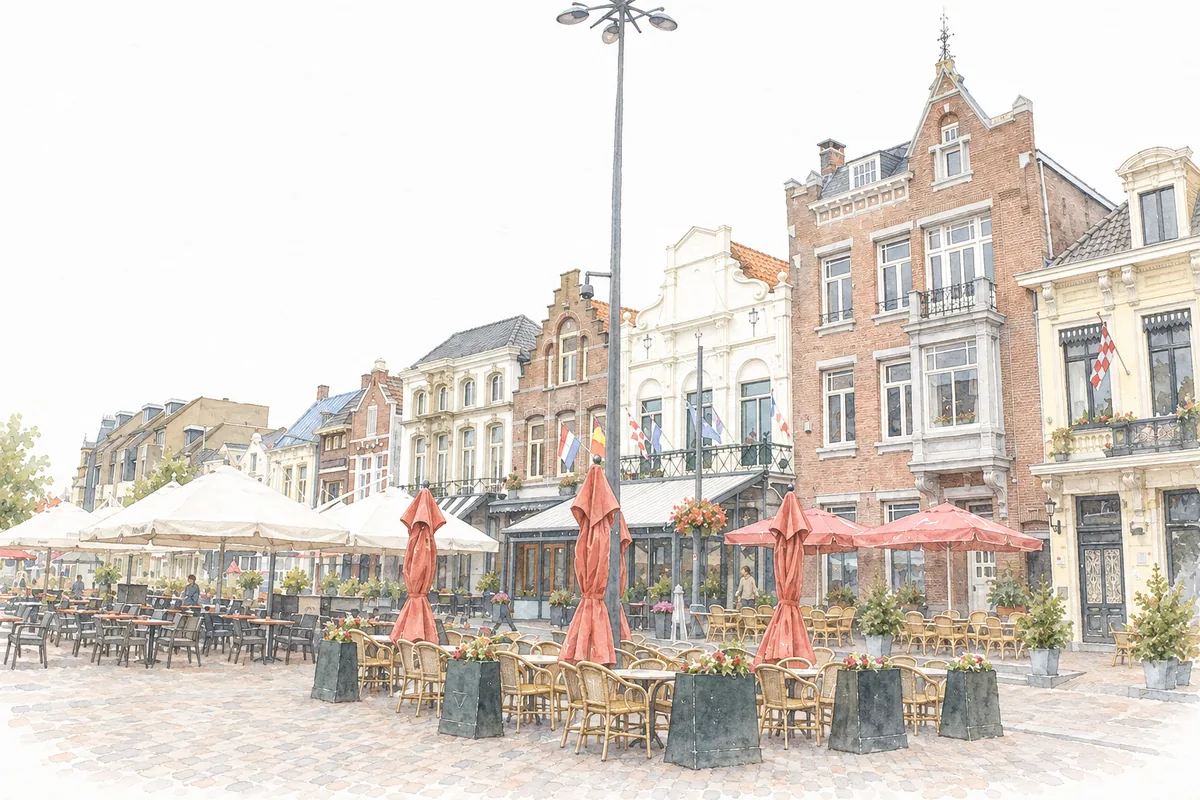
A city centre full of bars and restaurants almost always scores low on this basis, even if it is a pleasant place to live. Maastricht is no exception.
The eight neighbourhoods with the least trouble
We only included neighbourhoods with at least 500 residents. These eight score best:
- Campagne: better than 85 percent of Dutch neighbourhoods, which makes it the only part of Maastricht that is genuinely near the national top.
- Wolder: 76 percent.
- Itteren: 73 percent.
- Vroendaal: 64 percent.
- Borgharen: 63 percent.
- Dousberg-Hazendans: 62 percent.
- Amby: 61 percent.
- Jekerdal: 56 percent.
Nearly all of them are small neighbourhoods on the edge of the city. Itteren and Borgharen are the villages on the Maas in the north; Campagne, Wolder and Jekerdal are in the south-west. With over 6,500 residents, Amby is the largest on the list. Few homes come up for sale in most of these places. Dousberg-Hazendans currently has the most homes for sale, and Amby has a few rentals alongside its homes for sale.
Where the data and the residents disagree
This is where it gets interesting. Some neighbourhoods score poorly on the Leefbaarometer while the people living there feel safe, and the reverse happens too.
Malberg: low on paper, high with residents
Malberg does better than only 15 percent of Dutch neighbourhoods on nuisance and insecurity. Yet five residents give it an average of 8.6 out of 10 for safety. They describe a close-knit working-class area with shops, parks and plenty of green, where people know each other. One resident admits the area felt a little intimidating at first, but says almost everyone gets along fine. The biggest complaint is not crime but traffic: several people mention cars speeding along the Malbergsingel.
Limmel and Daalhof: better than the figures suggest
Limmel (15 percent) and Daalhof (27 percent) both get an 8.0 for safety from residents, based on three reviews each. Limmel is described as quiet, even with university students living nearby, although one person would like more cameras by the park. In Daalhof, the criticism is about shops and schools disappearing, not about feeling unsafe.
Heugem: residents are tougher
Heugem scores 26 percent, much like Daalhof, but the three residents who left a review rate safety at 5.0. They say it used to be quieter and mention youths hanging around. It is a small number of reviews, but the sense that things are getting worse comes up in all three.
Pottenberg and De Heeg
Pottenberg sits near the bottom at 3 percent, yet residents rate its safety 7.3. They call it green and spacious, with children playing in the street. The recurring complaint is heavy illegal fireworks, starting well before New Year. In De Heeg (33 percent) residents give a 7.0 across four reviews: friendly neighbours and good public transport, but also litter and occasional trouble with youths.
Where nuisance is highest
The bottom of the list is mostly the centre and the areas around it. The Binnenstad (old town) does better than only 1 percent of Dutch neighbourhoods, followed by Pottenberg (3 percent), the Boschstraatkwartier (4 percent) and Nazareth, Malpertuis and Caberg (5 percent each). The old town comes with the caveat above: crowds of visitors and nightlife generate a lot of reports, which says little about life on a quiet side street. If you are thinking of living there, go and look at different times, including a Friday night.
Looking at a Maastricht neighbourhood yourself
Every neighbourhood page shows the Leefbaarometer scores, what residents say and what is for sale or for rent. Start at the Maastricht municipality page, or go straight to homes for sale and homes for rent in Maastricht. Live in Maastricht yourself? Rate your neighbourhood. Here, where the numbers and the lived experience sometimes sit far apart, every review helps.