





Bramenhof 24
De Huet - fase 6 + 7, Doetinchem
 Area
AreaA friendly end-of-terrace home in De Huet
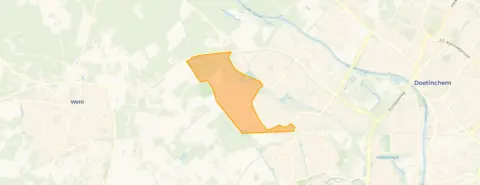
Bramenhof 24 is an end-of-terrace house from 1991, sitting in the De Huet - fase 6 + 7 neighbourhood of Doetinchem. With a living area of 117 m² and a plot of 230 m², this is a home with a bit of room to breathe. The asking price of €349,000 works out at €2,983 per m² based on the BAG registration. Compared with the average asking price in the neighbourhood, the price is in line with the market. For a sense of what else is available, you can compare with other [end-of-terrace houses in Doetinchem].
The home itself
The energy label is B, which means the home is reasonably efficient, so heating costs should be manageable. The house was built in 1991, so it is a relatively modern build. The agent does not provide further details about the layout, outdoor space or installations in this listing.
Life in De Huet - fase 6 + 7
Residents of the wider De Huet district give their living environment an average score of 8.1, based on four reviews. One resident says: "Nice neighbourhood, still no problems after almost 15 years. Always something to see." Another notes: "A nice neighbourhood in itself, unfortunately not when it comes to hygiene. Many different people live here, not all of whom handle waste neatly." The district has around 1,820 inhabitants, with a mix of ages and household types. If you want to know more, you can read about [the De Huet - fase 6 + 7 neighbourhood].
Amenities and transport
Daily errands are easy from here. Albert Heijn is on your doorstep, with a PLUS supermarket just around the corner. Basisschool Octa and IKC de Plattenburg are both a ten-minute walk away, and the GP practice at Gezondheidscentrum Hof van Cambridge is just around the corner, with BENU Apotheek de Huet nearby. Bus line 20 stops at Doetinchem, Station De Huet, a couple of streets away, and the train station Doetinchem De Huet is also just around the corner. The Slingeland Ziekenhuis is a short drive away, and the wider [municipality of Doetinchem] offers plenty of options.
WOZ value and address data
The WOZ value of the home is €311,000, with a reference date of 1 January 2025. The asking price is 12% above this WOZ value. As for the area, the noise level from road traffic is 57 dB Lden, which is above the noise standard, while railway noise is below it. The foundation risk indication is low, though the soil is clay, which is sensitive to settlement. Pluvial flooding risk is low, while the current flood risk is elevated and the 2050 flood risk is medium. These are area-level indications, not an inspection of this specific home.
Source
At the time of writing, the home is offered only via MVG Vastgoedbeheer B.V. on Vastgoed Nederland.
This summary was generated with AI and may contain errors. Always verify the details with the provider.
Features
Details of this home
Transfer
Price

Areas and volume
 Insure your home and belongingsGet insured
Layout
Construction
The WOZ value is set annually by the municipality with 1 January as its reference date, and therefore lags the market by about a year. It is an estimated market value, not a sale price.
Frequently asked questions
About Bramenhof 24, Doetinchem
What is the asking price for this home?
The asking price for Bramenhof 24 is €349,000. With a living area of 117 m² according to the BAG registration, that works out at €2,983 per m². The price is in line with the average asking price in the neighbourhood, according to the precomputed comparison.
What is the WOZ value of this home?
The WOZ value is €311,000, with a reference date of 1 January 2025. The asking price is 12% above this WOZ value. The WOZ value is the municipal valuation, not the current market value, and it is used for tax purposes.
What is the energy label of this home?
The energy label is B. This is an efficient label, so you can expect relatively moderate energy costs. The home was built in 1991. The agent does not provide further details about insulation or heating installations in this listing.
What is the foundation risk for this address?
The foundation risk indication for this address is low. The soil consists of clay, which is sensitive to settlement. This is an area-level indication based on public risk data, not an inspection of this specific home. The flood risk is currently elevated, and the 2050 flood risk is medium.
What are the noise levels like at this address?
The road traffic noise level is 57 dB Lden, which is above the noise standard, based on 2022 data. Railway noise is 46 dB Lden, which is below the noise standard, based on 2023 data. These are area-level indications from public data sources, not measurements taken at the property itself.
What supermarkets are nearby?
Albert Heijn is on your doorstep at about 166 metres away. A PLUS supermarket is just around the corner at about 705 metres, and another PLUS is about a ten-minute walk away at just over a kilometre. Lidl and Dekamarkt are further out, at around 2 kilometres.
What schools are in the area?
Basisschool Octa and IKC de Plattenburg are both about 711 metres away, a ten-minute walk. Openbare Basisschool De Huet is slightly further at about 809 metres. For secondary education, ISK Doetinchem is about 744 metres away, while the nearest regular secondary school is about 3 kilometres from the home.
How is the public transport connection?
Bus line 20 stops at Doetinchem, Station De Huet, about 251 metres away, and also at Doetinchem, Bessenweg and Doetinchem, Hof van Oxford nearby. The train station Doetinchem De Huet is about 290 metres away, so rail connections are close by.
What do residents say about the area?
Residents of the wider De Huet district give their living environment an average score of 8.1, based on four reviews. One resident says: "Nice neighbourhood, still no problems after almost 15 years. Always something to see." Another notes that the location is "really perfect" but mentions issues with waste handling in the streets.
What is the neighbourhood like demographically?
The De Huet - fase 6 + 7 neighbourhood has around 1,820 inhabitants. About 37% of households have children, and 26% are single-person households. The age spread is fairly even, with 23% aged 65 or older and 32% between 45 and 65. About 80% of the housing stock consists of owner-occupied homes.