





2 rental homes in neighbourhood Prinsenbeek, Breda
Looking for a rental property in Prinsenbeek? Check the current listings on this page and discover what this village-like Breda neighbourhood has to offer.


Rental prices and market figures for Prinsenbeek, Breda
Prinsenbeek is essentially an owner-occupied neighbourhood: 78% of homes are owned, and only 22% are rented. Of those rental properties, 13% are owned by a housing association (social housing), and 9% belong to the private sector or other landlords. This makes the supply of rental homes in Prinsenbeek limited, especially if you are looking for a private-sector property.
In the private sector (excluding social housing), an average rent of €1,154 per month was recorded over the past year, based on 21 rented homes. Rents ranged from €500 to €2,000 per month, with an average living area of 100 m². That works out to approximately €11.54 per m². For current rents and available supply today, check the overview at the top of this page.
The WOZ value in Prinsenbeek is €455,000, slightly below the district average of €469,000 and clearly above the Breda average of €382,000. This reflects the predominantly green, village-like character of the neighbourhood with spacious single-family homes. Anyone looking for a rental home in Prinsenbeek pays a price comparable to other sought-after outer neighbourhoods of Breda, but generally lower than in the city centre. Also check the broader supply of rental homes in Breda for a complete market overview.
Living in Prinsenbeek, Breda
Prinsenbeek is an independent village that was merged into the municipality of Breda in the 1970s, but it has never lost its sense of identity. The neighbourhood has a distinct village character: its own centre with a church square, a recognisable shopping area, and strong social cohesion. Resident Francis describes it aptly: "Familiar because you know everyone, safe because we look out for each other and everything, public transport and shops nearby, plenty of green around us." That sense of familiarity and safety is less self-evident in more urban districts of Breda.
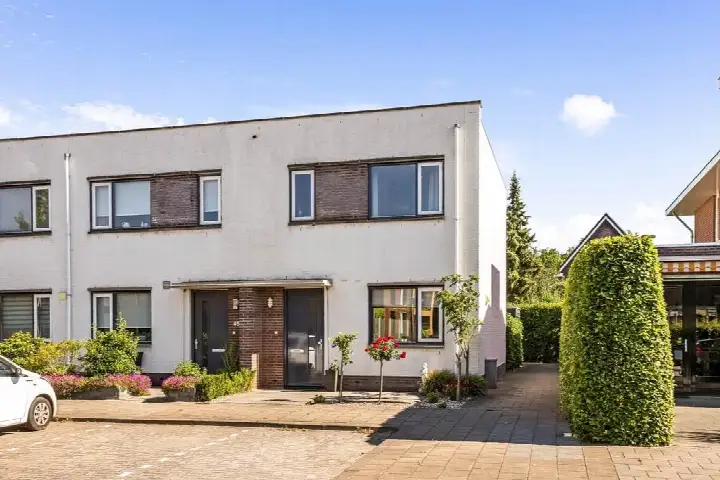
The housing stock largely consists of ground-floor single-family homes, often from the 1960s and 1970s, supplemented by later-built detached homes and semi-detached houses. Apartments exist but are scarce. Anyone considering renting an apartment in Prinsenbeek will find that supply is limited and properties are rented out quickly.
Amenities in Prinsenbeek
In the village centre, you will find basic necessities within walking distance. There is a supermarket (Jumbo) on Dorpsstraat, supplemented by a bakery, butcher, and a few other local shops. For a larger range of shops, Breda city centre is about a ten-minute drive away. In terms of education, Prinsenbeek scores remarkably high: residents give education a 9.0. There are primary schools in the centre, and secondary schools are accessible in Breda. For sports, there are football club SV Prinsenbeek and several tennis courts. The area offers space for walking and cycling, with the Markiezaatspolders and the countryside within cycling distance. Amenities score an average of 7.3 in resident reviews, indicating that the offering is functional but not extensive.
Accessibility
Prinsenbeek has its own train station on the Breda-Roosendaal line, making public transport accessibility above average. Residents give accessibility a 9.0, the highest sub-score. From the station, you can reach Breda Central in about ten minutes. By car, Prinsenbeek connects to the A16 towards Rotterdam and the A27 towards Utrecht and Antwerp. The cycle route to Breda city centre is good: along the canal or via Terheijdenseweg, you can cycle there in twenty to twenty-five minutes. Parking on residential streets is generally free, as resident Rob Tieken also notes: "Spacious parking bays." That is an advantage over more urban neighbourhoods such as Breda centre, where parking is much more difficult and expensive.
Anyone wanting to combine the tranquillity of Prinsenbeek with more urban rental convenience can also look at Breda north or Breda east, districts that have a slightly larger supply of rental homes. The adjacent Buitengebied Prinsenbeek offers an even more rural alternative, but is less well served by public transport. More general information about the district can be found on the page about Prinsenbeek as a district.
Does renting in Prinsenbeek suit you?
Prinsenbeek mainly attracts families and people in the 45 to 65 age group. Of the 11,435 residents, the largest group is between 45 and 65 years old (3,275 people), and 43% are married. The proportion of households with children (1,860) is high. The average income of €42,100 is above the Breda average, and 41% of residents have a high level of education. Renting in Prinsenbeek suits families seeking peace, green space, and a sense of community, but is less suitable for students or those looking for a vibrant city life. Living in Prinsenbeek also requires some patience: the supply of rental homes is limited and properties are rented out quickly.
What residents say about Prinsenbeek
Based on resident reviews, Prinsenbeek scores an 8.1 out of 10. The highest sub-scores are accessibility (9.0) and education (9.0). Safety and community feeling both score 8.3. Green space (7.7) and amenities (7.3) are the relatively lowest scores, indicating that the neighbourhood is functional but not overly equipped. Lobke writes: "It's a nice neighbourhood, quiet so not busy, you can just walk outside and children can easily play outside." All reviews and the full neighbourhood data for Prinsenbeek can be read on the neighbourhood main page.
Compare rental homes in and around Prinsenbeek
Looking for available rental homes in Prinsenbeek or want to compare the neighbourhood with alternatives? On Buurtje.nl, you combine current property listings with neighbourhood scores, demographic data, and resident experiences—information you won't find at neighbourhood level on any other property site. Compare Prinsenbeek with rental homes in the broader Prinsenbeek district, check the supply in Breda south-east if you prefer a more urban setting, or explore the municipality of Breda for a complete overview. Want to know more about Breda as a whole? The municipality of Breda provides official information on amenities, permits, and housing policy.
What is the average rent in Prinsenbeek, Breda?
In the free sector (excluding social housing), the average rent in Prinsenbeek over the past year was €1,154 per month, based on 21 rented properties. Rents ranged from €500 to €2,000 per month, with an average floor area of 100 m², equating to approximately €11.54 per m². Social housing through a housing association is generally cheaper, but waiting lists and income requirements apply.
Are there social housing properties in Prinsenbeek?
Yes, approximately 13% of the housing stock in Prinsenbeek is owned by a housing association, amounting to roughly 640 homes. For social housing in the Breda region, you can register with WonenBreburg or AlleeWonen, the largest associations active in Breda and the surrounding area. Be prepared for waiting lists, which can be significant in sought-after neighbourhoods like Prinsenbeek.
What is it like to live in Prinsenbeek?
Prinsenbeek is a quiet, village-like neighbourhood on the west side of Breda with a strong sense of community. Residents particularly appreciate the safety, train accessibility, and green surroundings. On Buurtje.nl, the neighbourhood scores an 8.1 out of 10. Resident Francis describes it as: 'Familiar because you know everyone, safe because we look out for each other.' It is not a bustling city district, but that is precisely what makes Prinsenbeek attractive for those seeking peace and quiet.
Is Prinsenbeek suitable for families with children?
Yes, Prinsenbeek is distinctly family-friendly. The largest age group is 45 to 65 years old, and there are relatively many households with children (1,860). There are primary schools in the core, residents give education a 9.0, and there is plenty of space for outdoor play, as resident Lobke notes: 'Children can easily play outside.' The homes are predominantly ground-floor family houses, making it especially suitable for families.
How accessible is Prinsenbeek?
Prinsenbeek has its own train station on the Breda-Roosendaal line, taking about ten minutes to reach Breda Central. By car, the neighbourhood connects to the A16 and A27 motorways, towards Rotterdam, Utrecht and Antwerp. Cycling to Breda city centre takes about twenty to twenty-five minutes. Parking on residential streets is generally free. Residents give accessibility the highest sub-score: a 9.0.
What amenities are there in Prinsenbeek?
In the village centre of Prinsenbeek, you will find a Jumbo supermarket, a bakery, a butcher, and various local shops on Dorpsstraat. There are primary schools in the core and sports clubs such as SV Prinsenbeek and tennis courts. For a wider range of shops and dining options, you will need to go to Breda city centre, about a ten-minute drive away. Residents give amenities a 7.3, indicating functional but not extensive.
Is Prinsenbeek a safe neighbourhood to rent in?
Prinsenbeek is perceived as safe by residents: safety scores an 8.3 on Buurtje.nl. The neighbourhood is characterised by social control and a strong sense of community, with neighbours looking out for each other. Resident Francis explicitly writes: 'Safe because we look out for each other.' This is one of the reasons why Prinsenbeek is popular with families and people who have lived in the neighbourhood for years.
Quite a few elderly and young people around a green field. Spacious parking spaces. Many trees.
Auto-translated to English by AII live here again at my birthplace, I lived away in the meantime, but it still feels familiar and like old times to live here. Familiar because you know everyone, safe because we look out for each other and everything, public transport and shops nearby, plenty of green around us! Ideal place to live!
Auto-translated to English by AIIt's a nice neighbourhood, quiet so not busy, you can just walk outside on the street and children can easily play outside!
Auto-translated to English by AIOffices with the most homes in Breda on Buurtje.nl, last 12 months.
Van der Sande MakelaarsBreda335 homes
 Kin MakelaarsBreda189 homes
 DietvorstBorman MakelaarsBreda170 homes
 Storimans en PartnersBreda144 homes
 Rotsvast BredaBreda140 homes
 Makelaarshuys Johanna en GijsBreda119 homes
 Van de Wiel MakelaarsPrinsenbeek114 homes
 Makelaar SanderBavel103 homes
 ROGA MakelaarsBreda86 homes
 Mechel MakelaardijBreda85 homes