Homes for sale in De Eilanden, Albrandswaard
Discover the current supply of homes for sale in De Eilanden and compare prices, neighbourhood data and resident reviews directly on this page.



House prices and market figures De Eilanden, Albrandswaard
The owner-occupied market in De Eilanden is strong. Of the 1,322 homes in the neighbourhood, 76% are owner-occupied, indicating that this is a distinct home-owning neighbourhood. The average WOZ value is €452,000, slightly below the district average of Portland (€465,000), but clearly above the municipal average of Albrandswaard (€431,000). This indicates that De Eilanden is a sought-after location within the municipality, without matching the absolute top prices of the rest of the district.
Over the past twelve months, 27 homes were sold with an average purchase price of €552,574. The range runs from €325,000 to €1,075,000, indicating that both more affordable terraced houses and more spacious detached homes come onto the market. The average living area was 118 m², which works out at a price of around €4,700 per m². For current asking prices and selling times, you can consult the overview at the top of this page, which is updated daily. Owner-occupied homes in De Eilanden are predominantly single-family homes; apartments form a smaller part of the supply. Rental homes make up 24% of the stock, largely managed by a housing association.
Living in De Eilanden, Albrandswaard
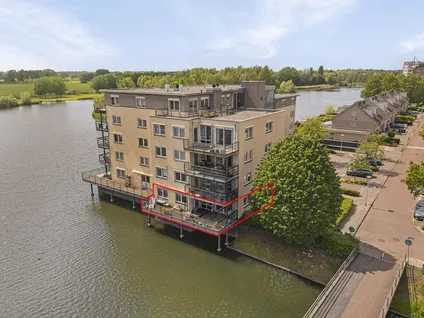
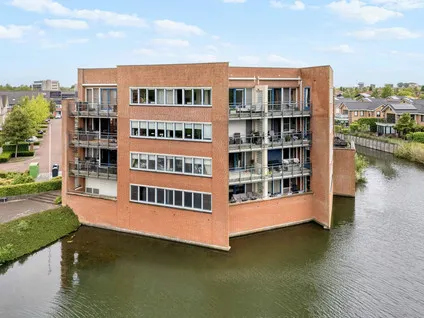
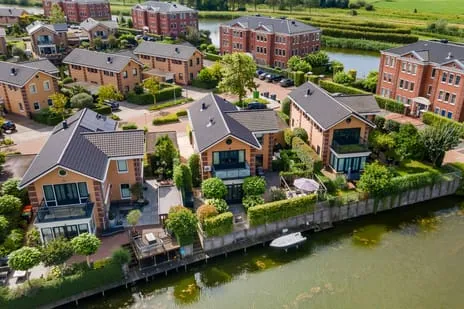
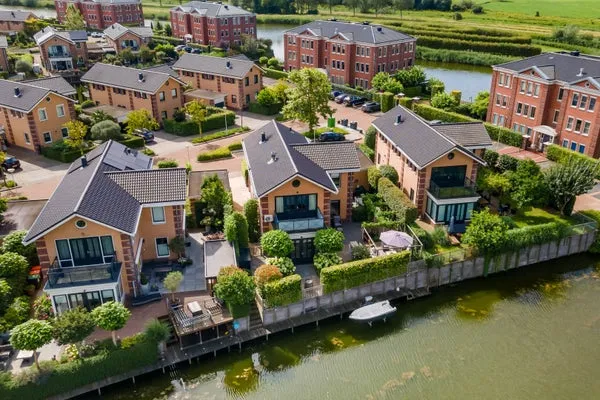
De Eilanden is a quiet, green residential neighbourhood in the southwest of the Portland district. The name is no coincidence: the neighbourhood consists of residential islands separated from each other by water and green strips, resulting in a remarkably quiet streetscape. Cars largely disappear into residential yards and parking areas on the edges, making the interior of the islands feel like a car-restricted living area. That is precisely what many residents appreciate here.
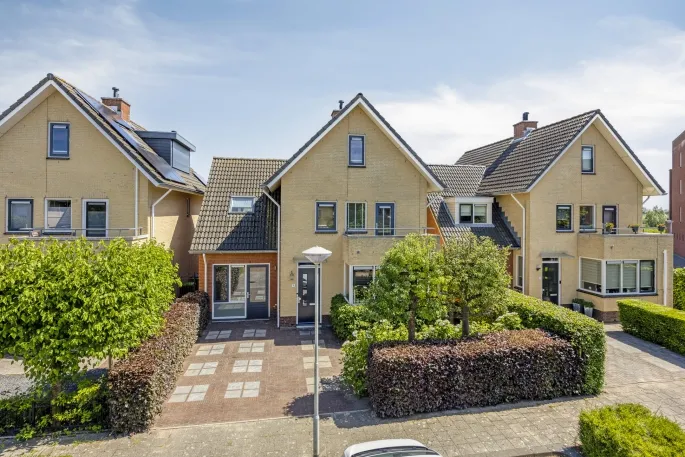
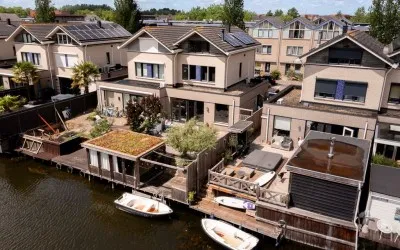
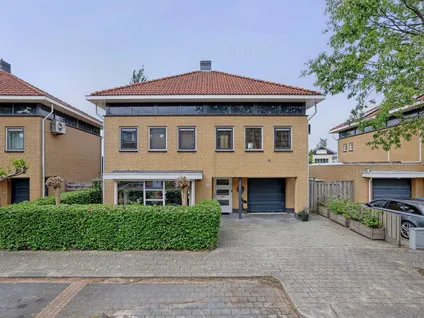
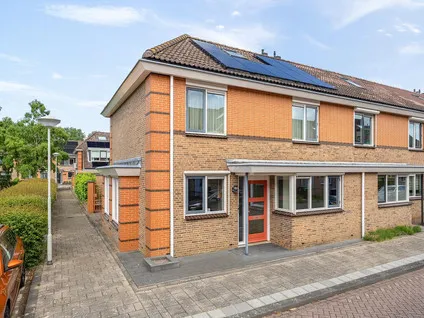
The housing stock largely dates from the 1980s and 1990s. You will mainly find semi-detached and detached homes, with the occasional terraced house. The gardens are on the spacious side for a Randstad neighbourhood, and many homes have direct water access or overlook a ditch or pond. The maintenance of the homes is generally good; most owners have invested in their property, partly due to the high homeownership rate.
In terms of amenities, De Eilanden depends on the wider area. In Portland-Centrum, one of the sister neighbourhoods, you will find supermarkets and primary schools within cycling distance. The Portland shopping centre offers daily groceries, a GP and pharmacy. For more extensive shopping, residents drive to Spijkenisse or Rotterdam. Children attend primary schools in the immediate vicinity; secondary schools are accessible in Poortugaal or Spijkenisse. Sports clubs are active in the district, with football and tennis clubs a short distance away.
Accessibility is a point that residents regularly mention, both positively and critically. By car, the A15 is quickly reachable via the Groene Kruisweg, and Rotterdam city centre is about a twenty-minute drive away. Public transport is more limited: bus line 171 connects De Eilanden with Rhoon metro station and Spijkenisse city centre, from where you can enter Rotterdam via the Caland line. This is acceptable for many residents, but those who have to travel without a car daily notice that it takes a bit more effort than in more urban neighbourhoods. On the neighbourhood page of De Eilanden you can read what residents themselves write about accessibility and other aspects of living here.
Compared to sister neighbourhoods such as Portland-Centrum and Driehoek, De Eilanden is greener and quieter, but also slightly further from daily amenities. Wijkpark Portland borders the neighbourhood and offers additional recreational space. The combination of water, greenery and a stable home-owning community makes De Eilanden a neighbourhood with a character of its own that is hard to replicate.
Who is a home in De Eilanden suitable for?
The neighbourhood mainly attracts families and movers aged 45 to 65, the largest group in De Eilanden. This is reflected in the quiet atmosphere and the emphasis on space and greenery. First-time buyers will find it difficult: with an average purchase price of €552,574 and a lower limit of €325,000, a mortgage without own capital or outside help is hard to achieve. Movers looking for more space from a smaller home fit the profile better. Seniors who want to live quietly but have a car at their disposal also feel at home here. Those considering renting can look at rental homes in De Eilanden, although the supply is limited. Be prepared for competition for popular properties; homes in good condition are not offered here for long.
What residents say about De Eilanden
Residents particularly appreciate De Eilanden for its peace, green surroundings and the sense of space that the water-rich layout offers. One resident writes: "It is so quiet here that you almost forget Rotterdam is around the corner. The children play outside, the neighbours know each other, you don't see that in the city anymore." Critical notes more often concern the limited public transport connections and the fact that you still need the car for more than daily shopping. View all reviews and neighbourhood scores on the information page of De Eilanden, where residents give scores on categories such as safety, greenery, amenities and atmosphere.
Compare homes for sale in and around De Eilanden
On Buurtje.nl you will find the current housing supply in De Eilanden compiled from more than 1,500 sources, supplemented with resident reviews and district data that you will not find anywhere else in one place. Want to compare more broadly? Then also check the supply in Poortugaal-Noord, Rhoon-Noord or Poortugaal-Zuid for a good picture of what the municipality has to offer. More information about the municipality can be found on the page of Albrandswaard. For municipal policy on housing and amenities, you can also visit the website of the municipality of Albrandswaard.
Frequently asked questions
What is the cost of a home in De Eilanden?
The average purchase price in De Eilanden over the past twelve months was €552,574, based on 27 sold homes. The range runs from €325,000 to €1,075,000, depending on type and location. The average living area was 118 m², which works out to a price of around €4,700 per m². Buying a home in De Eilanden therefore requires a solid financial foundation, although there are also more affordable options at the lower end of the market.
What is the WOZ value in De Eilanden?
The average WOZ value in De Eilanden is €452,000. That is slightly below the average for the Portland district (€465,000), but above the municipal average of Albrandswaard (€431,000). De Eilanden is thus one of the more expensive neighbourhoods within the municipality, without reaching the absolute top prices of the rest of the district.
What is living in De Eilanden like?
Living in De Eilanden feels quiet and green. The neighbourhood is built around residential islands with water and green strips, creating a car-free atmosphere in the interior of the district. Residents appreciate the space, nature and social cohesion. Public transport is more limited than in more urban neighbourhoods, and a car is handy for extensive shopping.
Is De Eilanden suitable for families with children?
Yes, De Eilanden is very much a family neighbourhood. The largest age group consists of 45- to 65-year-olds, and families with children are the most common household type. The neighbourhood is safe, quiet and green, with primary schools and sports clubs within cycling distance. First-time buyers will find it more difficult due to the higher purchase prices, but for movers with children this is a logical choice.
How accessible is De Eilanden?
By car, De Eilanden is easily accessible via the A15, which can be reached quickly via the Groene Kruisweg. Rotterdam city centre is about a twenty-minute drive away. By public transport, bus line 171 runs to Rhoon metro station and Spijkenisse, from where you can reach Rotterdam via the Caland line. Those who travel without a car daily will notice that the public transport connections are slightly less frequent than in more urban neighbourhoods.
What types of homes are for sale in De Eilanden?
The supply in De Eilanden consists mainly of single-family homes: semi-detached and detached houses are most common, with the occasional terraced house. Most homes date from the 1980s and 1990s and have a garden, sometimes bordering water. Buying an apartment in De Eilanden is less common; apartments make up a small part of the housing stock. Current listings can be seen at the top of this page.
Is there a lot of green space and water in De Eilanden?
Green space and water define the character of De Eilanden. The neighbourhood is literally designed as a system of residential islands, surrounded by ditches and green strips. Many homes overlook water, and the adjacent Wijkpark Portland offers additional recreational space. This makes De Eilanden attractive for people who value nature and space when buying a home.