Homes for sale in Den Hoorn, Delft
Discover the current supply of homes for sale in Den Hoorn and compare neighbourhood scores, resident reviews and market figures directly on this page.

House prices and market figures for Den Hoorn, Delft
Den Hoorn is a pronounced owner-occupied neighbourhood: 77% of the housing stock consists of owner-occupied homes, which immediately defines the character of the area. The average WOZ value is €524,000, well above the district average of Voordijkshoorn (€391,000) and significantly higher than the Delft average of €322,000. That difference is no coincidence: Den Hoorn largely consists of more spacious single-family homes and detached houses, which are less common in the rest of Delft.
Looking at actual sales transactions over the past twelve months gives a clear picture of the market. 22 homes were sold with an average purchase price of €646,386. The range runs from €415,000 to €1,025,000, showing that both first-time buyers and those with a larger budget can find something here. The average living area of the sold homes is 129 m², which works out to a price of approximately €5,010 per square metre. For current asking prices and the latest available homes, see the overview at the top of this page.
Living in Den Hoorn, Delft
Den Hoorn is not a city neighbourhood; it is a village. That sounds like a cliché, but anyone walking around notices the difference immediately. The area has its own centre with a village square, a recognisable street pattern, and a scale that makes it easy to know your neighbours. The housing stock largely consists of more spacious single-family homes, partly detached, partly semi-detached, with gardens that are rarely so large elsewhere in Delft. The construction period varies: there are older properties from the 1960s and 1970s, but also newer extensions on the edges of the village.
Resident Sjoerd describes it aptly: "A nice cosy village. They have everything you need, like a football field, a supermarket, a snack bar. There are also many schools. Everything in Den Hoorn is well organised; safety is good because nothing unusual ever happens." That observation aligns with the resident figures: safety scores an 8.0 and education even a 10. There are several primary schools in or directly around the neighbourhood, which explains why families with children form the largest household group.
Facilities are modest but functional. There is a supermarket, a snack bar, sports facilities including the football field, and primary education within walking distance. For more extensive shops or dining, you drive to Delft city centre or to Naaldwijk. The scores for facilities (6.0) and green space (6.0) honestly indicate that Den Hoorn does not excel in those areas, but that is not why people choose it. They choose it for space, tranquillity, and a village community.
Accessibility scores an 8.0 among residents, and that is understandable. Den Hoorn is located directly on the A4 and has a fast connection to The Hague and the Westland via the N211. By car, you are within ten minutes of Delft station or the city centre. Public transport is more limited than in the city itself: there are bus lines connecting Den Hoorn with Delft city centre and surrounding towns, but there is no train station in the neighbourhood itself. Cyclists can reach Delft city centre via quiet polder roads in about twenty minutes.
Compared to other neighbourhoods in the Voordijkshoorn district, Den Hoorn has a very distinct character. Neighbourhoods like Hoornse Hof and Westlandhof are more planned residential areas, while Den Hoorn has a historic village centre with a different atmosphere. Marlot and Ecodus are also more compact in layout. Anyone wanting to compare more neighbourhood information can find all scores and resident reviews on the Den Hoorn neighbourhood page.
Who is a home for sale in Den Hoorn suitable for?
Den Hoorn mainly attracts families looking for space without the hustle and bustle of the city. With 630 households with children as the largest group and a top score for education, the neighbourhood is clearly geared towards families. Movers-up who want to make the step from an apartment in Delft or The Hague to a single-family home will find more square metres for their money here than in Delft city centre, although the price level with an average of over €646,000 is certainly not low. First-time buyers will have to realistically consider the lower limit of €415,000 and must take into account limited supply and competition. Those who want to explore renting as an intermediate step can look at rental homes in Den Hoorn, although the rental share is small at 23%.
What residents say about Den Hoorn
Den Hoorn receives an overall score of 7.8 out of 10. The highest sub-scores are for education (10), housing (9.0), safety (8.0), and accessibility (8.0). Green space and facilities score lower, both at 6.0, indicating that the neighbourhood is more functional than abundant in those areas. Sjoerd writes: "A nice cosy village. Everything in Den Hoorn is well organised; safety is good because nothing unusual ever happens, and there is not much litter either." All reviews and sub-scores per category can be found on the Den Hoorn page.
Compare homes for sale in and around Den Hoorn
On Buurtje.nl you will find homes for sale in Den Hoorn from more than 1,500 sources, combined with neighbourhood scores, resident reviews, and demographic data that you will not find on one page anywhere else. This way you can better assess whether the neighbourhood suits you before scheduling a viewing. Want to compare? Check the supply in the wider district via homes for sale in Voordijkshoorn, or explore other Delft districts such as Binnenstad, Delftse Hout, or the total supply via homes for sale in Delft. More about the municipality can also be found on the website of municipality Delft.
Frequently asked questions
What is the cost of a home in Den Hoorn?
The average purchase price in Den Hoorn over the past twelve months was €646,386, based on 22 sold homes. The range runs from €415,000 to €1,025,000. The average living area is 129 m², resulting in an average price of approximately €5,010 per square metre. Buying a home in Den Hoorn is therefore clearly more expensive than the Delft average.
What is the WOZ value in Den Hoorn?
The average WOZ value in Den Hoorn is €524,000. That is well above the district average of Voordijkshoorn (€391,000) and significantly higher than the municipal average of Delft (€322,000). The higher value level is related to the large share of larger single-family homes and detached houses in the neighbourhood.
What is it like to live in Den Hoorn?
Den Hoorn has the character of a village within the municipality of Delft: quiet, orderly and with a recognisable community. Residents give the neighbourhood an overall score of 7.8 out of 10. Safety, education and housing score particularly well. Amenities and green spaces are functional but not abundant, which suits the village scale of the neighbourhood.
Is Den Hoorn suitable for families?
Den Hoorn is pre-eminently a family neighbourhood. Households with children form the largest group, the neighbourhood scores a 10 for education and there are several primary schools in the immediate vicinity. The more spacious homes with gardens and the quiet, safe environment make buying a home in Den Hoorn attractive for families looking to move out of the city.
How accessible is Den Hoorn?
Residents rate accessibility at 8.0. Den Hoorn has a direct connection to the A4 and via the N211 you are quickly towards The Hague or the Westland. Delft Station is reachable by car or bicycle within ten to twenty minutes. Bus lines connect the neighbourhood with Delft city centre, but there is no own train station. For motorists, the location is favourable.
What type of homes are for sale in Den Hoorn?
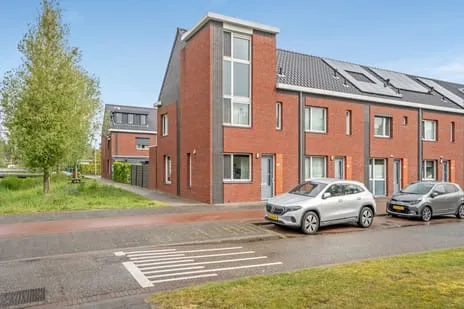
The supply consists largely of single-family homes, including semi-detached houses and detached houses. Buying apartments in Den Hoorn is less common; the share is small given the village layout. The construction period ranges from 1960s and 1970s homes to newer expansions. With an average area of 129 m², the homes are more spacious than in many other Delft neighbourhoods.
How are the schools and education in Den Hoorn?
Education is Den Hoorn's strongest asset: residents give a score of 10 out of 10. There are primary schools in or directly around the neighbourhood, which is a major practical advantage for families with young children. For secondary education, pupils rely on schools in Delft city centre or surrounding towns, but accessibility is good.
A good experience, they have everything you need like a football field, a supermarket, a snack bar, etc. There are also many schools. Everything in Den Hoorn is well organised. Safety is good because nothing crazy ever happens, and there isn't much litter either.
Auto-translated to English by AI