





18 homes for sale in Duivelseiland, Amsterdam
Discover the current supply of homes for sale in Duivelseiland and view neighbourhood data, resident reviews and market figures to assess whether this neighbourhood suits you.








House prices and market figures for Duivelseiland, Amsterdam
The owner-occupied market in Duivelseiland is compact but pricey. Of the 879 homes in the neighbourhood, only 32% are owner-occupied; the rest are rented out, often by private landlords (56%). This limited ownership percentage makes supply scarce and competition during sales correspondingly fierce.
The average WOZ value is €643,000, well above the Amsterdam average of €517,000, but significantly below the district average of the Museumkwartier (€1,175,000). Duivelseiland thus occupies a middle position within the district: more expensive than average Amsterdam, but more accessible than the most exclusive neighbourhoods around it.
Over the past twelve months, 40 homes were sold at an average purchase price of €652,875. The range runs from €375,000 to €1,695,000, indicating that both compact apartments and larger homes change hands. With an average sold area of 61 m², this works out at a price per square metre of over €10,700. These are predominantly apartments in pre-war buildings. View the current supply and asking prices at the top of this page.
Living in Duivelseiland, Amsterdam
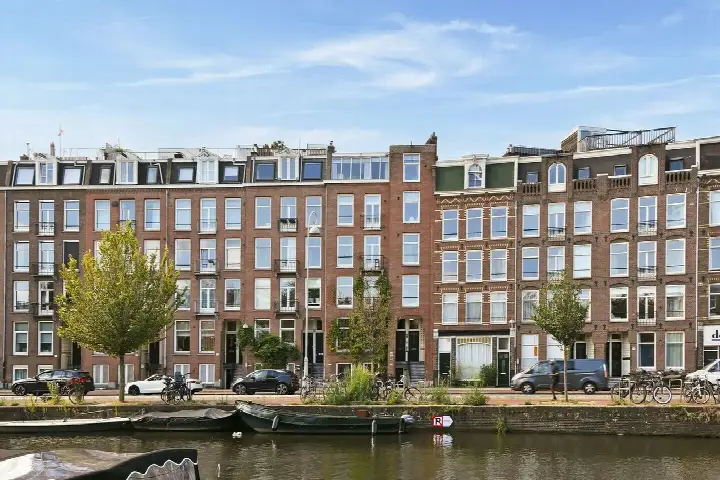
Duivelseiland is one of the smaller neighbourhoods of Amsterdam, nestled between the Singelgracht, the Vondelpark and the busy Stadhouderskade. The name sounds more adventurous than the neighbourhood looks: it is a quiet, green part of the city with a strong urban character. The buildings largely consist of pre-war apartments and townhouses that have been divided into flats. Wide pavements, high ceilings and brick facades define the streetscape.
The location is downright excellent. The Vondelpark is literally around the corner, giving the neighbourhood a green, relaxed feel that you miss in many other parts of the city. At the same time, you are within cycling distance of Leidseplein, the Pijp and the Jordaan. For daily shopping, you can go to the Albert Heijn on the Overtoom or the supermarkets on the Kinkerstraat, both within walking distance. The PC Hooftstraat with its shops is also nearby, although for most residents it is more of a curiosity than a daily destination.
In terms of accessibility, the neighbourhood is well connected. Tram lines 1, 7 and 19 run along the Overtoom and take you to the city centre or Amsterdam Central Station in fifteen minutes. By bike, you are at Dam Square in ten minutes. The car is less practical: parking in this part of Amsterdam is paid and difficult, something several residents point out in their reviews.
The population is young and highly educated: 74% have a higher professional or university degree, and the largest age group (25-45 years) numbers 705 people out of a total of 1,405 residents. The average income of €66,500 is significantly higher than the Amsterdam average of €44,276. This is reflected in the neighbourhood: quiet streets, well-maintained buildings, few social problems. Residents describe the atmosphere as "pleasantly anonymous", a neighbourhood where you know your neighbours but don't have to keep an eye on them.
One resident wrote: "You literally live next to the Vondelpark and yet you feel like you're in the middle of the city. The only real downside is the parking and the traffic on the Stadhouderskade." This tension between tranquillity and urbanity is characteristic of Duivelseiland. More experiences and a full overview of neighbourhood scores can be found on the main neighbourhood page for Duivelseiland.
Compared to neighbouring areas such as the Concertgebouwbuurt and the P.C. Hooftbuurt, Duivelseiland is slightly less exclusive in price, but also more compact in scale. Those looking for more space might look instead at Vondelpark-Oost or the Cornelis Schuytbuurt, where sometimes more square metres are available for similar prices.
Is an owner-occupied home in Duivelseiland right for you?
Duivelseiland mainly attracts young professionals and dual-income couples who want to live centrally without being in the tourist hustle and bustle. First-time buyers with a limited budget will find it difficult: the entry price of €375,000 is at the lower end, but the average of over €650,000 requires substantial equity or a high income. Overbidding is more the rule than the exception in this neighbourhood. Those who want to start flexibly or try out the neighbourhood first can also look at rental homes in Duivelseiland. Families with children find the neighbourhood pleasant due to the proximity of the Vondelpark, but large family homes are scarce and pricey.
What residents say about Duivelseiland
Residents appreciate Duivelseiland mainly for its location, green surroundings and quiet atmosphere despite the central location. The proximity of the Vondelpark consistently scores highly. Residents are less enthusiastic about the parking pressure and traffic on the Stadhouderskade. One resident summed it up as: "A neighbourhood you don't leave quickly once you live there. The combination of park, city and good connections is hard to beat." View all reviews and partial scores on the neighbourhood page.
Compare owner-occupied homes around Duivelseiland and in Amsterdam
On Buurtje.nl you will find owner-occupied homes in Duivelseiland combined with resident reviews, neighbourhood scores and demographic data, brought together from more than 1,500 sources. This way you can not only compare the supply, but also assess whether the neighbourhood suits you. Want to search more broadly? Then view owner-occupied homes in Museumkwartier as a whole, explore alternatives such as the Jordaan or the Grachtengordel-West, or search more broadly via the overview of owner-occupied homes in Amsterdam. More information about the municipality can also be found on the website of the municipality of Amsterdam.
What does a home cost in Duivelseiland?
The average purchase price in Duivelseiland over the past twelve months was €652,875, based on 40 sold homes. The range runs from €375,000 to €1,695,000. With an average sold area of 61 m², this works out to a price per square metre of over €10,700. Buying a home in Duivelseiland therefore requires a substantial budget, and overbidding is common.
What is the WOZ value in Duivelseiland?
The average WOZ value in Duivelseiland is €643,000. That is well above the Amsterdam average of €517,000, but significantly lower than the district average of the Museumkwartier (€1,175,000). Duivelseiland is thus a relatively accessible neighbourhood within an otherwise expensive district.
What is it like to live in Duivelseiland?
Living in Duivelseiland means a quiet, green environment right next to the Vondelpark, combined with a central location in Amsterdam. The neighbourhood has a young, highly educated character and a relaxed atmosphere. Residents appreciate the combination of park location and urban accessibility, but mention parking pressure and traffic on the Stadhouderskade as drawbacks.
Is Duivelseiland suitable for first-time buyers and young families?
The neighbourhood mainly attracts young professionals and dual-income couples: the largest age group is 25-45 years and 74% of residents are highly educated. For first-time buyers, buying in Duivelseiland is financially challenging due to the high average purchase price. Young families benefit from the proximity of the Vondelpark, but spacious family homes are scarce and expensive.
How accessible is Duivelseiland?
The neighbourhood is well accessible by public transport: tram lines 1, 7 and 19 run along the Overtoom and connect the neighbourhood to Amsterdam Central Station in about fifteen minutes. By bike you are in the city centre in ten minutes. The car is less practical: parking is paid and availability is limited, something residents regularly mention as a disadvantage.
What type of homes are for sale in Duivelseiland?
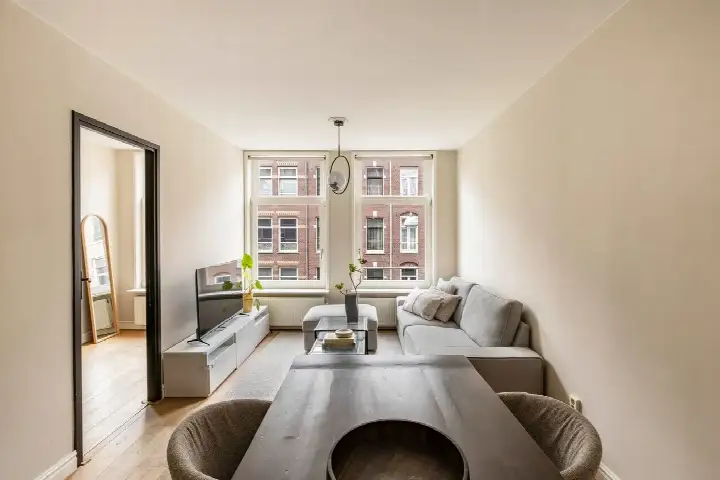
The supply consists mainly of apartments in pre-war buildings, often former floor-through apartments or subdivided townhouses with high ceilings and brick facades. The average sold area is 61 m², indicating relatively compact homes. Large single-family homes are rare. If you want to buy an apartment in Duivelseiland, pre-war floor plans and characteristic details are typical of the supply.
Is there a lot of green space and are there amenities near Duivelseiland?
The Vondelpark borders directly on the neighbourhood and is for many residents the main reason to want to live here. For daily groceries, there are supermarkets on the Overtoom and the Kinkerstraat within walking distance. Schools, sports facilities and cultural amenities such as the Concertgebouw are within cycling distance. The neighbourhood has few shopping streets of its own, but benefits greatly from the amenities in the surrounding neighbourhoods.