Homes for sale in Geuzenbuurt, Amsterdam
Discover the current supply of homes for sale in Geuzenbuurt: view prices, property features, and what residents say about living in this Amsterdam neighbourhood.


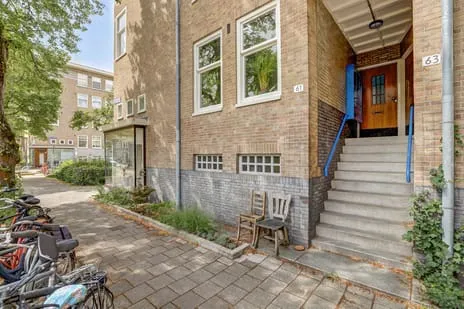
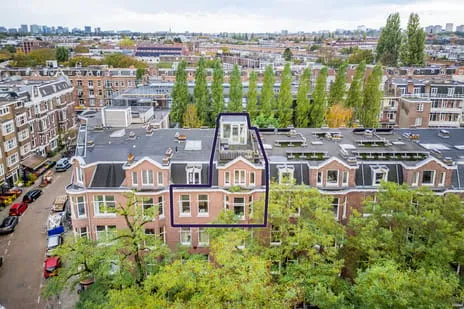
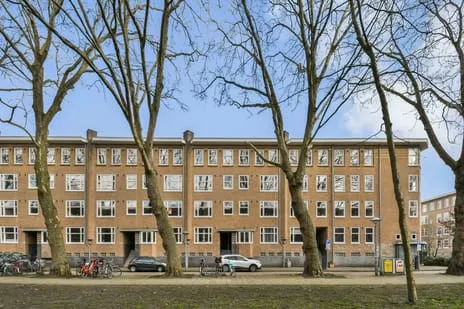

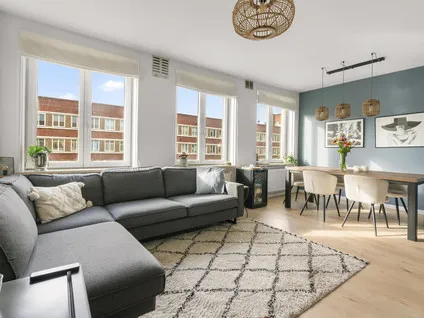

Purchase prices in the Geuzenbuurt: above the Amsterdam average, but with variation
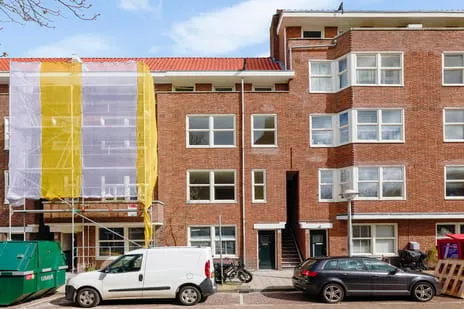
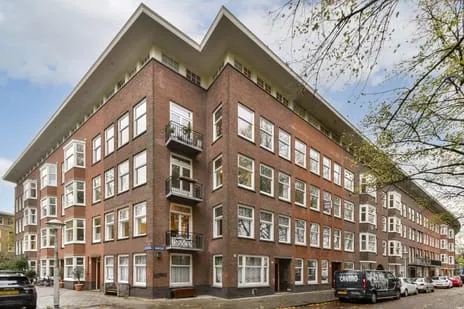
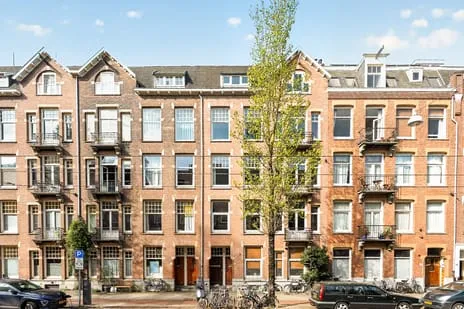
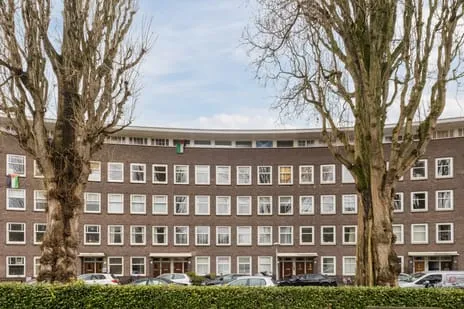
The Geuzenbuurt is predominantly a rental district: only 31% of the housing stock is owner-occupied, compared to 69% rental. This makes the supply of owner-occupied homes in the Geuzenbuurt relatively scarce, which drives up prices. The average WOZ value is €530,000, slightly above the Amsterdam average of €517,000. Looking at actual transactions over the past year, the average purchase price is €578,899, with a range from €275,000 to €1,325,000. A total of 129 homes were sold, with an average living area of 63 m². This immediately says something about the type of housing on offer: it is almost exclusively apartments, often in pre-war building blocks. Detached houses or spacious single-family homes are rare. For current asking prices and the current supply, you can consult the overview at the top of this page.
Living in the Geuzenbuurt: urban, accessible and with its own rhythm
The Geuzenbuurt is located in Amsterdam-West, wedged between the Haarlemmerweg and the Jan van Galenstraat. It is a district with a pronounced urban character: busy shopping streets, many cyclists, restaurants within walking distance, and a population that is 64% highly educated. The largest group of residents is between 25 and 45 years old, giving the district a young, active appearance. Students and expats are well represented, contributing to the dynamism but also to a certain anonymity.
Residents give the district an average score of 7.7 out of 10 on the district page of the Geuzenbuurt. Accessibility scores a perfect 10, and safety, greenery and beauty also score well. Resident Eline Lotte describes the atmosphere as pleasant and the people as friendly, but honestly adds that a sense of community is lacking: she has little contact with her neighbours. The community score of 6.0 confirms that picture. The Geuzenbuurt is not a district where you quickly get to know your neighbours at a neighbourhood barbecue, but it is a place where you can live comfortably and anonymously if that suits you. Amenities score lower (5.5), although Eline mentions the restaurants and shops as a plus point. The Jan van Galenstraat and the area around the Haarlemmerweg offer supermarkets, bakeries, cafés and small specialist shops. For schools, the district scores a 10: there are several primary schools in and directly around the neighbourhood.
Accessibility is excellent. Tram and bus lines connect the Geuzenbuurt quickly to the city centre and Amsterdam Centraal. By bike, you are in the Jordaan or the Haarlemmerbuurt within ten minutes. Via the Haarlemmerweg you also have relatively quick access to the A10. Westerpark is within cycling distance and offers greenery in an otherwise densely built-up environment. The nearby neighbourhoods Trompbuurt and Geuzenhofbuurt have a similar character and are worth exploring if you also want to buy in this part of Amsterdam.
For whom is buying in the Geuzenbuurt a good choice?
The Geuzenbuurt mainly appeals to young professionals and dual-income couples who want to live in an urban setting without the canal belt prices. Buying an apartment in the Geuzenbuurt is realistic from around €275,000, but most transactions are much higher. Overbidding is common in this market. In addition to the purchase price, take into account additional costs such as transfer tax (2% for non-first-time buyers above the NHG threshold) and notary fees. Families looking for space would be better off looking at adjacent neighbourhoods. If you first want to rent or are unsure, this page also offers an overview of rental properties in the Geuzenbuurt.
Your next step: searching for owner-occupied homes in the Geuzenbuurt and surroundings
Buurtje.nl combines current housing supply with resident reviews and district statistics, so you choose not just a home but also a neighbourhood. Compare the Geuzenbuurt with similar districts such as the Haarlemmerbuurt, the Jordaan or Grachtengordel-West, or view the broader supply of owner-occupied homes in Amsterdam. More about living and permits in the city can be found on the website of the municipality of Amsterdam.
Frequently asked questions
What is the average cost of a home in Geuzenbuurt?
Over the past twelve months, the average purchase price in Geuzenbuurt was €578,899. The range runs from €275,000 to €1,325,000, depending on size, floor level, and state of maintenance. The average living area of sold homes was 63 m², indicating that these are almost exclusively apartments.
What are the additional costs when buying a home in Geuzenbuurt?
In addition to the purchase price, as a buyer you pay transfer tax (2% for homes above the starter exemption), notary costs for the deed of transfer and mortgage deed, and possibly estate agent fees. For homes in Geuzenbuurt, where prices often exceed the NHG limit, additional costs can quickly amount to several thousand euros. Also factor in any homeowners' association (VvE) contributions for apartments.
What type of homes can you buy in Geuzenbuurt?
The supply consists almost entirely of apartments in pre-war building blocks. Single-family homes or detached houses are hardly found in this densely built neighbourhood in Amsterdam-West. Buying an apartment in Geuzenbuurt therefore also means taking into account a VvE and shared facilities such as stairwells or a courtyard garden.
How is the accessibility of Geuzenbuurt for residents?
Accessibility is one of the neighbourhood's strongest points: residents rate it a 10 out of 10. Several tram and bus lines connect Geuzenbuurt with Amsterdam Central and other districts. By bike, you are in the city centre in about ten minutes. Via the Haarlemmerweg, there is also a good connection to the A10 ring road.
Is Geuzenbuurt suitable for families looking to buy a home?
Families looking for space will find that the supply in Geuzenbuurt is limited: the average home is 63 m² and almost always an apartment. For schools, the neighbourhood scores excellently, and there are several primary schools nearby. Those wanting more space can also look at the Pieter van der Doesbuurt or other adjacent neighbourhoods in Amsterdam-West.
It's nice there and friendly people. But a sense of togetherness is lacking and I don't have much contact with my neighbours either, which I regret. My primary school days in this neighbourhood were really perfect and the restaurants and shops are also very good. But there are many students and expats, which makes me feel a certain divide and not much community. I myself would like to move out, but that's certainly not possible in my neighbourhood because they are far too expensive.
Auto-translated to English by AINice and cosy, there is an ice cream shop and a playground called de ruige speeltijn but now it's for babies because everything is getting super small, which is a shame, but the rest is great. We get along well and some of my friends live very close by, which is also nice. But I do think there should be more playgrounds for older children, because babies are fine at home too, but older kids just end up on their phones or laptops, so more playgrounds for older children, that's the only thing.
Auto-translated to English by AI