





41 homes for sale in Timorpleinbuurt-Zuid, Amsterdam
Discover homes for sale in Timorpleinbuurt-Zuid and compare current listings, market prices, and neighbourhood data to determine if this Amsterdam neighbourhood suits you.
House prices and market figures for Timorpleinbuurt-Zuid, Amsterdam
House prices in Timorpleinbuurt-Zuid clearly position the neighbourhood as an affordable alternative within Amsterdam. Over the past twelve months, 51 homes were sold with an average purchase price of €454,510. The range runs from €295,000 to €700,000, indicating that both compact apartments and larger homes change hands. With an average living area of 51 m², the price per square metre comes to approximately €8,912. That is lower than the Amsterdam average, and also slightly lower than the WOZ value of €481,000 in this neighbourhood, which in turn is just above the district average of the Indische Buurt-West (€475,000). Compared to the municipal average of €517,000, the WOZ value here is noticeably lower, making the neighbourhood relatively accessible within Amsterdam. Only 28% of the housing stock is owner-occupied; the vast majority (71%) is rental, of which almost half is housing association property. This limits the supply of homes for sale, but at the same time keeps the neighbourhood mixed and socially diverse. See the current supply and average asking price at the top of this page for the most recent situation.
Living in Timorpleinbuurt-Zuid, Amsterdam
Timorpleinbuurt-Zuid is one of the denser, livelier corners of the Indische Buurt in Amsterdam-Oost. The neighbourhood was built in the early twentieth century, in the style characteristic of the Amsterdam School and the planned expansion of the city from that period: brick porch flats and closed building blocks with inner courtyards, interspersed with narrower streets and occasionally a wider avenue. Timorplein itself is the heart of the neighbourhood and functions as an informal village square, with terraces, a supermarket and small shops that cover daily errands well. Those who want more can walk to the Javastraat in a few minutes, the commercial backbone of the wider Indische Buurt, with a mix of Turkish bakeries, Surinamese toko's, coffee shops and neighbourhood supermarkets.
The population is young and mixed: the largest group is 25 to 45 years old and makes up more than 44% of the over 4,450 residents. Single-person households dominate (1,545 of the households), making the neighbourhood attractive for singles and couples without children. Families with children are less represented, but present; there are several primary schools within walking distance, including schools in the immediate vicinity of Timorplein. In terms of green space, the neighbourhood is not overly endowed, but Flevopark is within cycling distance and offers space for recreation along the water.
Accessibility is one of the strongest assets. Indische Buurt metro station (line 54) and various tram lines connect the neighbourhood quickly to the centre of Amsterdam, which is about ten to fifteen minutes away. By bike, the centre can be reached in a quarter of an hour. The A10 ring road is easily accessible via Mauritskade or Zeeburgerdijk for motorists, although parking in the neighbourhood is a known bottleneck: residents regularly mention this as a point of attention.
Residents appreciate the liveliness and central location, but are honest about the downside. "The neighbourhood has character and you can walk everywhere, but the hustle and bustle and parking can start to annoy you after a while," writes a resident on the neighbourhood main page of Timorpleinbuurt-Zuid. The social mix is experienced positively by many; the neighbourhood is not sanitised or one-sided, which keeps living there authentic. Those looking for peace and space will find their place less quickly than those who love urban liveliness within walking distance. For comparison: the neighbouring Timorpleinbuurt-Noord has a similar character but is slightly quieter, while the Ambonpleinbuurt feels a bit greener due to the layout around Ambonplein.
Who is a home for sale in Timorpleinbuurt-Zuid interesting for?
Buying in Timorpleinbuurt-Zuid is most attractive for young starters and dual-income couples who want to live urban without paying the absolute top prices of the canal belt or the Jordaan. With an average sale price of €454,510 and homes from €295,000, there is also something to be found for starters with a modest budget, although overbidding in Amsterdam-Oost is still common and you have to take into account a tight market due to the limited share of owner-occupied homes. Families who need a lot of space will find that the average area of 51 m² is limited. For them, it is worthwhile to also look at the broader supply of homes for sale in Indische Buurt-West. Those who doubt whether buying is the right time now can also consider the rental homes in Timorpleinbuurt-Zuid as an intermediate option.
What residents say about Timorpleinbuurt-Zuid
Residents generally give the neighbourhood a positive rating, with the location and atmosphere as the most appreciated aspects. Accessibility and facilities score high; parking and sometimes the nuisance on busy evenings are the downsides that come back most often. "I've lived here for three years now and wouldn't leave quickly. The Javastraat, the park, the metro: everything is close by. Only a private parking spot is a dream," says a resident. Read all reviews and partial scores on the overview page of Timorpleinbuurt-Zuid, where the total score per category is also kept.
Compare homes for sale in and around Timorpleinbuurt-Zuid
Buurtje.nl bundles the supply from more than 1,500 sources in one place, supplemented with resident reviews and neighbourhood data that you won't find in this combination anywhere else. This way you can not only filter homes by price or area, but also compare how neighbourhoods score on liveability, facilities and accessibility. Also view the supply in the Ambonpleinbuurt or the Timorpleinbuurt-Noord as direct alternatives, or broaden your search to all homes for sale in Amsterdam. For those who want to look further: the Haarlemmerbuurt and the Jordaan offer a different urban living environment. More information about permits, zoning plans and municipal policy can be found at amsterdam.nl.
What is the cost of a home in Timorpleinbuurt-Zuid?
Over the past twelve months, the average purchase price in Timorpleinbuurt-Zuid was €454,510, based on 51 sold homes. The range runs from €295,000 to €700,000. With an average living area of 51 m², the price per square metre comes to approximately €8,912. Overbidding is common in this market, so keep that in mind when making your offer.
What is the WOZ value in Timorpleinbuurt-Zuid?
The average WOZ value in Timorpleinbuurt-Zuid is €481,000. That is slightly above the district average of Indische Buurt-West (€475,000), but clearly below the Amsterdam average of €517,000. The neighbourhood is therefore relatively affordable within the municipality, although the Amsterdam price level still applies here.
What is it like to live in Timorpleinbuurt-Zuid?
Timorpleinbuurt-Zuid is an urban, mixed neighbourhood in Amsterdam-Oost with a young and diverse character. The atmosphere is lively, with Timorplein as an informal neighbourhood centre and Javastraat within walking distance for daily shopping and dining. Residents appreciate the central location and good accessibility, but mention parking and crowds as points of attention. The neighbourhood scores positively on amenities and accessibility.
Is Timorpleinbuurt-Zuid suitable for first-time buyers?
For first-time buyers, the neighbourhood is interesting because of the relatively lower entry price compared to other Amsterdam districts: homes start from €295,000. Over 44% of residents are between 25 and 45 years old, giving the neighbourhood a young profile. However, the supply of owner-occupied homes is limited (only 28% of the stock is for sale), so competition for popular homes is real. Dual-income couples and singles are the most suitable target group.
How is the accessibility of Timorpleinbuurt-Zuid?
Accessibility is good. Metro line 54 (Indische Buurt station) and several tram lines connect the neighbourhood quickly to the centre of Amsterdam, with a travel time of about ten to fifteen minutes. By bike, the centre can be reached in a quarter of an hour. For motorists, the A10 ring road is easily accessible via Mauritskade or Zeeburgerdijk, but parking in the neighbourhood itself is a known bottleneck for residents.
What types of homes are for sale in Timorpleinbuurt-Zuid?
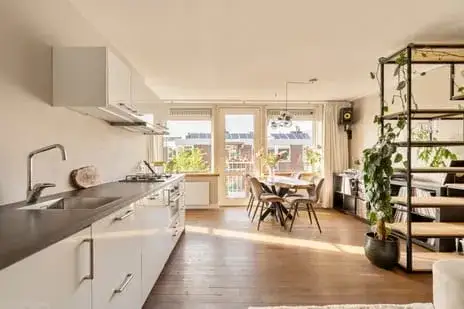
The supply mainly consists of apartments in porch flats from the early twentieth century, built in the Amsterdam School style. These are largely closed building blocks with relatively compact homes; the average sold living area over the past year was 51 m². Larger single-family homes or detached houses are rare in this neighbourhood. Buying an apartment in Timorpleinbuurt-Zuid often means choosing a characterful, historic property with limited floor space.
Is there a lot of green space and are there good schools in Timorpleinbuurt-Zuid?
The neighbourhood itself is compact and has limited public green space, but Flevopark is within cycling distance and offers space along the water. For daily outdoor activities, Timorplein and the surrounding streets are the most available. There are several primary schools in the immediate vicinity. For families who place great importance on green space and play areas right on their doorstep, the neighbouring Ambonpleinbuurt or another district in Amsterdam-Oost may be a better match.