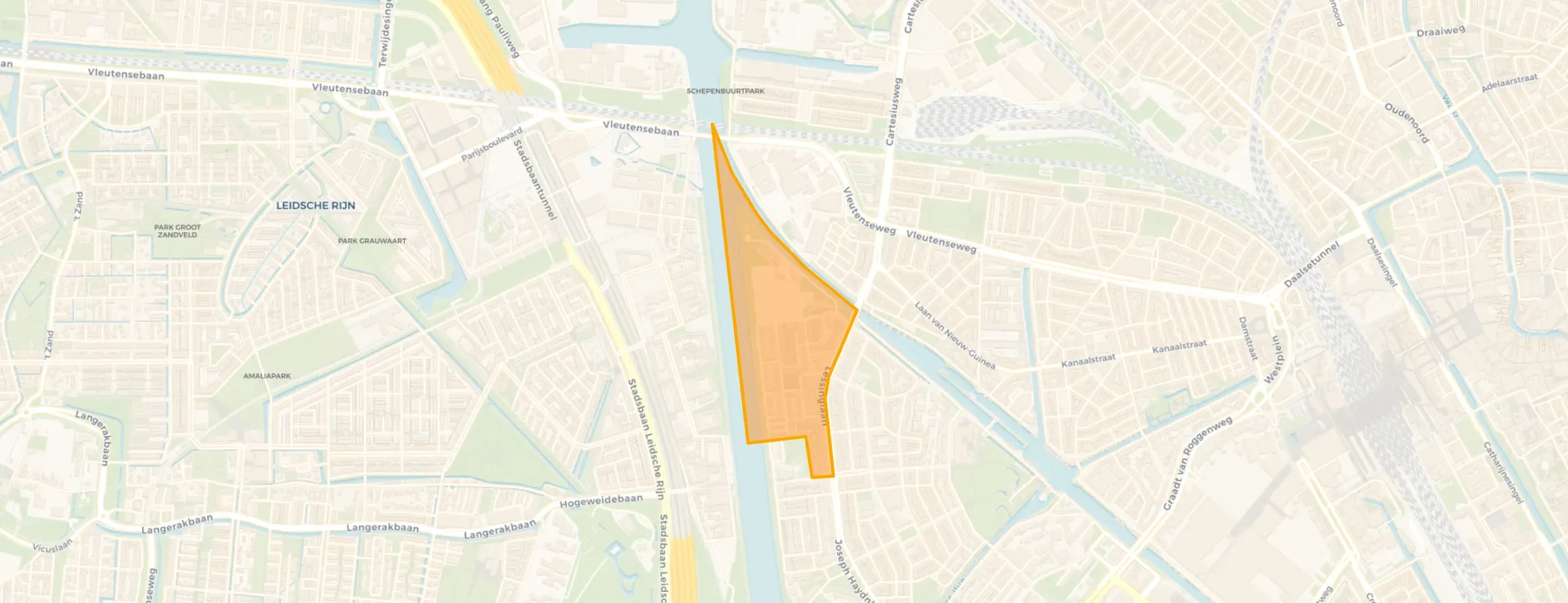
Neighbourhood in Utrecht
Halve Maan-Noord is located in the province of Utrecht, in the municipality of Utrecht, in the district West The neighbourhood has a total area of 25 hectares, of which 19 hectares are land and 6 hectares are water. The neighbourhood is coded as BU03440114. The postcode area is 3533AM-3533TN.
Three residents rate the neighbourhood as more than satisfactory with a score of 6.5. They describe it as 'Neighbourhood where everyone lives for themselves', 'Quiet neighbourhood' and 'average good'. Residents experience big differences in this neighbourhood: education, accessibility, safety receive high ratings, while community and cleanliness are mentioned as weak points.
Halve Maan-Noord has 1.840 residents. Of these, 48,1% are men and 51,9% are women. Most residents are 25 to 45 years (35,9%). The other age groups are 22,3% for '45 to 65 years', 18,8% for '0 to 15 years', 13,3% for '15 to 25 years' and 9,8% for '65 years or older'. Of the residents, 65,2% is unmarried, 23,6% is married, 9,2% is divorced and 1,9% is widowed. 765 residents originate from the Netherlands, 150 come from Europe and 920 come from countries outside Europe.
There are 930 households in Halve Maan-Noord. 52,7% of these are single-person households, 17,2% households without children and 30,1% households with children. The average household size is 2,0 persons. The national average is 2,1 persons.
In Halve Maan-Noord there are 1.500 income recipients. The average income per income recipient is €36.400, which is €5.800 (14%) lower than the national average of €42.200. Per resident, the average income is €28.700, which is €6.200 (18%) lower than the national average of €34.900. Most residents of Halve Maan-Noord are highly educated. 41,1% have a university or higher professional education (HBO/WO), 32,6% have an intermediate education (HAVO, VWO or MBO 2-4) and 26,2% have a lower education (VMBO or MBO 1).
Of the 1.840 residents, around 66% are in paid employment, which amounts to 1.214 people. This is 6% lower than the national average of 72%. The majority of workers are in salaried employment (83%), while 17% are self-employed. In Halve Maan-Noord, 24% of residents receive a benefit. The largest group is those receiving a social assistance benefit. 170 people receive this benefit.
In Halve Maan-Noord there are 887 homes with an average assessed value (WOZ) of €377.000. Of these, around 96% are occupied and 4% unoccupied. Most homes are rental properties. This amounts to 68% rental homes and 32% owner-occupied homes. Of the homes, 32% privately owned, 59% owned by housing associations and 9% owned by other landlords. The most common construction periods in Halve Maan-Noord are 1950-1970 (84%) and 2000-2010 (6%).
There are currently no homes for sale in Halve Maan-Noord. The most recently listed home is Lessinglaan 41-3 by Ludenhoff makelaars & taxateurs o.g. Utrecht op Funda. Over the past year, 6 homes were sold in Halve Maan-Noord. On average, a home was sold within 28 days.
There is 1 homes for rent in Halve Maan-Noord. The most recent home is Lessinglaan 89E, offered by Your-House. Over the past year, 8 homes were let in Halve Maan-Noord. On average, a listing was let within 15 days.
No recent rental data available for Halve Maan-Noord.
In Halve Maan-Noord there are 753 addresses with a registered energy label. The most common labels are A (27%), C (24%) and B (19%). On average, an address in Halve Maan-Noord uses 1.740 kWh of electricity per year. This is 32% below the national average of 2.550 kWh. With an annual consumption of 670 m³ per address, natural gas consumption is 16% below the national average of 800 m³.
It's a reasonably quiet neighbourhood. But there is absolutely no social contact.
Auto-translated to English by AII quite like it there
Auto-translated to English by AIThe neighbourhood is restless and there is often rubbish on the street. And by restless I mean that in November fireworks go off at night and people often hang around on the street until late. There is a snack bar and several shops in the area. However, there is a lot of hassle, for example with the sewerage that needs to be repaired. When residents report this, it sometimes takes months before anything is done about it, and even then it is not done properly. More police are also needed in the neighbourhood.
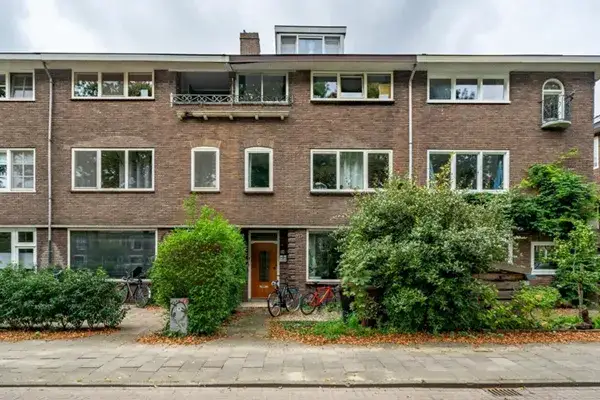
Auto-translated to English by AIThe housing stock is mainly post-war — 84% was built between 1945 and 1990. In addition, the most common type is flats (88%).
Over the past year a home for sale in Halve Maan-Noord was listed for an average of €435,652 (€5,891 per m²). That is 17% below the Dutch national average.
Residents give Halve Maan-Noord a 6.5 out of 10 based on 3 reviews. Education stands out with a 8.3; cleanliness lags behind with a 4.0.
Buurt Halve Maan-Noord has 1,840 residents. The largest age group is 25 to 45 years (36%). Notably, 53% of the households are single-person households.
A considerable share of the supply in Halve Maan-Noord is less efficient: 29% has an E, F or G label. The average natural gas consumption per household is 670 m³ per year.
From Halve Maan-Noord you can on average reach a supermarket at 0.7 km, a GP at 0.8 km, a railway station at 1.7 km, a primary school at 0.3 km (as the crow flies, source: CBS).
Right now you will find 9 homes for sale and 2 homes for rent in Halve Maan-Noord.