Betondorp, Amsterdam
 Neighbourhood
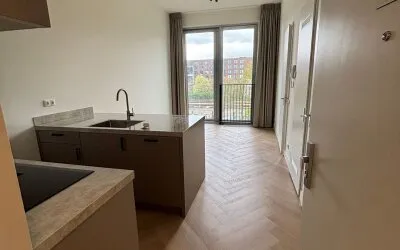
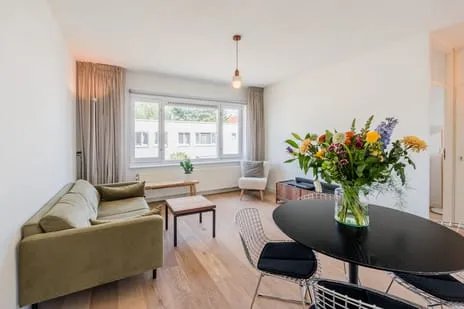
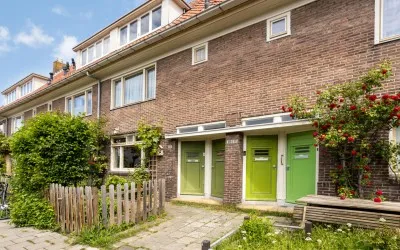
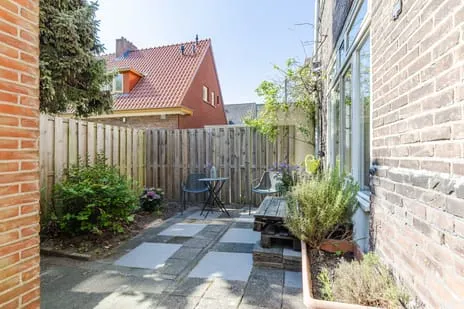
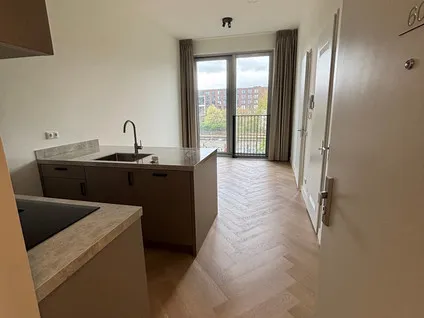
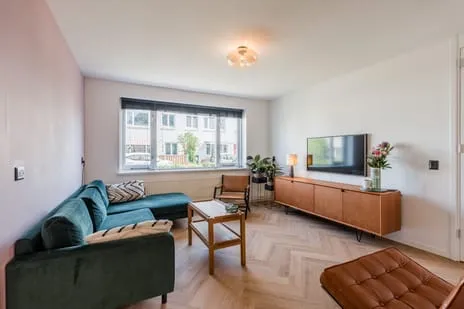
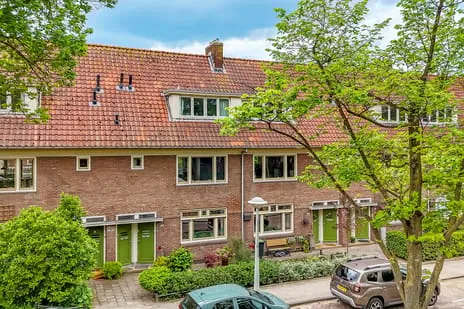
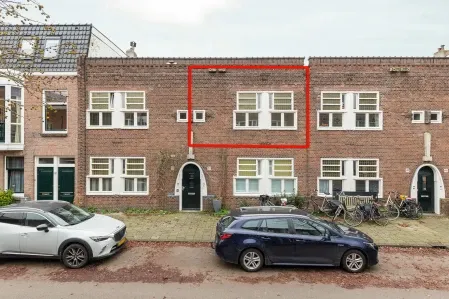
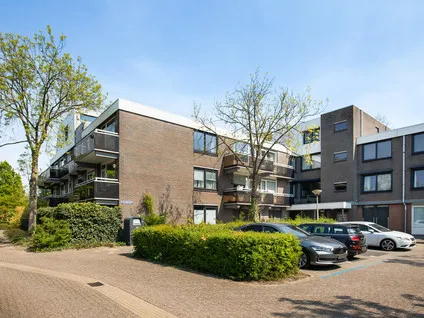
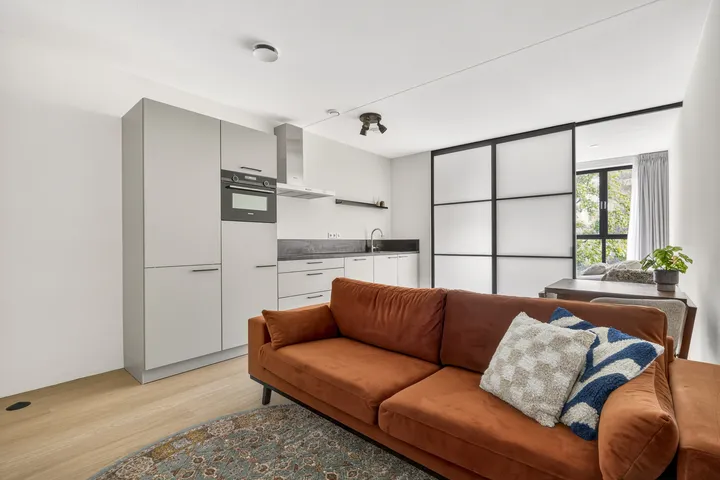
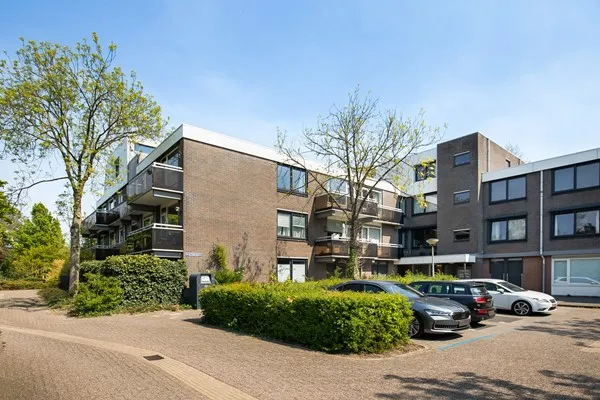
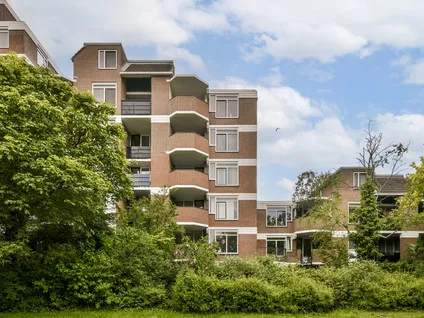
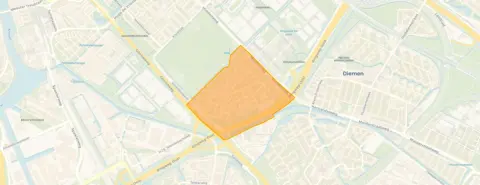
This studio on Oogststraat 79 sits in Betondorp, a neighbourhood that feels like a village within Amsterdam. Built in 1924, it's a compact 44 m² home with an energy label C. At €395,000, the asking price is 38% below the neighbourhood average of €640,938, which makes it keen compared to other studios in Amsterdam.
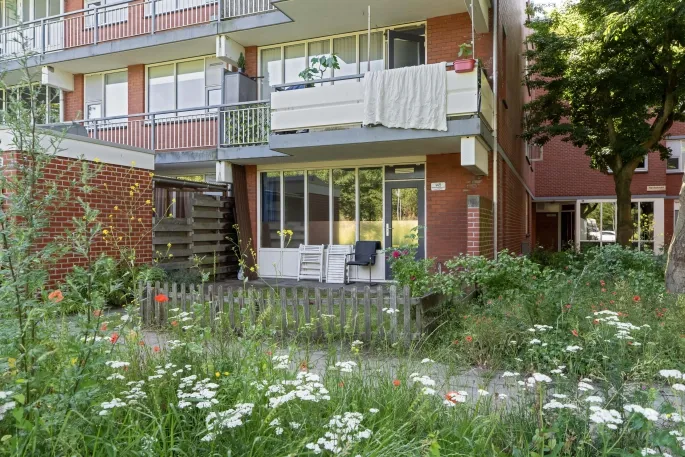
Betondorp is described by residents as a 'village in the city', green, low-rise, and with a strong sense of community. One resident says: 'People know each other and there is a village atmosphere.' Another notes: 'Betondorp is a nice green neighbourhood. With many low-rise buildings.' Based on seven reviews, the neighbourhood scores a 7.1 out of 10. It's a quiet area with mostly single-person households and a mix of ages, though families with children are fewer. For more on the area, see Betondorp.
For daily groceries, the nearest supermarket is a PLUS about a ten-minute walk away. There's also a bakery, De Lekkernij, just around the corner. Primary schools include A. Bekemaschool and Openbare Basisschool De Grote Beer, both a ten-minute walk from the home. The neighbourhood has a community centre, Brinkhuis, and a café-restaurant, De Avonden, on your doorstep. For more on the wider area, see the municipality of Amsterdam.
At the time of writing, the home is listed through several channels, including De Heren van Snoek Makelaardij B.V.
This summary was generated with AI and may contain errors. Always verify the details with the provider.
Details of this home
 Save up to € 400 on your energy billCompare now
 Insure your home and belongingsGet insured
The WOZ value is set annually by the municipality with 1 January as its reference date, and therefore lags the market by about a year. It is an estimated market value, not a sale price.
About Oogststraat 79, Amsterdam
The asking price of €395,000 is 38% below the average asking price in Betondorp (€640,938) and also below the median of €475,000. However, this studio is smaller than average (44 m² vs 82 m²). The price per square metre works out at about €8,977, which is above the neighbourhood average of €7,984 per m². So while the total price is low, you're paying a premium per square metre.
Energy label C is a mid-range label. It means the home is registered as reasonably efficient, but not top-tier. You can expect moderate energy costs, though the exact amount depends on usage. The label is an official registration from EP-Online and does not specify which aspects of the home are efficient or not.
The nearest train station is 2.1 km away, which is about a 25-minute walk or a short cycle. The neighbourhood has a high address density (2,606 per km²), indicating good urban connectivity.
Betondorp has a bakery (De Lekkernij) and a café-restaurant (De Avonden), but lacks a supermarket for daily groceries. The nearest supermarket is a PLUS at 733 m, about a ten-minute walk. Residents note the lack of shops as a drawback, but appreciate the green, village-like atmosphere.
The neighbourhood recorded 97 total crimes in the latest data, which is relatively low for an urban area. Residents in reviews mention that everyone is warned if something unusual happens, and there is a sense of community watch. However, one review advises caution about opening the door to strangers.
Betondorp has a mix of residents, but only 395 households with children out of 1,720 total households. The primary schools are a ten-minute walk away, and there is childcare nearby. However, some residents note that families often move out when children grow older, seeking larger homes.
The building was constructed in 1924. The listing does not provide details on the condition of the roof, plumbing, or electrical systems. The energy label C suggests the home is reasonably efficient, but a full inspection would be needed to assess the actual state of the property.
How residents experience their neighbourhood
Quite good. When the children went to school, there was more involvement. People want to live larger when children come. So before you get to know a new resident, they've already left. Then you really miss the togetherness. But you can always turn to someone if you need someone. By placing fences between the gardens and more lighting, they try to offer more safety. Everyone is warned if something unusual happens. For all advice if you are alone, never just open the door. Call someone who can be with you quickly is always the advice.
Auto-translated to English by AIBetondorp is a village in the city of Amsterdam. At least, that's how it feels. Social but also built in a very urban way on the edge of the city. Lots of greenery and children can play outside. Various childcare options for young children. There are only few shops for daily groceries. There is a good bakery, de lekkernij, where you can also eat a sandwich or take one away. Only on Thursday mornings there is a cheese seller. There is also a café-restaurant, De Avonden, where various meals can be eaten. Or just have a drink. There is a community centre, Brinkhuis, where various activities are organised. For both young and old. But the lack of shops is a drawback. You really have to go out to do your shopping. Betondorp celebrated its 100th anniversary last year. In the past there were many shops, which have all disappeared one by one. About 40 shops, I think. There were also many more children attending school at Zuivelplein. This school now has other functions, including studios, childcare and an Islamic organisation. It would be nice if some small specialist shops would come to Betondorp. Like a mini-supermarket and a greengrocer. A place to quietly enjoy a cup of coffee with something sweet. But otherwise I am a happy resident of Betondorp. I love this green little village. I hope to live here for a long time with great pleasure.
Auto-translated to English by AIBetondorp is a nice green neighbourhood. With many low-rise buildings. People know each other and there is a village atmosphere. There is a lot of greenery in the neighbourhood and there are plans for more. Unfortunately no supermarket or grocer. But there is a very good bakery (de Lekkernij) that opens early. There is also a cosy (eatery) Cafe de Avonden. With heated terrace. In it, the Brinkhuis, a community centre where many things are organised for the neighbourhood. For example, you can enjoy a hot meal twice a week for a small fee. There are also many creative clubs in the Brinkhuis. It is nice to live in Betondorp, only a pity that there is no shop for daily groceries. There is childcare for the very young. For older children there is no school in Betondorp. Finally, for me the ideal neighbourhood, spacious, green and low-rise.
Auto-translated to English by AIUnfortunately no supermarket, but a lovely bakery where you can also sit with a terrace in summer. Community centre on the Brink, the Brinkhuis, former library, which is very active and connecting for young and old. There is a living room project by the Salvation Army where you can have coffee and a chat. It's not yet open all day. There is a lot of greenery in the neighbourhood and also many gardens, which emphasises the village character. There is a good public transport connection. Various buses and tram 19. There are several childcare options. Betondorp has a neighbourhood concierge for cultural matters, located at Onderlangs 36. They organise exhibitions and other cultural events within Betondorp that are well worth seeing. Onderlangs is the green strip around Betondorp with playground equipment and (picnic) benches. It's just a shame that rubbish is often put out too early. Disfiguring for such a beautiful place. Last year this neighbourhood celebrated its hundredth anniversary, and it was celebrated extensively. The architecture is still striking. Definitely worth a look. I have been a resident of this village for two years and every day I count myself lucky to have a house here. In a village 15 minutes from the centre of Amsterdam. Ideal.
Auto-translated to English by AIPleasant, I live nicely. Unfortunately only one bakery in the village. While it used to be bustling with shops. Now you have to leave the village for your groceries. That's not for everyone. Many elderly population. More shops, more frequent or better rubbish collection service. Enforcement. Many children playing until late in the evening.
Auto-translated to English by AII've lived here for 50 years. Of a nice neighbourhood where people knew each other, nothing is what it seems. Activities are organised quite a bit. But I miss the togetherness and care in the neighbourhood. Only a baker left, nothing more. No school anymore. Village is becoming polluted. Not only the people, but also institutions do little to nothing about it. Renovated 40 years ago, little done since. Such a shame. This is how a neighbourhood deteriorates. We have lighting everywhere, also gates for which only residents have keys. Plenty of tips via the community centre.
Auto-translated to English by AII've been living here for a year and am very satisfied. A village character but in the big city. The best of both worlds. Lots of leisure clubs. People here are involved in their surroundings and there is a lot of greenery. Both public and (front) gardens. Residents are satisfied and not without reason. There could be a few more shops, but the ones that are here are top-notch. A very nice bakery, good hairdresser and pedicure. And the Avonden (eet) café has delicious dishes and is super cosy. The Brinkhuis, the community centre, is very active with many daily activities for young and old. I hear around me that people don't move away quickly and that is very understandable.
Auto-translated to English by AIFigures on residents, liveability and the housing market
| Sale price | €510,278 | €475,000 |
|---|---|---|
| Sale per m² | €7,637 | – |
How residents experience their district
Quite good. When the children went to school, there was more involvement. People want to live larger when children come. So before you get to know a new resident, they've already left. Then you really miss the togetherness. But you can always turn to someone if you need someone. By placing fences between the gardens and more lighting, they try to offer more safety. Everyone is warned if something unusual happens. For all advice if you are alone, never just open the door. Call someone who can be with you quickly is always the advice.
Auto-translated to English by AIBetondorp is a village in the city of Amsterdam. At least, that's how it feels. Social but also built in a very urban way on the edge of the city. Lots of greenery and children can play outside. Various childcare options for young children. There are only few shops for daily groceries. There is a good bakery, de lekkernij, where you can also eat a sandwich or take one away. Only on Thursday mornings there is a cheese seller. There is also a café-restaurant, De Avonden, where various meals can be eaten. Or just have a drink. There is a community centre, Brinkhuis, where various activities are organised. For both young and old. But the lack of shops is a drawback. You really have to go out to do your shopping. Betondorp celebrated its 100th anniversary last year. In the past there were many shops, which have all disappeared one by one. About 40 shops, I think. There were also many more children attending school at Zuivelplein. This school now has other functions, including studios, childcare and an Islamic organisation. It would be nice if some small specialist shops would come to Betondorp. Like a mini-supermarket and a greengrocer. A place to quietly enjoy a cup of coffee with something sweet. But otherwise I am a happy resident of Betondorp. I love this green little village. I hope to live here for a long time with great pleasure.
Auto-translated to English by AIBetondorp is a nice green neighbourhood. With many low-rise buildings. People know each other and there is a village atmosphere. There is a lot of greenery in the neighbourhood and there are plans for more. Unfortunately no supermarket or grocer. But there is a very good bakery (de Lekkernij) that opens early. There is also a cosy (eatery) Cafe de Avonden. With heated terrace. In it, the Brinkhuis, a community centre where many things are organised for the neighbourhood. For example, you can enjoy a hot meal twice a week for a small fee. There are also many creative clubs in the Brinkhuis. It is nice to live in Betondorp, only a pity that there is no shop for daily groceries. There is childcare for the very young. For older children there is no school in Betondorp. Finally, for me the ideal neighbourhood, spacious, green and low-rise.
Auto-translated to English by AIUnfortunately no supermarket, but a lovely bakery where you can also sit with a terrace in summer. Community centre on the Brink, the Brinkhuis, former library, which is very active and connecting for young and old. There is a living room project by the Salvation Army where you can have coffee and a chat. It's not yet open all day. There is a lot of greenery in the neighbourhood and also many gardens, which emphasises the village character. There is a good public transport connection. Various buses and tram 19. There are several childcare options. Betondorp has a neighbourhood concierge for cultural matters, located at Onderlangs 36. They organise exhibitions and other cultural events within Betondorp that are well worth seeing. Onderlangs is the green strip around Betondorp with playground equipment and (picnic) benches. It's just a shame that rubbish is often put out too early. Disfiguring for such a beautiful place. Last year this neighbourhood celebrated its hundredth anniversary, and it was celebrated extensively. The architecture is still striking. Definitely worth a look. I have been a resident of this village for two years and every day I count myself lucky to have a house here. In a village 15 minutes from the centre of Amsterdam. Ideal.
Auto-translated to English by AIPleasant, I live nicely. Unfortunately only one bakery in the village. While it used to be bustling with shops. Now you have to leave the village for your groceries. That's not for everyone. Many elderly population. More shops, more frequent or better rubbish collection service. Enforcement. Many children playing until late in the evening.
Auto-translated to English by AII've lived here for 50 years. Of a nice neighbourhood where people knew each other, nothing is what it seems. Activities are organised quite a bit. But I miss the togetherness and care in the neighbourhood. Only a baker left, nothing more. No school anymore. Village is becoming polluted. Not only the people, but also institutions do little to nothing about it. Renovated 40 years ago, little done since. Such a shame. This is how a neighbourhood deteriorates. We have lighting everywhere, also gates for which only residents have keys. Plenty of tips via the community centre.
Auto-translated to English by AII've been living here for a year and am very satisfied. A village character but in the big city. The best of both worlds. Lots of leisure clubs. People here are involved in their surroundings and there is a lot of greenery. Both public and (front) gardens. Residents are satisfied and not without reason. There could be a few more shops, but the ones that are here are top-notch. A very nice bakery, good hairdresser and pedicure. And the Avonden (eet) café has delicious dishes and is super cosy. The Brinkhuis, the community centre, is very active with many daily activities for young and old. I hear around me that people don't move away quickly and that is very understandable.
Auto-translated to English by AIFigures on residents, liveability and the housing market
| Sale price | €510,278 | €475,000 |
|---|---|---|
| Sale per m² | €7,637 | – |
How residents experience their municipality
IJburg is a new district still under development and it's getting better with all the amenities and a beach nearby. And you're also quickly out of the city and into the greenery.
Auto-translated to English by AIQuiet, peaceful, relaxed, green, social and a nice mix of people
Auto-translated to English by AII lived here for about 12 years. The neighbourhood has clear advantages: good connections by tram, bus and ferry/boat, plenty of supermarkets, gyms and practical amenities nearby. For me, however, there was one major drawback: structural low-frequency noise, demonstrably coming from commercial shipping on the Amsterdam-Rijnkanaal. If you are sensitive to that, it can be very burdensome. In my case, it was clearly noticeable indoors, especially at night. Neighbours said they slept with earplugs and extra insulation offered limited to no solution. The municipality took measurements at the time and acknowledged that the noise was significant, but indicated they could do little or nothing about it because the source fell outside their direct authority. My honest advice: visit this neighbourhood not only during the day, but also in the evening and at night, and pay specific attention to low-frequency humming or vibrations. For people sensitive to noise, I would personally strongly advise against this location.
Auto-translated to English by AINo public transport!
Auto-translated to English by AINice, quiet and reasonably cosy neighbourhood. Good accessibility, the Amsterdam Forest nearby. Lots of different facilities within walking distance. Nice to live here with a family and pets! Quite a few schools within cycling distance. Hygiene in the neighbourhood is above the average level in Amsterdam. VUmc very close by.
Auto-translated to English by AIAt the end of the Silodam lies the striking MVRDV building. Surrounded by water on all sides. Every apartment has a view of the IJ and/or the Oude Houthaven. The views are therefore phenomenal and every day is different due to the weather. The sunrises and sunsets are unbeatable. Because the building is at the end of the Silodam, there is no through traffic and every person is either a resident or a visitor. This makes it, by Amsterdam standards, an exceptionally safe living environment. There is little turnover. The residents of this building form a close-knit community. A nice mix of families with and without children and single people who help each other where needed. And that too is a special quality in an increasingly transient Amsterdam. Within walking distance are the Haarlemmerdijk and the markets where you can find all the hustle and bustle if you feel like it. On the Silodam there is peace and quiet, a delight for body and mind. The wind, the seagulls, the waves on the IJ, the boats, occasionally a cruise ship, and every 5 years Sail! A little paradise in Amsterdam? Absolutely!
Auto-translated to English by AIBecause we are on the outskirts, there is no through traffic. In the middle of the street a large playground with a table tennis table and a small football pitch. And playground equipment. Behind our house only meadows.
Auto-translated to English by AIIt's a nice quiet neighbourhood on the edge of the city but still close to many good amenities that a city has to offer. The neighbourhood is still becoming more beautiful.
Auto-translated to English by AIFigures on residents, liveability and the housing market
| Sale price | €823,116 | €695,718 |
|---|---|---|
| Sale per m² | €8,921 | – |
| Rent price | €2,801 p/m | €2,602 p/m |
| Rent per m² | €34 p/m | – |
Oogststraat 79, Amsterdam






Noise, foundation and climate around this address
View more homes nearby