Rental homes in Trompbuurt, Amsterdam
Check the current rental property listings in the Trompbuurt and discover if this neighbourhood in Amsterdam-West suits you based on neighbourhood data and resident reviews.

Rental prices and market figures for Trompbuurt, Amsterdam
The Trompbuurt is quintessentially a tenant neighbourhood: 68% of the more than 1,600 homes are rental properties. Notably, only 17% are owned by housing corporations, while as much as 51% is in the hands of other landlords (private investors, institutional parties). This makes the supply of social housing limited and the free sector dominant. In the free sector, the average rent over the past twelve months was €2,573 per month, with a range of €781 to €4,500. The average WOZ value of €581,000 is significantly above the average for the Geuzenbuurt district (€530,000) and also above the Amsterdam average of €517,000. This translates into higher rents than you encounter in many other parts of the city. Rents in the Trompbuurt are therefore also higher than the average for rental properties in Amsterdam as a whole. At the top of this page, view the current supply and daily prices for available rental properties in the Trompbuurt.
Living in Trompbuurt, Amsterdam
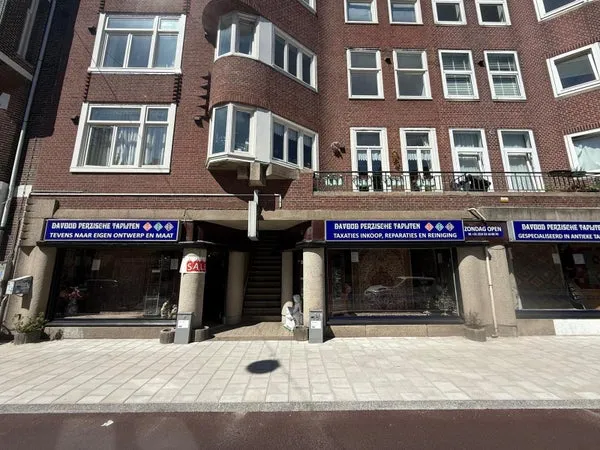
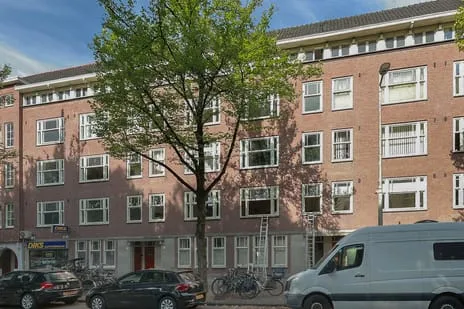
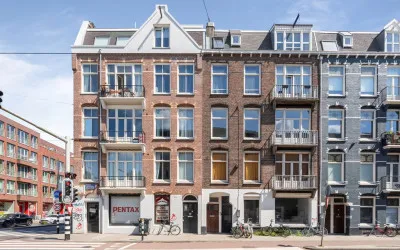
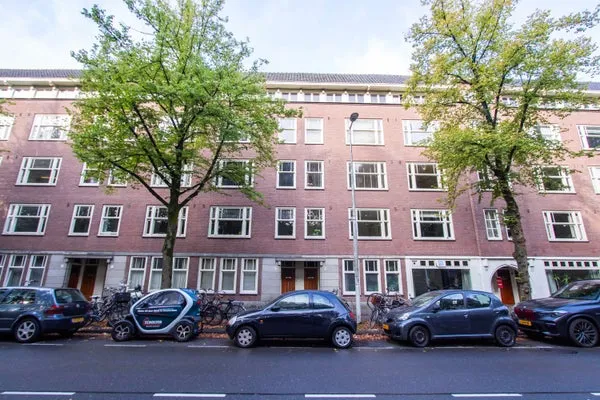
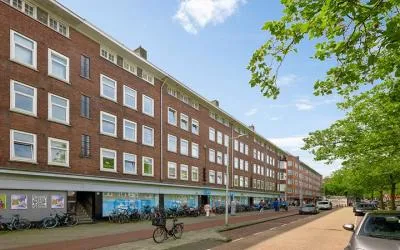
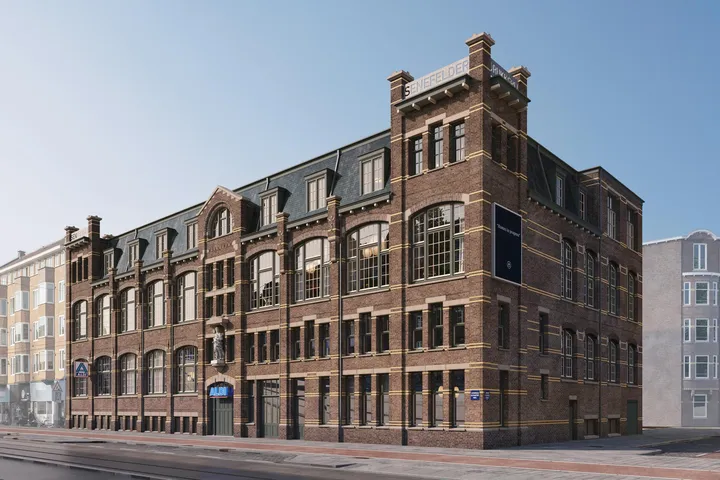
The Trompbuurt is located in Amsterdam-West, wedged between the Admiraal de Ruijterweg and the Postjesweg. It is a compact, urban neighbourhood with predominantly pre-war buildings from the 1920s and 1930s: many porch-access flats of three to four storeys with characteristic Amsterdam School details on the facades. Here and there are newer apartment complexes, but the streetscape is defined by the distinctive brick architecture. The streets are narrow, the pavements too, and the atmosphere is that of a typical Amsterdam working-class neighbourhood that has changed considerably in recent years due to an influx of young professionals and expats.
Facilities in the Trompbuurt
You can do your daily shopping within walking distance: there is an Albert Heijn on the Admiraal de Ruijterweg and various small specialist shops and convenience stores. The Kinkerstraat, a few minutes away by bike, offers a wider range of shops including De Hallen, a former tram depot with a food hall, cinema and shops. For primary education, residents score remarkably high: a 10 out of 10. The Trompbuurt has several primary schools in the immediate vicinity, including De Troubadour on the Trompstraat. In terms of dining and drinking, there is plenty to be found along the Admiraal de Ruijterweg and the Bilderdijkstraat, from coffee shops to restaurants. Sports facilities are available via the nearby Erasmuspark and Sportpark Ookmeer is accessible by bike. A really large park is lacking in the neighbourhood itself, but both Erasmuspark and Rembrandtpark are a few minutes away by bike.
Accessibility from the Trompbuurt
Accessibility scores a perfect 10 among residents, and rightly so. Tram lines 7 and 13 stop nearby and take you to Amsterdam Central Station in a quarter of an hour. Bus routes via the Admiraal de Ruijterweg connect the neighbourhood with Sloterdijk and beyond. Amsterdam Lelylaan station is within cycling distance (about 8 minutes) and provides connections to trains towards Schiphol, Haarlem and The Hague. By bike, you can be in the Jordaan or at Leidseplein in ten minutes. By car, the A10-West via exit S105 can be reached within five minutes. Parking is a point of attention: the neighbourhood falls under paid parking and a permit is required. The waiting list for a parking permit can be long, something to keep in mind if you come with a car.
Atmosphere and residents
With 3,155 inhabitants, the Trompbuurt is relatively small. The largest group is 25 to 45 years old (almost half of all residents), and 61% are highly educated. This fits the image of a neighbourhood popular among young workers, starters and expats. The percentage of single-person households is high (940 of the households) and only 20% are married. Resident Eline Lotte sums it up aptly: "It is nice and friendly people. But a sense of community is lacking and I don't have much contact with my neighbours either." She also mentions the presence of many students and expats. The neighbourhood scores an average of 7.7 among residents, with strong points on accessibility and education, but lower scores on sense of community (6.0) and facilities (5.5). Read all reviews and neighbourhood data of the Trompbuurt for a complete picture. Compared to the neighbouring Pieter van der Doesbuurt, the Trompbuurt is slightly more compact and urban, while the Geuzenhofbuurt offers a bit more peace due to its proximity to Erasmuspark.
Is the Trompbuurt right for you as a tenant?
Are you a young professional or expat who wants to be in the city centre quickly and is not necessarily looking for a close-knit neighbourhood feel? Then a rental home in the Trompbuurt is a good fit. The neighbourhood is also suitable for couples without children who rent an apartment in a lively environment. For families with children, primary education is a strong point, but the relatively high rents and limited supply of larger homes can be a barrier. Be quick: homes go off the market quickly. Prepare your documents (employer's statement, payslips, ID) and respond on the same day. For social housing, you can register via WoningNet, but expect years-long waiting lists. Also consider owner-occupied homes in the Trompbuurt as an alternative, although the average WOZ value is €581,000.
What residents say about renting in Trompbuurt
The Trompbuurt receives a 7.7 out of 10 based on resident experiences. The highest scores go to accessibility (10.0) and education (10.0), the lowest to facilities (5.5) and sense of community (6.0). Eline Lotte writes: "My primary school time in this neighbourhood scores really perfect and the dining and shopping options are also very good." She does warn that the neighbourhood feel is limited. Curious about more experiences? Check the neighbourhood page of the Trompbuurt for all reviews.
Comparing rental properties in and around the Trompbuurt
Want to know if renting a property in the Trompbuurt is the right choice? Then compare with surrounding neighbourhoods. The Geuzenbuurt as a whole has a slightly lower WOZ value, which can translate into slightly lower rents. Also popular among tenants are the Haarlemmerbuurt and the Jordaan, although prices there are generally even higher. Buurtje.nl helps you compare based on neighbourhood scores, resident reviews and data from more than 1,500 sources, so you not only find a home but also the neighbourhood that truly suits you. Also view the supply for rent in the broader region of Amsterdam or inform yourself via the website of the municipality of Amsterdam about housing policy and permits.
Frequently asked questions
What is the average rent in the Trompbuurt, Amsterdam?
The average rent in the free sector in the Trompbuurt is €2,573 per month, with a range from €781 to €4,500. This concerns free-sector rental properties, excluding social housing. Social housing through housing associations is significantly cheaper, but supply is limited (17% housing association ownership).
Are there social housing properties in the Trompbuurt?
Yes, approximately 17% of homes in the Trompbuurt are owned by housing associations. This is relatively low compared to many other Amsterdam neighbourhoods. You can register via WoningNet, but waiting times in Amsterdam-West can exceed ten years. The vast majority of rental supply (51%) is in the hands of private and institutional landlords.
What is it like to live in the Trompbuurt?
Residents give the Trompbuurt a 7.7 out of 10. The neighbourhood scores excellently on accessibility and education (both a 10), but lower on sense of community (6.0). It is a compact, urban neighbourhood with many young professionals and expats. The atmosphere is pleasant but neighbourly contact is limited, according to residents.
Is the Trompbuurt suitable for young professionals and starters?
Yes, the Trompbuurt is popular among starters and young workers. Nearly half of residents are between 25 and 45 years old, 61% are highly educated, and the average income is €47,500. Excellent public transport connections and proximity to the city centre make the neighbourhood attractive. Keep in mind that rents in the free sector are high.
How is the accessibility of the Trompbuurt?
Accessibility scores a 10 out of 10 from residents. Tram lines 7 and 13 take you to Amsterdam Central Station in fifteen minutes. Station Lelylaan is within cycling distance and offers trains to Schiphol and Haarlem. The A10-West is reachable by car within five minutes. By bike, you can be in the Jordaan in ten minutes.
What amenities are there in the Trompbuurt?
On the Admiraal de Ruijterweg you will find an Albert Heijn and various specialist shops. The Kinkerstraat and De Hallen are within cycling distance for a wider range. There are several primary schools in the neighbourhood, including De Troubadour. Erasmuspark and Rembrandtpark are a few minutes' bike ride away for greenery and sports.
How quickly are rental properties rented out in the Trompbuurt?
The rental market in the Trompbuurt is tight. In the past twelve months, 94 properties were rented out in the free sector. Rental homes go quickly, so it is important to respond immediately and have your documents (employer's statement, payslips, ID) ready in advance. Check the current rental time at the top of the page.
It's nice there and friendly people. But a sense of togetherness is lacking and I don't have much contact with my neighbours either, which I regret. My primary school days in this neighbourhood were really perfect and the restaurants and shops are also very good. But there are many students and expats, which makes me feel a certain divide and not much community. I myself would like to move out, but that's certainly not possible in my neighbourhood because they are far too expensive.
Auto-translated to English by AINice and cosy, there is an ice cream shop and a playground called de ruige speeltijn but now it's for babies because everything is getting super small, which is a shame, but the rest is great. We get along well and some of my friends live very close by, which is also nice. But I do think there should be more playgrounds for older children, because babies are fine at home too, but older kids just end up on their phones or laptops, so more playgrounds for older children, that's the only thing.
Auto-translated to English by AI