Rental homes in TU-Campus, Delft
Discover current rental properties in TU-Campus, Delft. View the available listings on this page and read what the neighbourhood has to offer.



Rental prices and market figures TU-Campus, Delft
TU-Campus is one of the few neighbourhoods in the Netherlands where the housing market consists entirely of rental properties: 100% rent, 0% owner-occupied. This is no coincidence, as the neighbourhood is literally built around Delft University of Technology and houses almost exclusively students and researchers. Approximately 67% of the housing stock is owned by housing corporations; the remaining 33% falls under other landlords, including private and institutional parties offering homes in the free sector.
The average WOZ value of a home on TU-Campus is around €139,000. This is remarkably low compared to the district Wippolder as a whole, where the average WOZ value is €279,000, and the Delft average of €322,000. This low WOZ value reflects the nature of the housing supply: small, functional student rooms and studios, not spacious family homes. For current rental prices and the average asking price per month, we refer to the overview at the top of this page, which is updated daily. By comparison, in adjacent neighbourhoods such as de Professorenbuurt or the broader Wippolder area, rental prices are generally higher, partly due to larger homes and a more mixed housing supply.
Living in TU-Campus, Delft
TU-Campus is not an ordinary residential neighbourhood. It is a campus area that has organically grown around the buildings of TU Delft, with its own rhythm, its own atmosphere, and a resident population hardly found anywhere else in Delft. Of the approximately 2,750 residents, more than half are between 15 and 25 years old. Seniors, families with children, and middle-aged people are virtually absent: the 45-65 age group numbers only 30 people, and the 65-plus group barely 10. That says everything about the atmosphere: young, international, academic, and constantly in motion.
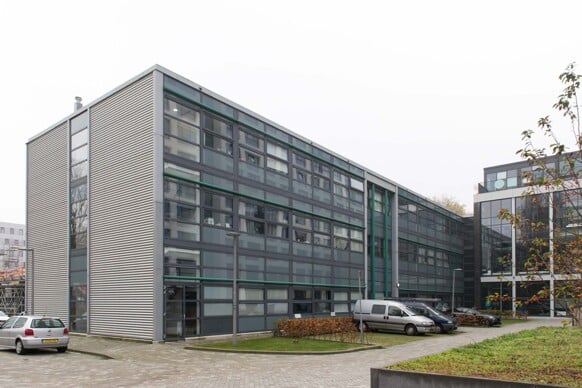
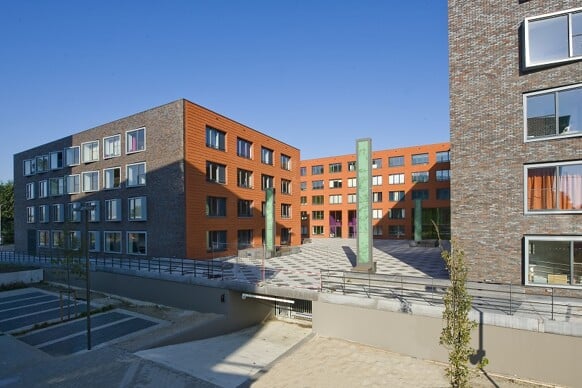
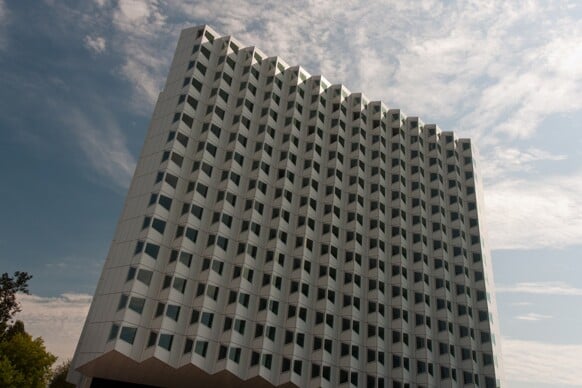
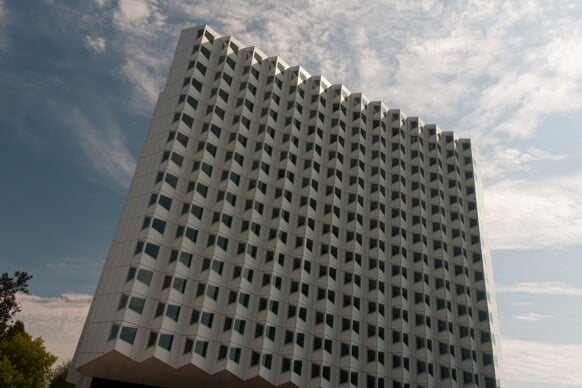
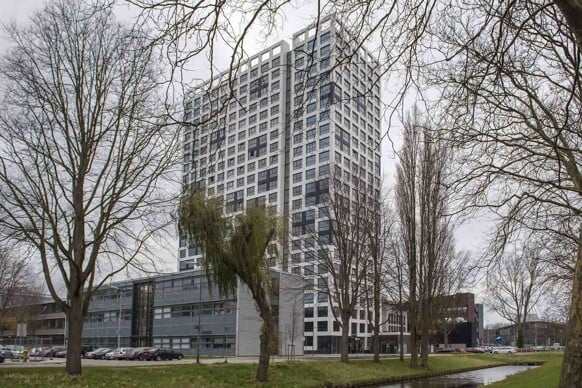
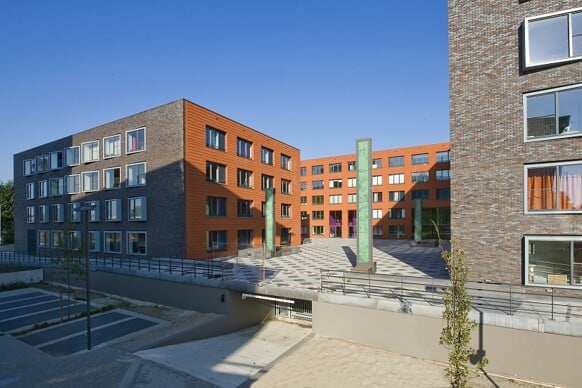
The buildings largely consist of gallery flats and larger residential blocks from the 1960s and 1970s, supplemented by newer student complexes. Streets like Mekelweg and the area around Leeghwaterstraat give a good impression of the campus character: wide avenues, few shops, many cyclists, and a constant stream of students between lecture halls and residential buildings. Living in TU-Campus means living right in the university, not next to it.
Facilities in the neighbourhood
Daily facilities are limited but functional. On and around the campus, there are various university canteens and small catering establishments, particularly in the TU buildings themselves, such as the X-building and Pulse. For a supermarket, you need to cycle a bit: the nearest Albert Heijn and Jumbo are in the adjacent districts towards the centre or Wippolder. There are hardly any primary schools in the immediate vicinity, which is logical given the demographics. The campus is well-equipped for sports: the University Sports Centre (USC Delft) on Mekelweg offers a wide range of sports, from fitness to squash and swimming. The Botanical Gardens of TU Delft form a green oasis in the middle of the campus area. For more extensive shopping and dining options, Delft city centre is within cycling distance.
Accessibility
TU-Campus is easily accessible by bicycle from Delft city centre, about a 10 to 15-minute ride. This is by far the most common mode of transport in this neighbourhood: the median income of €15,200 per year and the student population ensure that the bicycle reigns supreme. For public transport, bus lines connect the campus with Delft station and the city centre; line 40 and various night buses serve the area. Delft station is about 15 minutes by bike or 10 minutes by bus, from where intercity trains run to The Hague (10 min) and Rotterdam (15 min). By car, the neighbourhood connects to the A13 towards Rotterdam and The Hague, accessible via Kruithuisweg. Parking is a point of attention: on the campus itself, parking space is limited and partly subject to permits, which can be a disadvantage for motorists.
Residents appreciate the peace on campus outside lecture hours and the direct proximity to university facilities, but some miss liveliness in the evenings. One resident writes: "It's very nice to live here if you're studying, but outside the TU there's little to do on the campus itself. You cycle quickly to the centre." Read more experiences on the TU-Campus neighbourhood page, where residents rate the neighbourhood on categories such as atmosphere, safety, and facilities.
If you are looking for a quieter, more residential environment with a similar location, you could also consider TU-Noord or the Zeeheldenbuurt, neighbourhoods in the same district that have a slightly more mixed character with more family homes and their own facilities.
Is renting in TU-Campus right for you?
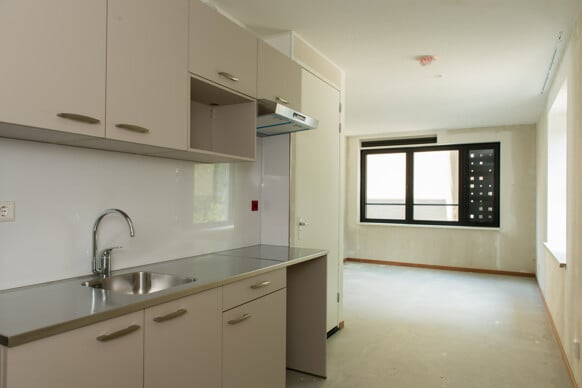
TU-Campus is almost exclusively the domain of students and young researchers affiliated with TU Delft. With a labour participation rate of 47% and an average income of €15,200 per year, this is a neighbourhood with a specific profile. If you are considering renting an apartment in TU-Campus, it is good to know that the supply is small and functional, with studios and rooms as the most common housing types. Free-sector rental properties are relatively scarce here; the majority of homes are under corporation management. For social housing, registration with a housing corporation such as Woonbron or Vestia is necessary, and waiting lists can be long. Respond quickly if you see a home for rent: rental times on campus are short due to high demand from the student population. Prepare your documents, think of proof of enrolment at the TU, identification, and possibly a guarantee. As an alternative to renting, you can also view the supply of homes for sale in TU-Campus, although given the 100% rental market here, this is minimal to non-existent.
What residents say about TU-Campus
Residents of TU-Campus generally give the neighbourhood a positive rating when it comes to safety and the quiet, green environment of the campus. The proximity to university facilities and the sports centre scores well. Residents are less enthusiastic about the limited shopping options and the sometimes one-sided atmosphere outside study hours. One resident describes it as: "Ideal if you study at the TU, but it sometimes feels more like a business park than a real residential neighbourhood." View all ratings and the full neighbourhood data on the TU-Campus neighbourhood page. The resident reviews provide an honest picture of what living in TU-Campus means in practice, including scores per category.
Compare rental properties in and around TU-Campus
Looking for available rental properties in TU-Campus but also want to consider alternatives? The adjacent neighbourhood Wippolder-Noord offers a quieter, more residential character with a wider housing supply and higher WOZ values. Also Wippolder-Zuid is worth comparing if you are looking for more space and a more family-friendly environment. For a complete overview of the rental landscape in the city, you can visit rental properties in Delft or the municipal page of Delft for background information on living, permits, and local policy. More information about living and rental policy in the municipality can also be found on the official website of the municipality of Delft. Buurtje.nl combines current housing supply with resident reviews and district data, so you not only find a rental home but also know for sure whether the neighbourhood suits you.
Frequently asked questions
What is the average rent in TU-Campus, Delft?
Rents in TU-Campus in the free sector are generally lower than the Delft average, which is related to the small housing types such as studios and rooms that dominate here. The average WOZ value is €139,000, well below the municipal average of €322,000. Current rents and the average asking price per month can be found at the top of this page. Social housing, which accounts for approximately 67% of the stock, is significantly cheaper than the free sector.
Are there social housing units in TU-Campus?
Yes, about 67% of the housing stock in TU-Campus is owned by housing associations and therefore largely falls under social housing. For a social housing unit in TU-Campus, you can register with associations such as Woonbron or Vestia, which are active in the Delft region. Be aware of waiting lists; demand from the student population is high and supply is limited. Registering as early as possible is the best advice.
What is it like to live in TU-Campus?
Living in TU-Campus is a specific experience: the neighbourhood is completely intertwined with Delft University of Technology and has a young, international character. The atmosphere is quiet and green, but outside lecture hours it can be quiet. Residents appreciate the safety and proximity to university facilities, but sometimes miss liveliness and daily amenities within walking distance. The average income of €15,200 per year reflects the student population.
Is TU-Campus suitable for students and young researchers?
TU-Campus is almost exclusively designed for students and young academics. More than 53% of residents are between 15 and 25 years old, and the vast majority of households are single-person. The neighbourhood offers a direct connection to TU Delft, a sports centre and a safe environment. For families with children or seniors, the neighbourhood is less suitable: primary schools and senior facilities are hardly present.
How accessible is TU-Campus?
TU-Campus is easily accessible by bicycle from Delft city centre, about 10 to 15 minutes away. Bus lines connect the campus to Delft station, from where intercity trains run to The Hague (10 min) and Rotterdam (15 min). By car, the A13 is accessible via the Kruithuisweg. Parking on campus is limited and partly permit-based, which can be a disadvantage for motorists.
What facilities are there in TU-Campus?
The campus has university canteens, small catering establishments and the University Sports Centre (USC Delft) on the Mekelweg with a wide range of sports. The TU Delft Botanical Gardens offer green recreation. For supermarkets, shops and more extensive catering, you need to cycle to neighbouring districts or the city centre. Primary schools and healthcare facilities are hardly present in the immediate vicinity.
How quickly are rental properties let in TU-Campus?
Rental properties and rooms on TU-Campus are generally let quickly, partly due to the constant demand from students and international researchers starting at TU Delft. It is wise to respond quickly when you see a property to rent and to have your documents, such as proof of TU enrolment, identity card and possibly a guarantee, ready. The current average letting time in days can be found at the top of this page.