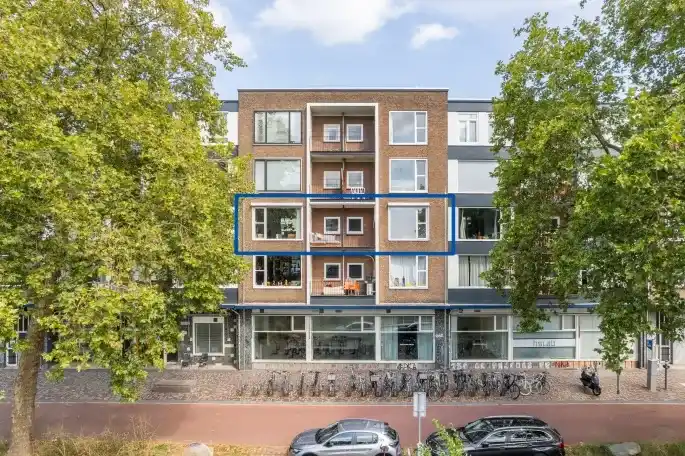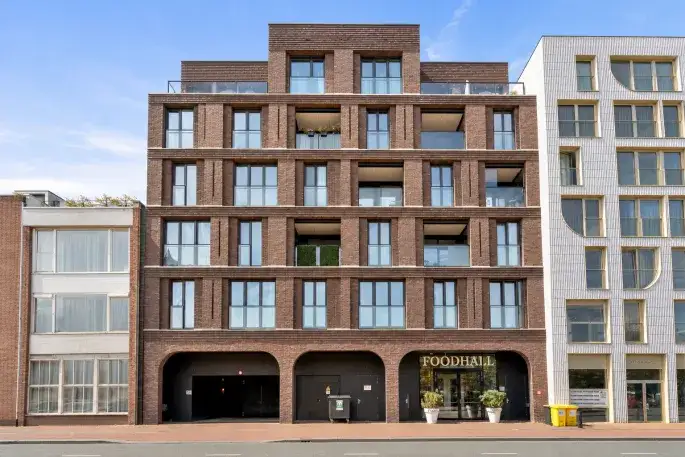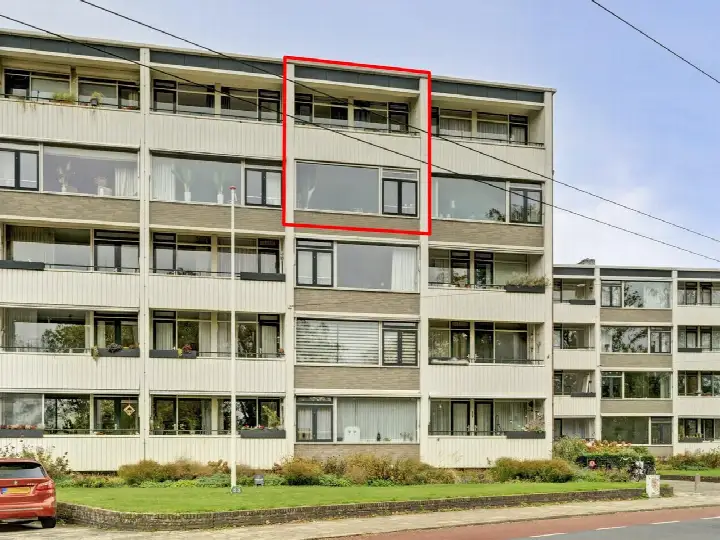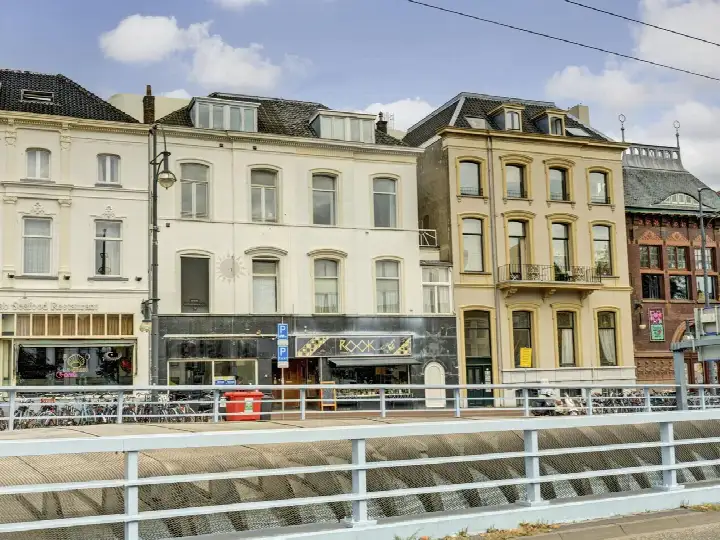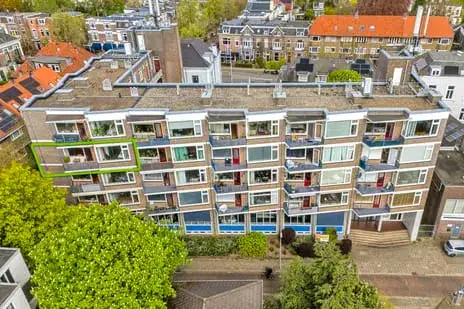





A classic city apartment on Oude Kraan
This apartment on Oude Kraan sits right in the heart of Arnhem, with the buzz of the city centre just outside your door. The 90 m² home from 1956 had an energy label C, so heating costs were moderate. At €375,000, the asking price was 25% below the neighbourhood average of €502,417, making it a keen entry into the market for apartments in Arnhem. This home has not been online since 21 September 2026.
The Utrechtsestraat neighbourhood
The Utrechtsestraat neighbourhood is a compact, urban area with a very high address density of 2,857 per km². Most residents live alone (810 single-person households) and the average household size is just 1.3. The one review available gives it an 8.5, with the resident saying: "I've only just moved in, but it's close to the station, the supermarket, a large park, and a 1-minute walk to my university." The area is lively and central, with many young adults between 25 and 45.
Life on the street
For daily groceries, the AH to go is on your doorstep, a SPAR is just around the corner, and an Albert Heijn is a five-minute walk. Primary schools include Montessorischool De Binnenstad and Jan Ligthartschool, both about a ten-minute walk away. Secondary education is close too, with Montessori College Arnhem a couple of streets away. The train station is a five-minute walk, and a large park is just around the corner for a weekend stroll. The municipality of Arnhem keeps the city centre well-maintained and vibrant.
When this home was still on the market,
At present, the home was listed through several channels, including Alpina Makelaardij Zevenaar and Alpina Makelaardij.
This summary was generated with AI and may contain errors. Always verify the details with the provider.
Features
Details of this home
Transfer
Price
Energy
 Save up to € 400 on your energy billCompare now
Areas and volume
 Insure your home and belongingsGet insured
Layout
Construction
Outdoor space
Frequently asked questions
About Oude Kraan 30-1, Arnhem
Was €375,000 a fair price for this apartment?
The asking price of €375,000 was 25% below the average asking price in the Utrechtsestraat neighbourhood, which stood at €502,417. The median asking price in the area was €415,000, so this apartment was priced on the low side. Given the central location and 90 m² floor area, it represented good value compared to other homes at the time for sale.
What is the energy label and what does it mean?
The apartment has an energy label C. This means it has reasonable insulation and heating efficiency, but it is not as efficient as modern homes with labels A or B. In the neighbourhood, 60% of homes have label C, and 40% have A+.
How far is the train station?
The train station is 0.5 km away, which is about a five-minute walk. This makes commuting by train very convenient, especially for trips to Utrecht, Amsterdam, or other cities.
What is the neighbourhood like?
The Utrechtsestraat neighbourhood is a very urban area with a high density of addresses. It is popular among young adults and singles, with many one-person households. The area scores an 8.5 out of 10 from resident reviews, who praise its proximity to the station, supermarkets, a large park, and the university. It is a lively, central part of Arnhem.
Are there supermarkets nearby?
Yes, there are several supermarkets within walking distance. An AH to go is just 213 metres away, a SPAR is 310 metres, and an Albert Heijn is 473 metres. For larger shops, a Jumbo and Lidl are about 700-800 metres away. Daily shopping is very convenient.
What schools are in the area?
Primary schools include Montessorischool De Binnenstad (1 km) and Jan Ligthartschool (1.1 km). For secondary education, Montessori College Arnhem is 0.8 km away. There is also a special secondary school, De Opmaat, at 0.5 km. All are within a ten- to fifteen-minute walk.
How many homes were for sale in the neighbourhood?
At the time, there were 12 apartments for sale in the Utrechtsestraat neighbourhood. The average asking price was €502,417, and the median was €415,000. Homes here sell relatively quickly, with an average time on market of 81 days for sold properties.
What is the year of construction and building type?
The apartment was built in 1956, so it is a classic post-war building. In the neighbourhood, 78.6% of homes were built before 1945, and 21.4% between 1945 and 1970. This home falls into the latter category, meaning it has a solid construction typical of that era.