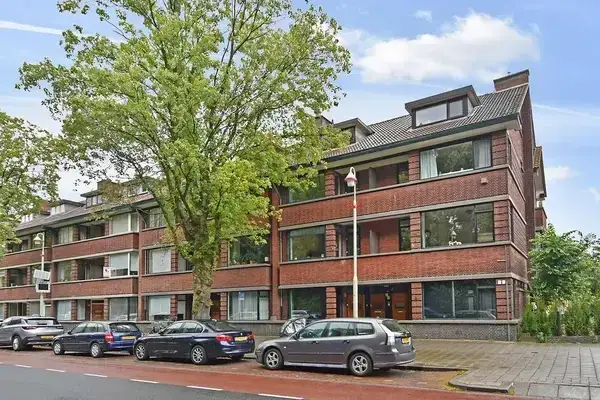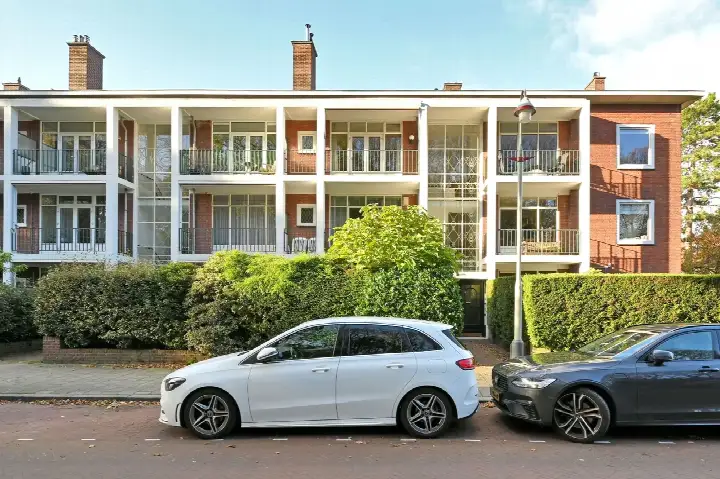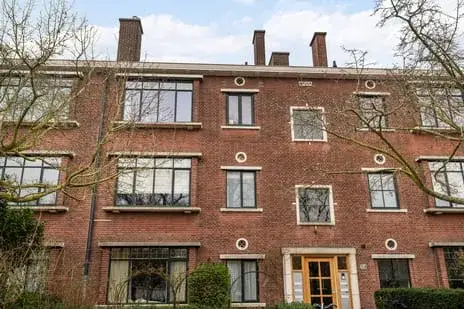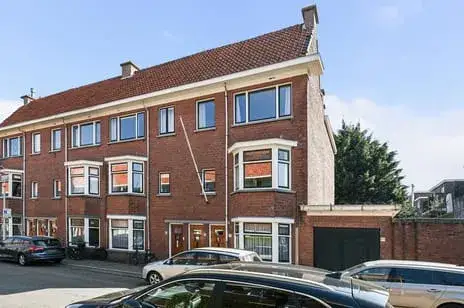





A pre-war apartment in Duinzigt
Tucked away on a quiet road in Duinzigt, this apartment from 1938 sits in a residential area with public transport and a shopping centre nearby. The neighbourhood, part of the Benoordenhout district, is home to many older residents, with over half of the population aged 65 or above. With an asking price of €725,000, the price is keen compared to the neighbourhood average asking price of €791,250. For context, [apartments in Den Haag] currently average around €5,136 per square metre.
Inside the home
The agent describes this as a spacious apartment with five rooms, including four bedrooms and two bathrooms, spread over two floors. The living area is listed at 145 square metres according to the agent, while the BAG registration records 160 square metres. The home has a volume of 582 cubic metres and is heated with a central heating boiler, an open fireplace and a wood stove. The energy label is D, which means you can expect moderate energy costs.
Life in Duinzigt
Residents of the wider district give their living environment a solid 8.46 out of 10, based on three reviews. One resident says: "It's a very pleasant neighbourhood with friendly people and almost always clean and hygienic. It's a really nice place to live, also with children, because there is a playground nearby and also many schools." Another adds: "It's a very nice neighbourhood with friendly people. It's often clean (not always, unfortunately). It's cosy and a great neighbourhood for children." A third notes: "Quite good except that there are many elderly people living there." The neighbourhood itself has around 2,620 inhabitants, and the average household size is 1.7 people. For more on [the Duinzigt neighbourhood], the local housing market shows that most homes for sale here were built before 1945.
Amenities and transport
Daily errands are easy from this address. An Albert Heijn supermarket is on your doorstep, just 39 metres away, and a SPAR is a ten-minute walk. The nearest pharmacy, Duinrand Apotheek Den Haag, is a couple of streets away, while HMC Bronovo hospital is just around the corner. The closest GP practice is in Wassenaar, about 1.9 kilometres away. For public transport, bus line 20 stops at Stalpertstraat on your doorstep, and Den Haag Centraal station is roughly 2.6 kilometres away. The municipality of [the municipality of Den Haag] offers a wide range of amenities within easy reach.
WOZ and address data
No WOZ value is available for this property in the records. According to public risk data at address level, the road traffic noise load is 49 dB Lden, which is above the noise standard, while railway noise is 17 dB Lden, below the standard. The foundation risk indication is medium, as the building dates from before 1970 and the soil type is sand. These are area-level indications, not an inspection of this specific home. For climate risks, pluvial flooding at heavy rain is medium, flood risk is low both now and in 2050, and heat stress is medium both now and in 2050.
Source
At the time of writing the home is offered via multiple channels, including Metropole Makelaardij and Metropole Makelaardij on Pararius.
This summary was generated with AI and may contain errors. Always verify the details with the provider.
Features
Details of this home
Transfer
Price
Energy
 Save up to € 400 on your energy billCompare now
Areas and volume
Layout
Construction
Outdoor space
Frequently asked questions
About Van Neckstraat 135, 'S-Gravenhage
What is the asking price for this apartment?
The asking price is €725,000. Compared to the neighbourhood average asking price of €791,250, this is a keen price, about 8 percent below the average. Per square metre, the price is €5,000 based on the agent's listed living area of 145 square metres, which is about 3 percent below the neighbourhood average of €5,136 per square metre.
How many rooms does this apartment have?
According to the agent, the apartment has five rooms in total, including four bedrooms and two bathrooms, spread over two floors. The living area is listed at 145 square metres by the agent, while the BAG registration records 160 square metres. The home also has a volume of 582 cubic metres.
What is the energy label and what does it mean?
The energy label is D. This is a mid-range label, so you can expect moderate energy costs for heating and hot water. The home is heated with a central heating boiler, an open fireplace and a wood stove. In the wider neighbourhood, most homes for sale have a better energy label, with 60 percent labelled A and 40 percent labelled C.
What is the foundation risk for this property?
The foundation risk indication for this address is medium, according to public risk data. This is because the building dates from before 1970, specifically 1938, and the soil type is sand. The KCAF attention area notes that 100 percent of properties in this postcode area were built before 1970. This is an area-level indication, not an inspection of this specific home.
How close is the nearest supermarket?
An Albert Heijn supermarket is just 39 metres away, literally on your doorstep. A SPAR is about 1.2 kilometres away, and another Albert Heijn is roughly 1.6 kilometres away. With 64 supermarkets within 5 kilometres, you have plenty of options for daily groceries.
What public transport options are available nearby?
Bus line 20 stops at Stalpertstraat, just 98 metres away, with additional stops at Theo Mann Bouwmeesterlaan and Else Mauhslaan within 170 metres. Den Haag Centraal train station is about 2.6 kilometres away, so you can reach the city centre by train in a short ride.
What do residents say about living in this area?
Residents of the wider district give their living environment an average score of 8.46 out of 10, based on three reviews. They describe it as a pleasant neighbourhood with friendly people, often clean and good for children, with a playground and many schools nearby. One resident notes that many elderly people live there, which some may see as a drawback.
What is the neighbourhood like in terms of demographics?
The neighbourhood has around 2,620 inhabitants, with a notable share of older residents: 51 percent are aged 65 or above. The average household size is 1.7 people, and 56 percent of households are single-person households. Households with children make up 15 percent of the total.