


You will not see it in the photos, and estate agents rarely bring it up: how much traffic passes a house. Yet noise is one of the things people most often regret after a move. We looked at more than 84,000 homes currently for sale in our listings and checked how much road traffic can be heard at each address. We also checked whether that shows up in the asking price.
The short answer to that last question: hardly at all. A house on a busy road asks almost the same price per square metre as a quiet one in the same district.
A few caveats first. The noise figures come from the calculated noise maps of RIVM, the Dutch public health institute (Atlas Leefomgeving): a modelled yearly average per address, with 2022 as the reference year for road traffic. It is not a measurement at your front wall. A bedroom at the back can be much quieter than the facade on the map. And the prices are asking prices of homes on the market now, not sale prices.
What does a decibel figure actually mean?
The maps use Lden: the average sound level over a full day and night, where noise in the evening and at night counts more heavily because it is more disturbing. Some reference points:
- Below 50 dB: a quiet street. You hear the odd car, but traffic is not a background hum.
- Around 55 dB: an ordinary city street with through traffic. You notice it with the windows open in summer.
- 60 dB and above: a busy road or a home close to a ring road. With the windows open, the traffic is in the room.
- 65 dB and above: a main route with buses and lorries, or a facade facing a motorway.
Dutch law offers a yardstick too. When a municipality allows new homes, the Environmental Quality Decree (Besluit kwaliteit leefomgeving) sets a standard value of 53 dB for municipal roads. Anything above that needs justification, up to a limit of 70 dB. For provincial roads and national motorways the figures are 50 and 60 dB, for railways 55 and 65 dB. These rules apply to new construction. They give you no rights as the buyer of an existing house, but they are a useful benchmark.
How common is it?
Of all private homes for sale in our listings, 41% are below 50 dB of road noise. Almost a third (31%) are at 55 dB or more, 13% at 60 dB or more and just over 4% above 65 dB.
Apartments and houses differ a lot. Nearly 23% of apartments are on a road at 60 dB or more, against 8% of houses. The other way round, half of the houses are on a quiet street below 50 dB, but only a quarter of the apartments. That makes sense: flats are more often in city centres and along the main roads.
By city: Rotterdam the loudest, Almere the quietest
The table shows the twelve municipalities with the most homes for sale, and the share of homes in each road noise band.
| Municipality | Homes | Quiet (under 50 dB) | 60 dB or more | 65 dB or more |
|---|---|---|---|---|
| Amsterdam | 5,412 | 28% | 21% | 7% |
| Rotterdam | 3,532 | 16% | 33% | 17% |
| The Hague | 3,120 | 32% | 24% | 12% |
| Utrecht | 1,467 | 30% | 21% | 7% |
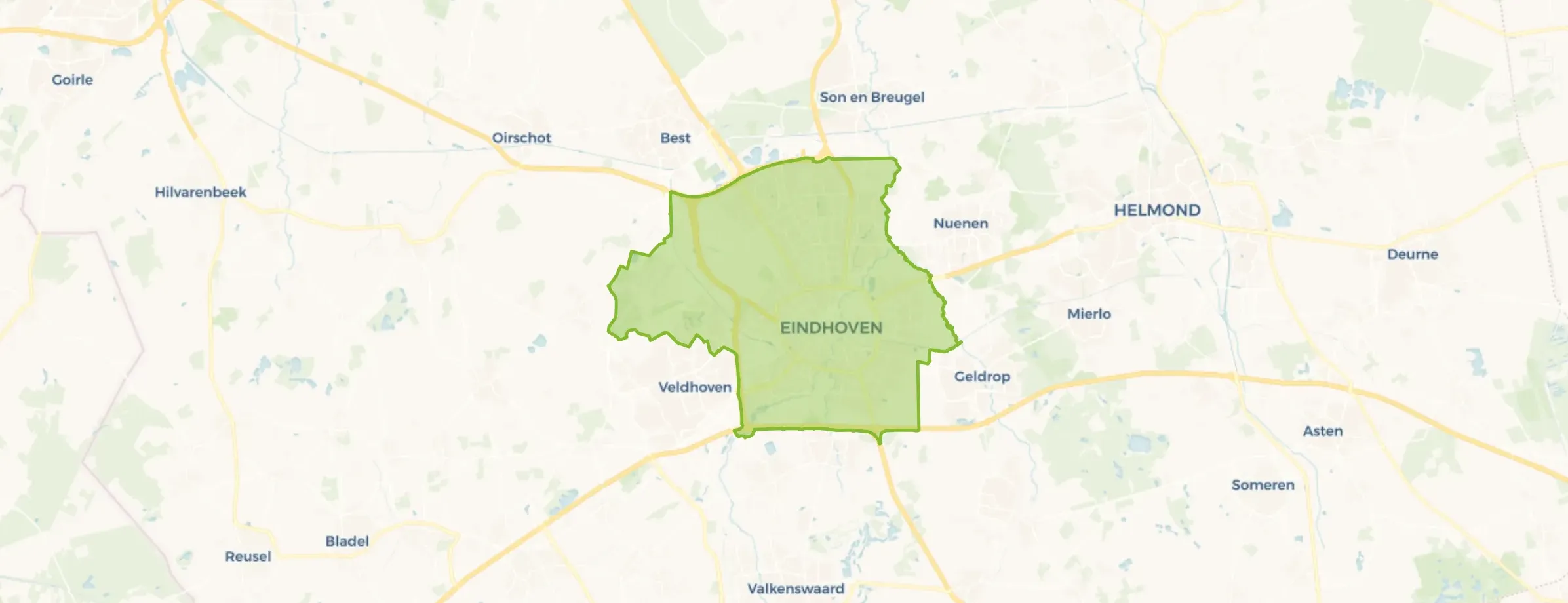
| Eindhoven | 1,248 | 27% | 21% | 8% |
| Groningen | 1,240 | 33% | 17% | 5% |
| Almere | 1,146 | 52% | 3% | 0% |
| Haarlem | 998 | 30% | 18% | 6% |
| Tilburg | 989 | 26% | 22% | 6% |
| Breda | 798 | 38% | 14% | 4% |
| Leiden | 484 | 18% | 30% | 9% |
| Rijswijk | 468 | 16% | 32% | 12% |
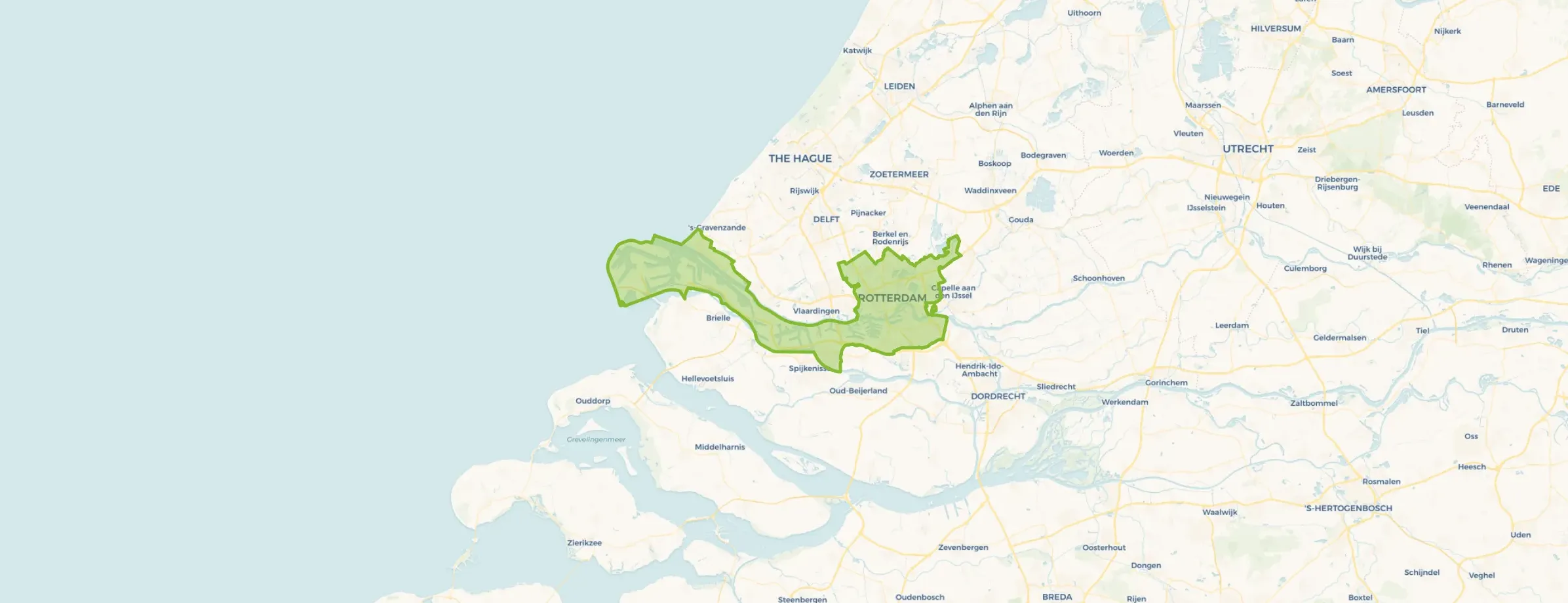
Among homes for sale in Rotterdam, one in three is at 60 dB or more, and one in six even at 65 dB. No other large city comes close. Rijswijk and Leiden follow, with around 30% at 60 dB or more. Almere is the exception: more than half of its homes for sale are on quiet streets, and noisy addresses are rare. That reflects how the city was planned, with through roads kept apart from residential streets.
If you really want peace and quiet, look outside the Randstad. In Sluis 76% of homes for sale are below 50 dB, in Veere 75% and on Schouwen-Duiveland 68%.
What about aircraft?
Aircraft noise is a separate story, and that map is also from 2022. The World Health Organization recommends keeping aircraft noise below 45 dB. In Amsterdam 67% of homes for sale are above that level, in Haarlemmermeer 85% and in Amstelveen virtually all of them. In Zaanstad it is more than half. How much you notice depends heavily on which Schiphol runway is in use and on the season.
Is noise priced in?
We compared each home's asking price per square metre with similar homes (apartment or house) in the same district. Up to 65 dB there is no difference at all. Only above that do sellers ask a little less: about 2% per square metre for apartments, just over 1% for houses.
That is not much for something you will live with for years. Two explanations seem likely. Noisy addresses are often in sought-after spots, close to shops and the station. And noise is not in the listing, so it only comes up once buyers hear it for themselves. Whether less is paid at the actual sale, asking prices cannot tell us.
For a buyer the lesson is simple: do not assume a noisy house will be cheaper. If quiet matters to you, you have to check it yourself.
How to check before you bid
- Look at the address, not the neighbourhood. Within one street it can vary a lot, because of a corner or a building that blocks the sound. Every home page on Buurtje.nl shows a noise indication for road, rail, aircraft and industry, in the risk sections near the bottom.
- Go back at a different time. A viewing at eleven in the morning tells you little about rush hour or a Friday evening. Walk around the block as well.
- Ask which side the bedrooms face. Dutch rules call this a quiet facade: a side of the building that faces away from the road. If you sleep there, a busy front matters far less.
- Check the glazing and ventilation. Good insulating glass helps a lot, but only if you do not need to sleep with the window open to get fresh air.
- For new builds, ask for the acoustic report. If a project is above the standard value, the municipality had to take a formal decision, and the documents show which measures were taken.
Looking yourself? Browse all homes for sale in the Netherlands and you will see the noise indication on each listing. With a saved search new homes in your area arrive in your inbox.
Read more: what the foundation risk indication means, and our checklist for a house viewing.