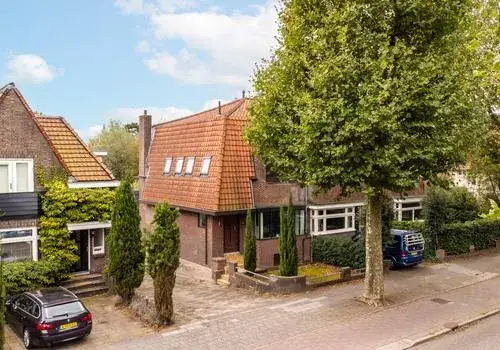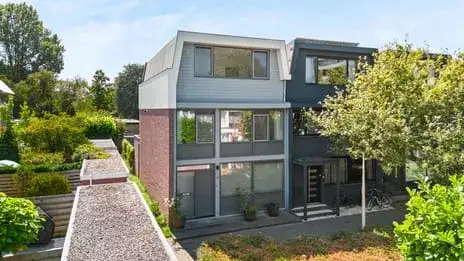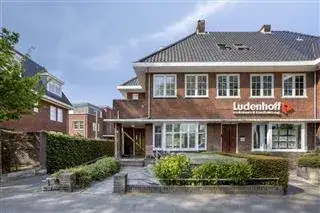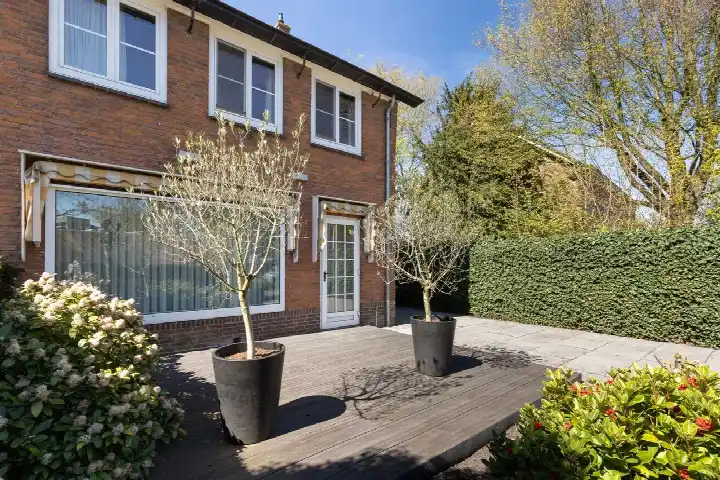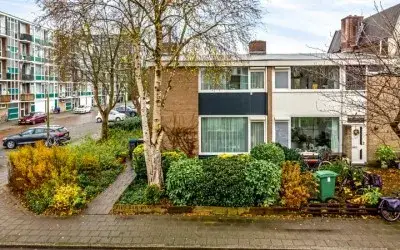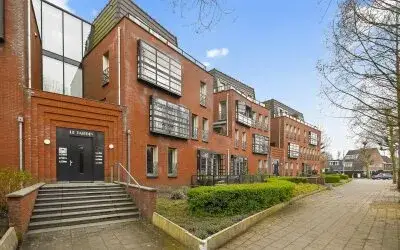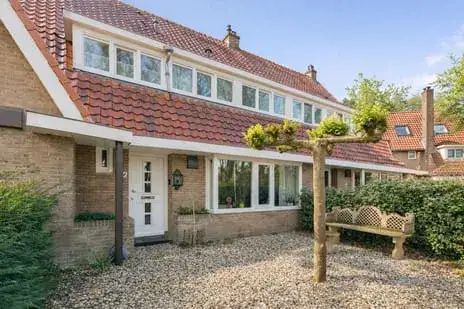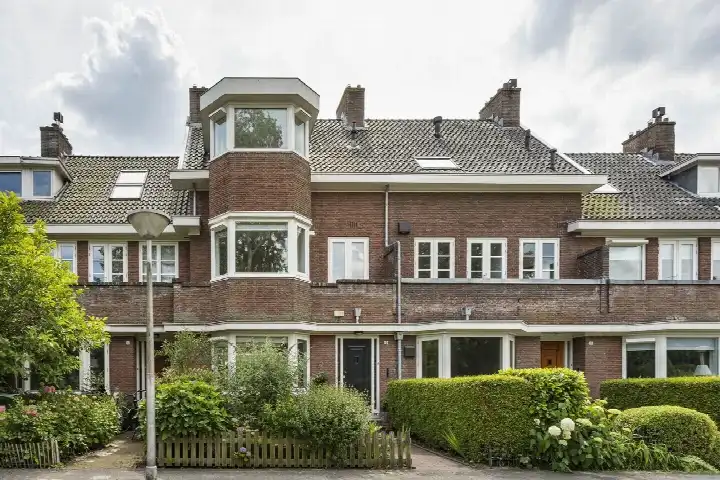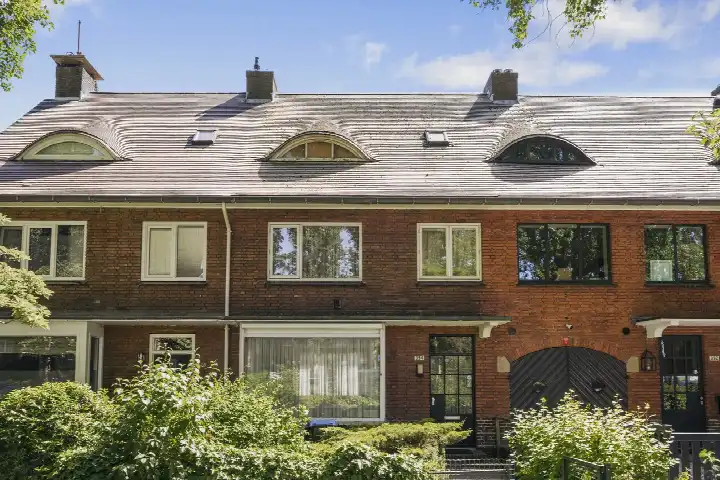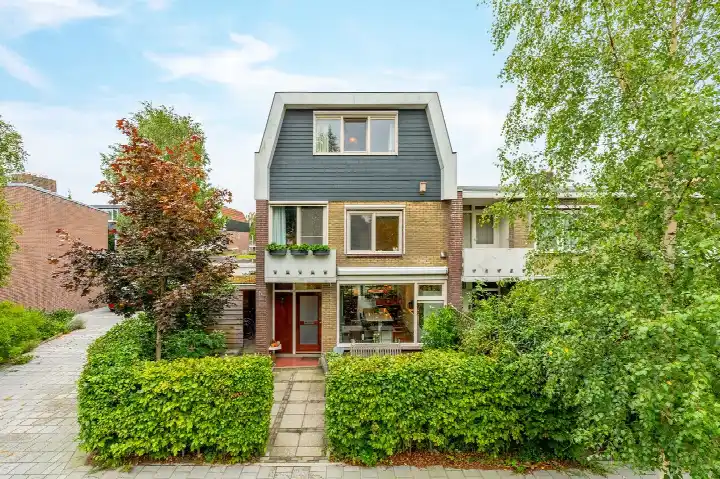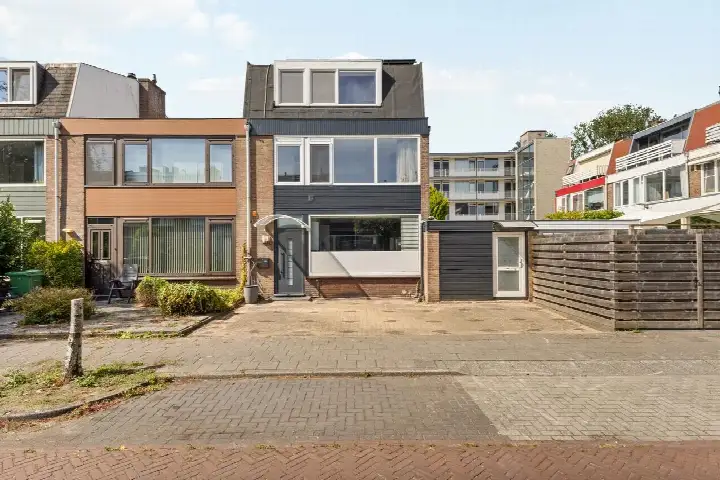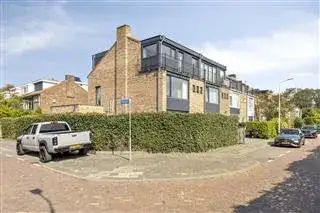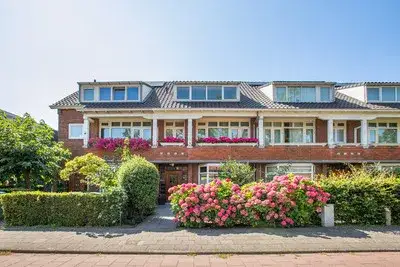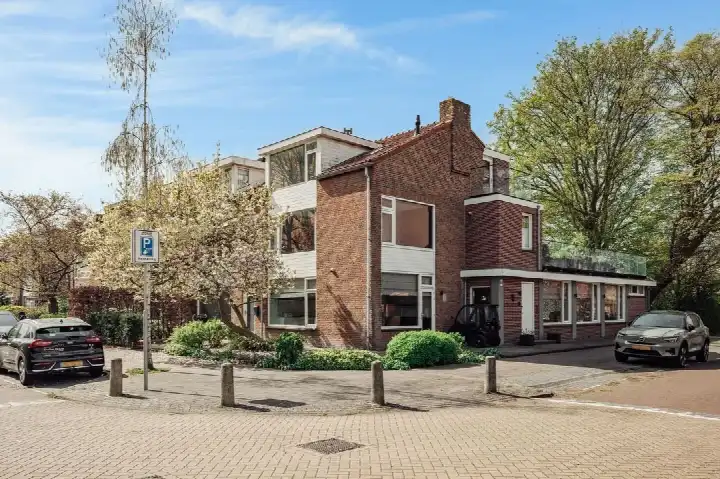





A classic end-of-terrace house on a leafy Amstelveen street
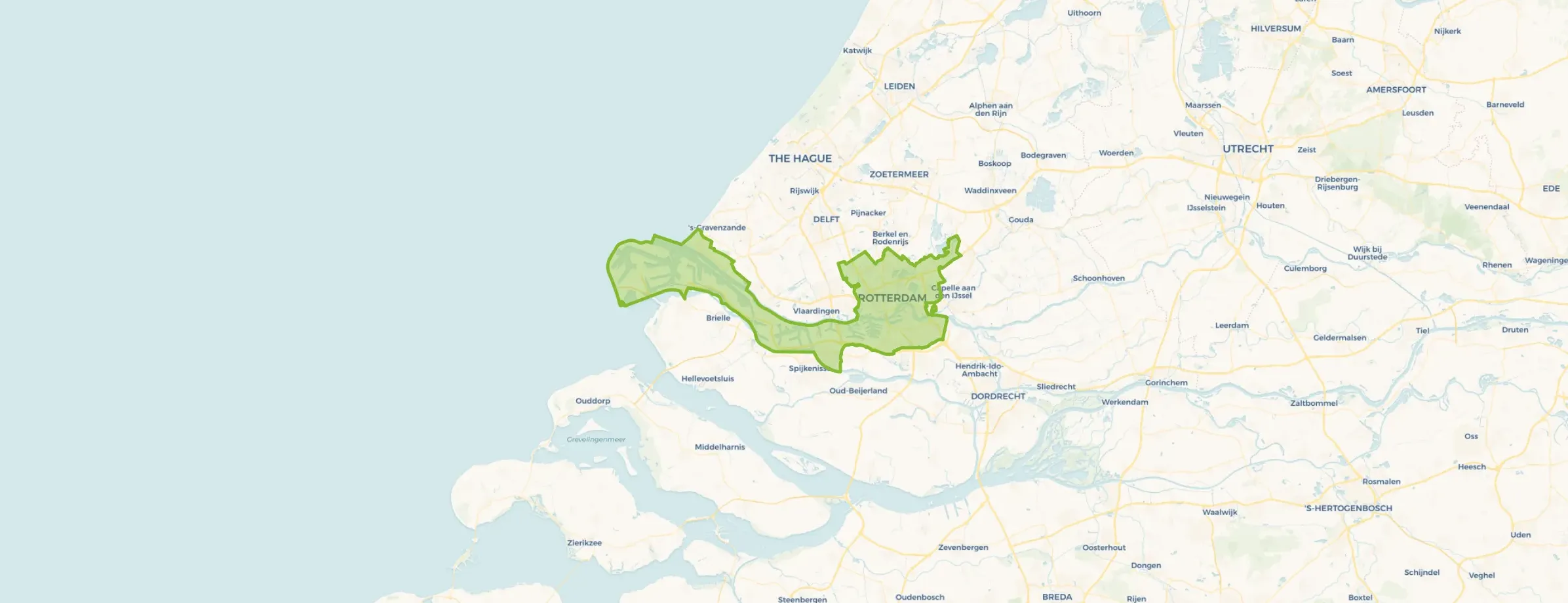
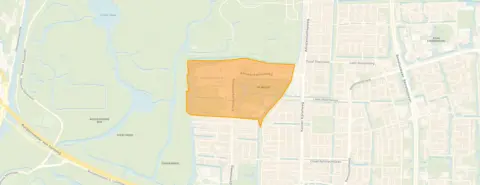
This 1925 end-of-terrace house sits on the Amsterdamseweg in the Oranjebuurt, a quiet residential pocket of Amstelveen where the streets are lined with mature trees and the pace of life feels unhurried. With 920 residents and a mix of families and older households, the neighbourhood has a settled, community feel. The asking price is €1,350,000. For context, the average asking price in the neighbourhood is €2,945,714, and the median asking price is €1,545,000. If you are weighing up your options, it is worth comparing with other end-of-terrace houses in Amstelveen.
Inside the house: six rooms across three floors
Step inside and you find a generous layout: six rooms in total, including three bedrooms and one bathroom, spread over three floors. The living area is 157 m² according to the agent, while the BAG registration records 168 m², and the plot is 343 m² in both. The house was built in 1925, so it has that pre-war character with high ceilings and period details. The energy label is G, the least efficient label, which means you should budget for higher energy costs. The asking price works out at €8,599 per m² based on the agent's floor area.
Life in the Oranjebuurt
Residents across the municipality of Amstelveen give their living environment an average score of 7.96 out of 10, based on 58 reviews. One resident says: "I have never had any problems in the neighbourhood and hardly any nuisance." Another adds: "Nice neighbourhood to live in with all amenities nearby and pleasant people." The Oranjebuurt itself is a small, established area with a high proportion of owner-occupied homes, 92% of the housing stock. Around 46% of households have children, and the average household size is 2.6 people. The neighbourhood has a calm, residential character, with the Amsterdamseweg running through it. For more on the area, see the Oranjebuurt neighbourhood.
Amenities and getting around
Daily errands are easy from here. The Lidl is just around the corner, and the Jumbo is a couple of streets away, with an Albert Heijn a ten-minute walk. For school runs, the Roelof Venema School is a couple of streets away, and the St. Jozefschool is a ten-minute walk. The GP practice Medisch Centrum Molenweg is a ten-minute walk, and the pharmacy is right next door. For public transport, the bus stop at Julianapark is on your doorstep, served by line 174, and the Graaf Florislaan stop, with lines 178, 257, 357, N47 and N57, is just around the corner. Amsterdam Zuid station is about 2.9 km away. The municipality of Amstelveen offers a good range of services and green spaces, as you can see on the page for the municipality of Amstelveen.
WOZ value and address data
The WOZ value, set by the municipality on 1 January 2025, is €1,124,000. The asking price is 20% above this WOZ value. Over the past five years, the WOZ value has risen by 29%, from €873,000 in 2020 to €1,124,000 in 2025. As for the address itself, public risk data indicates that road traffic noise is above the norm at 62 dB Lden, and aircraft noise is also above the norm at 55 dB Lden, while railway noise is below the norm at 30 dB Lden. The foundation risk indication is elevated, based on the clay soil and the pre-1970 construction typical of this postcode area. These are area-level indications, not an inspection of this specific home. Pluvial flooding risk is elevated, while flood risk is low now and in 2050, and heat stress is low now but medium by 2050.
Source and availability
At the time of writing, this home is offered via multiple channels, including Makelaarsgroep o.g. Commissaris.
This summary was generated with AI and may contain errors. Always verify the details with the provider.
Features
Details of this home
Transfer
Price

Areas and volume
Layout
Construction
Outdoor space
The WOZ value is set annually by the municipality with 1 January as its reference date, and therefore lags the market by about a year. It is an estimated market value, not a sale price.
Frequently asked questions
About Amsterdamseweg 370, Amstelveen
How does the asking price compare with the WOZ value?
The asking price of €1,350,000 is 20% above the WOZ value of €1,124,000, which was set on 1 January 2025. The WOZ value is the municipal valuation for tax purposes, not the current market value. Over the past five years, the WOZ value has increased by 29%, from €873,000 in 2020 to €1,124,000 in 2025.
What is the layout of the house?
The house has six rooms in total, including three bedrooms and one bathroom, spread over three floors. The living area is 157 m² according to the agent, while the BAG registration records 168 m². The plot is 343 m². Built in 1925, it has a pre-war character with high ceilings and period details.
What does the energy label G mean for this house?
The energy label is G, which is the least efficient label on the scale. This means you can expect higher energy costs compared with homes with better labels. The label reflects the energy performance of the home as a whole, but it does not tell you about the condition of the construction. The house was built in 1925, so it is an older property.
What is the foundation risk for this address?
The foundation risk indication for this address is elevated, according to public data from sources like the Klimaateffectatlas and KCAF. This is based on the clay soil and the fact that the house was built in 1925, which may mean wooden piles or a shallow foundation. In this postcode area, 90% of buildings were constructed before 1970, and 3% of properties have an elevated risk of pile rot. This is an area-level indication, not an inspection of this specific home.
What are the noise levels like at this address?
Public data shows that road traffic noise is above the norm at 62 dB Lden, and aircraft noise is also above the norm at 55 dB Lden. Railway noise is below the norm at 30 dB Lden. These are area-level indications based on data from the Atlas Leefomgeving, not measurements taken at the property itself.
Which supermarkets are nearby?
The nearest supermarket is the Lidl at 564 m, which is just around the corner. The Jumbo is at 609 m, a couple of streets away, and an Albert Heijn is at 850 m, about a ten-minute walk. There are also other options within a short distance, including another Albert Heijn at 1,082 m and an Aldi at 1,325 m.
What schools are close to this house?
The Roelof Venema School, a primary school, is at 596 m, just around the corner. The St. Jozefschool is at 840 m, about a ten-minute walk. For secondary education, CSB Amsterdam is at 1,265 m. There are also several other primary schools within a short distance, including the Openbare Basisschool Michiel de Ruyter at 950 m.
How is the public transport connection from this address?
The bus stop at Julianapark is on your doorstep at 52 m, served by line 174. The Graaf Florislaan stop, with lines 178, 257, 357, N47 and N57, is just around the corner at 212 m. Amsterdam Zuid train station is about 2.9 km away, which you can reach by bus or bike.
What is the neighbourhood like to live in?
Residents across the municipality of Amstelveen give their living environment an average score of 7.96 out of 10, based on 58 reviews. One resident says: "I have never had any problems in the neighbourhood and hardly any nuisance." Another adds: "Nice neighbourhood to live in with all amenities nearby and pleasant people." The Oranjebuurt itself is a small, established area with a high proportion of owner-occupied homes.
How does the price per square metre compare with the neighbourhood average?
The asking price per square metre is €8,599, based on the agent's floor area of 157 m². The average asking price per square metre in the neighbourhood is €8,329. So this home is priced slightly above the neighbourhood average per square metre, but the overall asking price is below the neighbourhood average because the home is smaller than the average property.