Homes for sale in Architectenbuurt, Amsterdam
Looking for a home to buy in Architectenbuurt? Check the current listings on this page and discover what the neighbourhood has to offer in terms of market data and resident reviews.

House prices and market figures for Architectenbuurt, Amsterdam
Architectenbuurt is a home-owning neighbourhood: 55% of the housing stock is owner-occupied, the rest is rented, a significant portion of which through housing associations (34%). The average WOZ value is €491,000, which is noticeably lower than the average for the broader district Oostelijk Havengebied (€630,000) and also slightly below the Amsterdam average of €517,000. This makes the neighbourhood relatively more affordable than many surrounding areas in the harbour district.
Over the past twelve months, 41 homes were sold. The average purchase price came to €573,488, with a range of €400,000 to €750,000. With an average living area of 84 m², this works out at a price per square metre of around €6,800. The supply consists mainly of apartments, a logical consequence of the urban densification that characterises Oostelijk Havengebied. For current asking prices and available properties, you can consult the overview at the top of this page.
Living in Architectenbuurt, Amsterdam
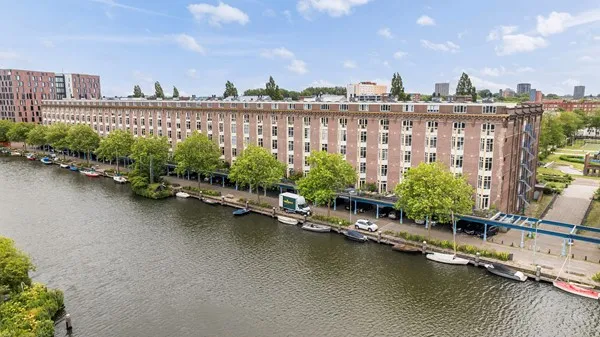
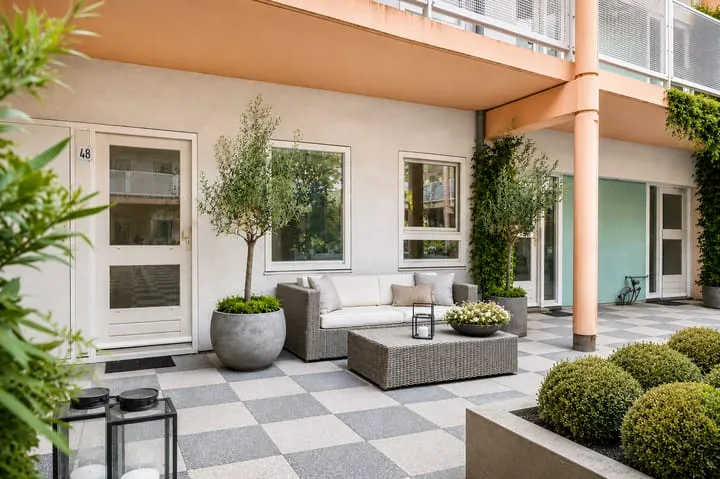
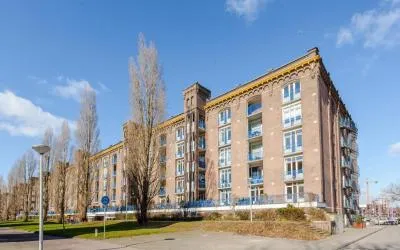
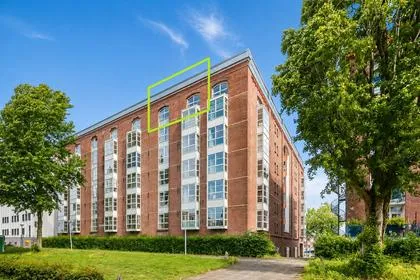
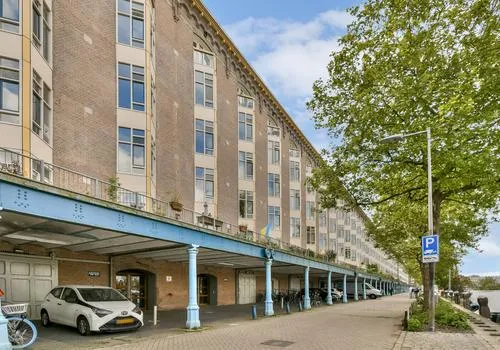
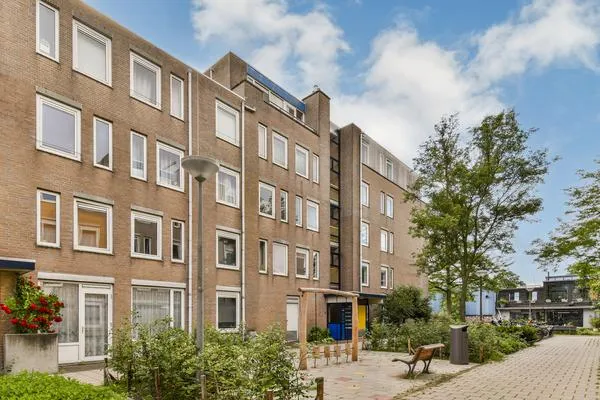
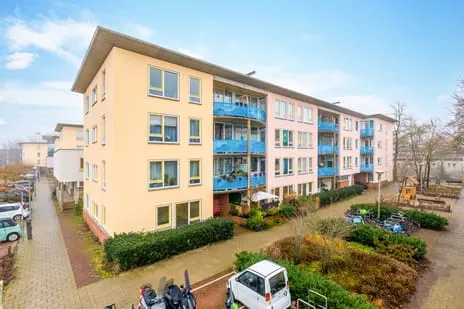
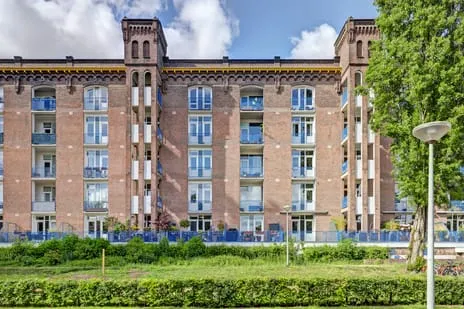
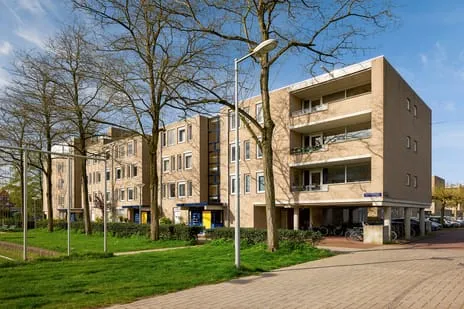
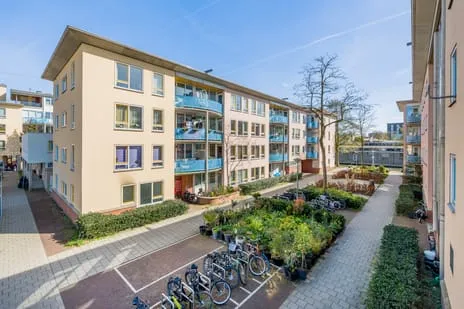
The name says it all: Architectenbuurt is no ordinary Amsterdam residential area. The neighbourhood was developed in the late 1990s and early 2000s as part of the redevelopment of Oostelijk Havengebied, and it shows. Streets like Theo Boschstraat and the surrounding blocks were designed by well-known Dutch architects, each with their own signature style. One resident puts it aptly: "It's almost like walking through an open-air museum. Every street has its own character." That is no exaggeration. Buying an apartment here means buying a piece of architectural history.
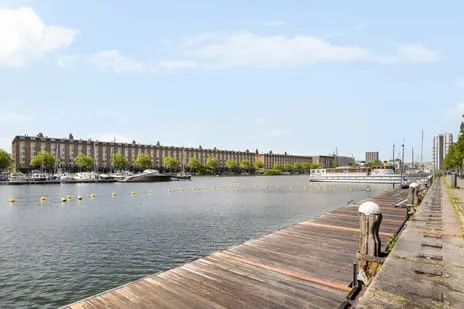
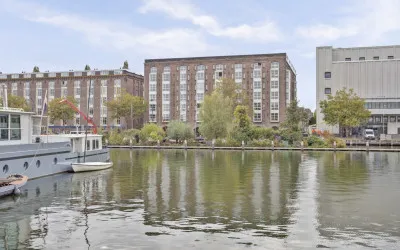
The atmosphere is quiet and somewhat introverted by Amsterdam standards. The neighbourhood is sandwiched between water and industry, giving it a certain island character. This has advantages: little through traffic, relatively few tourists, and a close-knit community. Several long-term residents emphasise the sense of togetherness, although this mainly applies to the original residents. Newcomers find that it takes a while to truly settle in.
In terms of amenities, the neighbourhood is compact. There are primary schools in the immediate vicinity, which is also reflected in the high score for education (8.4 from residents). For daily groceries, you rely on supermarkets in adjacent neighbourhoods, as there is no large supermarket within the area itself. This explains the lower score for amenities (6.2). Green spaces are present: the neighbourhood pays attention to parks and water features, though there is also criticism. One resident points out that the municipality promised to restore playgrounds after a redevelopment, but this has still not happened after two years. This is a point of concern for families with young children.
Accessibility scores a 6.4, which is on the low side for Amsterdam. There is no metro station directly in the neighbourhood, but tram and bus connections take you to the city centre and Amsterdam Central Station. By bike, you can reach the centre in fifteen minutes, which is the daily reality for many residents. Car parking is limited, although electric charging points have been installed after recent street reconstructions.
Compared to neighbourhoods like Java-eiland or Sporenburg, which are also part of Oostelijk Havengebied, Architectenbuurt has a somewhat more mixed character with both rental and owner-occupied homes interspersed. Borneo and KNSM-eiland each have their own atmosphere worth comparing. For more on the character of the neighbourhood, including all resident experiences, read the Architectenbuurt overview page.
Is a home in Architectenbuurt right for you?
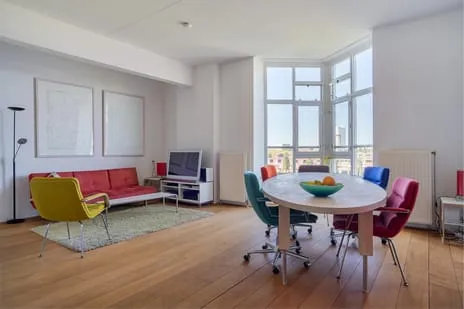
The neighbourhood mainly attracts middle-aged people and small households: the largest group of residents is aged 45 to 65, and single-person households are the most common. This says something about the type of housing that dominates here: compact apartments, suitable for singles, couples, and small families. First-time buyers with a limited budget will struggle: with an average purchase price of over €573,000 and a lower limit of €400,000, mortgage capacity is a serious hurdle. If you still want to live in Oostelijk Havengebied but need more flexibility, you can also look at rental properties in Architectenbuurt. Upsizers and dual-income households with a stable income are most at home here. Be prepared for competition: supply is limited and the market moves quickly.
What residents say about Architectenbuurt
Residents give the neighbourhood an average score of 7.4 out of 10, based on five reviews. The highest subscores are for education (8.4) and safety (8.0). Accessibility (6.4) and amenities (6.2) score the lowest. One resident who has lived there for over 35 years describes it like this: "Innovative yet familiar. Many changes. Not always positive, but a lot is done to make it pleasant." That sums up the mood well: appreciation for what is there, with a critical eye on what could be better. Read all reviews on the Architectenbuurt neighbourhood page.
Compare homes for sale in and around Oostelijk Havengebied
Buurtje.nl combines current property listings from over 1,500 sources with resident reviews and neighbourhood data, so you not only know what a home costs, but also what it is like to live there. Want to broaden your search? Then check out homes for sale in Oostelijk Havengebied as a whole, or explore other Amsterdam neighbourhoods like the Jordaan or the Haarlemmerbuurt. For a complete picture of the Amsterdam home-buying market, visit the page homes for sale in Amsterdam. The municipality of Amsterdam also publishes additional information about living and the housing market at amsterdam.nl.
Frequently asked questions
What is the cost of a home in Architectenbuurt?
Over the past twelve months, the average purchase price in Architectenbuurt was €573,488. The range runs from €400,000 to €750,000. With an average living area of 84 m², the price per square metre comes to approximately €6,800. The properties sold here are predominantly apartments.
What is the WOZ value in Architectenbuurt?
The average WOZ value in Architectenbuurt is €491,000. This is lower than the Amsterdam average of €517,000 and significantly lower than the district average of Oostelijk Havengebied (€630,000). The neighbourhood is therefore relatively affordable within the harbour area, although buying in Architectenbuurt remains a substantial investment.
What is it like to live in Architectenbuurt?
Architectenbuurt is a quiet, urban neighbourhood with distinctive architecture from the late 1990s and early 2000s. Residents appreciate the sense of community and the green character, but also point to limited amenities within the neighbourhood itself. The overall resident score is 7.4 out of 10, with high scores for safety and education.
Is Architectenbuurt suitable for families with children?
There are primary schools in the immediate vicinity, and residents give education the highest sub-score (8.4). However, there is criticism about the lack of playgrounds that were promised after a municipal redevelopment but have not yet been reinstalled. The neighbourhood has relatively few young children (150 residents under 15), reflecting the character of the area: compact and more focused on adult households.
How accessible is Architectenbuurt?
Residents give accessibility a 6.4, which is on the low side. There is no metro station directly in the neighbourhood, but tram and bus connections provide links to the city centre and Amsterdam Central. By bike, you can reach the centre in about fifteen minutes. Parking for cars is limited, although charging points for electric vehicles have been installed.
What type of homes are for sale in Architectenbuurt?
The supply consists almost entirely of apartments, fitting the urban densification characteristic of Oostelijk Havengebied. The homes were built around the turn of the century, with an average living area of 84 m². If you want to buy an apartment in Architectenbuurt, you typically purchase a home with a distinctive architectural design.
How safe is Architectenbuurt?
Safety scores 8.0 out of 10 in resident reviews, making it one of the neighbourhood's strongest points. Several long-term residents confirm that the area has changed positively over the past decades and that there is a sense of calm and familiarity. The relatively enclosed character of the neighbourhood, with little through traffic and tourism, likely contributes to this.
I find the Architectenbuurt in Amsterdam so lovely because it is a neighbourhood that immediately stands out due to its special layout and architecture. The houses are all designed with an eye for detail, and it's almost as if you're walking through an open-air museum. Each street has its own character, giving the neighbourhood a unique appearance. What I also really appreciate is the quiet and green environment. Despite being in Amsterdam, it feels spacious and calm here. The streets are wide, there are many trees, and there is plenty of space to sit outside or take a walk. Additionally, the contact with the neighbours is very pleasant. It feels like a real community where people know and help each other. When something is organised, like a neighbourhood drink or a small street party, everyone is enthusiastic. The location is also ideal. Within a few minutes you are in the bustling centre of Amsterdam or at the market, but in the Architectenbuurt you still have the peace and the feeling of home of a nice residential area.
Auto-translated to English by AIDiverse! Nice green spaces and attention for the neighbourhood. The first batch of residents are heading towards 60 and older. From new to dynamic. From rental to owner-occupied. I'm glad the (neighbourhood) children were able to grow up well here. Now I see them walking with their own children. Time doesn't stand still. Beautiful, nice little piece of Amsterdam. In the city and yet small. In terms of accessibility, there is only public transport via the Veelaan. At the 'back side' there is no transport, or you have to walk quite a long way to the tram. Especially if you live at the end of the Cruquisweg. I also miss the postboxes. On the cycle path, unfortunately, especially at the weekend, there is often shouting and yelling, possibly from the nightlife crowd. A night bus and regular bus would be really appreciated!
Auto-translated to English by AIThe municipality changed the streets 3 years ago, lots of electric car charging points, lots of greenery but neglected. They promised to put back the playgrounds they removed. Well, fighting for 2 years now, no playground and every time they promise. Also a general disabled parking spot we still don't have. We no longer go to the information days because nothing comes of it anyway. Now the playgrounds are used for parking, which is not allowed but they don't care.
Auto-translated to English by AII've lived here since 1989. Watching the neighbourhood grow and rise. There are changes. Improvement but also a lot of commerce. Rental homes being converted into exorbitantly expensive apartments. There is a sense of togetherness, but mainly among the old guard residents. The surroundings have certainly improved in terms of greenery. There could be a few more amenities. Low-threshold hospitality, a bus connection, letterboxes again. I hope to be able to live here for a long time yet.
Auto-translated to English by AIInnovative yet familiar. I've lived here for over 35 years and have seen the neighbourhood being built. Many changes. Not always positive, but a lot is done to make it pleasant. It's a mix of cultures, education, etc. A neighbourhood where I hope to stay for a long time. So nice that my grandchildren also enjoy playing here. The municipality and housing associations invest in and maintain the buildings and properties. There are schools in the neighbourhood, a supermarket, nice eateries. A bus connection and postboxes would be welcome again. This neighbourhood where I live (from Veelaan to the end of Cruquisweg) often gives me a kind of glamour feeling. I feel at home here.
Auto-translated to English by AI