





8 homes for sale in neighbourhood Dorst, Oosterhout
Discover the current supply of homes for sale in Dorst and compare prices, neighbourhood data, and resident reviews to determine if this quiet village suits you.



House prices and market figures for Dorst, Oosterhout
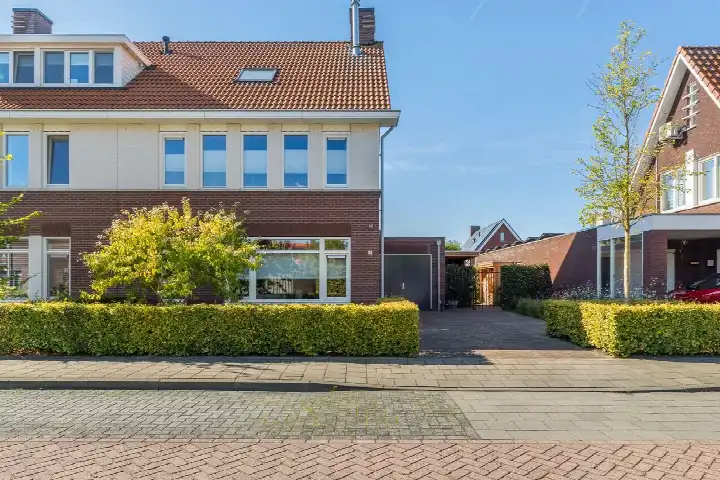
The owner-occupied market in Dorst is pronounced. With 86% owner-occupied homes in the housing stock, this is a neighbourhood where owner-occupiers set the tone. The average WOZ value is €438,000, which is slightly below the district average of €457,000 but well above the municipal average of €354,000 for the whole of Oosterhout. That difference says something about the character of Dorst: it consists mainly of spacious detached houses and semi-detached houses on larger plots, not compact urban neighbourhood development.
Over the past twelve months, 19 homes have been sold, with an average purchase price of €691,684. The range runs from €350,000 to €1,195,000, reflecting the wide diversity of property types. With an average living area of 158 m², the price per square metre comes to approximately €4,378. That is steep, but not inexplicable given the location and property quality. Rental homes are scarce: only 14% of the stock is for rent, divided between housing associations (6%) and other landlords (7%). For current asking prices and available supply today, you can consult the overview at the top of this page.
Living in Dorst, Oosterhout
Dorst is a village that has its own pace. With just under 2,800 inhabitants, it is compact enough to know each other, but large enough to carry its own sense of community. The housing stock largely consists of spacious detached houses and semi-detached houses, partly built in the 1970s and 1980s, partly newer. The streets are green, the gardens are large, and there is hardly any through traffic in the residential areas. Anyone considering moving from a city quickly notices the difference in atmosphere: quieter, greener, and with more physical space around you.
Facilities are present but limited to the essentials. Dorst has a primary school, a community centre, and a few local sports clubs. For more extensive grocery shopping or retail, you go to Oosterhout, about ten minutes away by car. The village centre has a modest shopping street with daily necessities. For sports, there are opportunities through local football and tennis clubs, and the surrounding area offers space for walking and cycling in the woods and countryside. The adjacent Bosgebied Dorst and Buitengebied Dorst-Zuid give an impression of how green and open the area is just outside the built-up area.
In terms of accessibility, Dorst is dependent on the car. The A27 is quickly reachable, providing good connections to Breda and Utrecht. Breda is a quarter of an hour away by car, Tilburg about twenty minutes. A bus line runs through the village, but the frequency is limited. A car of your own is not a choice but a necessity for most residents. There is no train station in Dorst itself; the nearest station is Breda or Oosterhout, depending on your destination. Cyclists can reach Oosterhout via cycle paths, but for daily commuting this is only realistic for shorter distances or with an e-bike.
Residents particularly appreciate Dorst for its peace, space, and social cohesion. One resident writes: "You really know your neighbours here, it feels like a real village where people look out for each other." Criticism often focuses on the limited public transport and dependence on the car. The limited level of facilities is also sometimes seen as a drawback by people used to a fully equipped residential area. View all reviews and neighbourhood data on the information page for Dorst, where residents give scores on categories such as green space, safety, and atmosphere. Compared to neighbouring community Steenoven, Dorst has a slightly more village-like and greener character, while the district of Dorst as a whole has a similar profile in terms of property type and income level.
Who is a home for sale in Dorst interesting for?
Dorst mainly attracts families and movers who consciously choose space and peace over urban convenience. The largest age group is 45 to 65 years old, and households with children are the most common family type. First-time buyers find it difficult here: with an average purchase price of nearly €692,000 and a lower limit of €350,000, the threshold is high. Buying an apartment in Dorst is virtually not an option; the supply consists almost exclusively of ground-based homes. Be honest with yourself: without a car, living in Dorst is impractical. And with a limited supply of 19 transactions per year, overbidding is certainly not an exception. Those looking for more choice or a lower budget can also look at the broader supply of homes for sale in Oosterhout or specifically at districts such as West or Slotjes.
What residents say about Dorst
Residents of Dorst generally give the neighbourhood high scores for green space, safety, and social atmosphere. The village character and involvement of neighbours are most often mentioned positively. Residents are less enthusiastic about public transport and the distance to facilities. One resident sums it up aptly: "Dorst is not a neighbourhood for people who want everything around the corner, but if you are looking for peace and space, you won't want to leave." Read all experiences and scores per category on the neighbourhood page for Dorst.
Comparing homes for sale in and around Dorst
Buurtje.nl combines current property listings from more than 1,500 sources with resident reviews and district data, so you not only compare a home but also understand the neighbourhood behind it. View the full supply and market figures for homes for sale in Dorst as a district, or broaden your search to the municipality via Oosterhout. Other neighbourhoods worth comparing with Dorst: Bosgebied Dorst, Buitengebied Dorst-Zuid, and Oosterhout-Centrum for those who want to combine more urban facilities with a home for sale. Want to know more about what the municipality offers? Also check the website of the municipality of Oosterhout for information on permits, housing policy, and local regulations.
What does a home cost in Dorst?
Over the past twelve months, the average purchase price in Dorst was €691,684, with an average living area of 158 m². That works out to approximately €4,378 per square metre. The range of sold homes ran from €350,000 to €1,195,000, reflecting the wide variation in property type and plot size.
What is the WOZ value in Dorst?
The average WOZ value in this neighbourhood is €438,000. That is slightly lower than the district average of €457,000, but considerably higher than the municipal average of €354,000 for the whole of Oosterhout. The relatively high WOZ value is linked to the predominantly spacious, ground-based housing supply in Dorst.
What is living in Dorst like?
Dorst is a quiet, green village with a strong sense of community. Residents appreciate the space, safety and social involvement. The level of amenities is limited to daily necessities; for more extensive shopping or dining out, you go to Oosterhout. Residents rate the neighbourhood positively for greenery and atmosphere, but are more critical of public transport.
Is Dorst suitable for families with children?
Yes, Dorst is primarily a family neighbourhood. The largest household type consists of families with children, and the most common age group is 45 to 65 years. There is a primary school present and local sports clubs offer activities for children. The quiet, green living environment with large gardens makes the village attractive for families seeking space.
How accessible is Dorst?
Dorst is easily accessible by car via the A27, with Breda about fifteen minutes away and Tilburg about twenty minutes by car. Public transport is limited: there is a bus line through the village, but the frequency is low. There is no train station of its own; the nearest station is in Breda or Oosterhout. A car is indispensable for most residents.
What type of homes are for sale in Dorst?
The supply in Dorst consists almost exclusively of ground-based homes: detached houses and semi-detached houses, partly built in the 1970s and 1980s. Buying an apartment in Dorst is virtually not an option. With an average living area of 158 m² and large plots, the homes are spacious. The supply varies but is usually limited in number, with 19 transactions in the past twelve months.
Are there schools and sports facilities in Dorst?
Dorst has a primary school within the village centre, so young children do not have to travel far. For secondary education, children rely on Oosterhout or surrounding towns. For sports, there are local clubs for football and tennis. The proximity of forests and the countryside also offers ample opportunities for walking and cycling in nature.
Offices with the most homes in Oosterhout on Buurtje.nl, last 12 months.
 Biemans Makelaardij | NVM - QualisOosterhout227 homes
 Van der Plas & De Vegt makelaardijOosterhout199 homes
 Van de Water Makelaars OosterhoutOosterhout170 homes
 Van de Water Makelaars TilburgTilburg74 homes
 TQ Makelaars OosterhoutOosterhout62 homes
 Ideale MakelaarOosterhout46 homes
 Verbrugge Makelaardij OosterhoutOosterhout42 homes
 TQ Makelaars Breda UlvenhoutUlvenhout33 homes
Trommelen Makelaars en TaxateursOosterhout31 homes
 Klijsen Makelaars & AdviseursOosterhout30 homes