


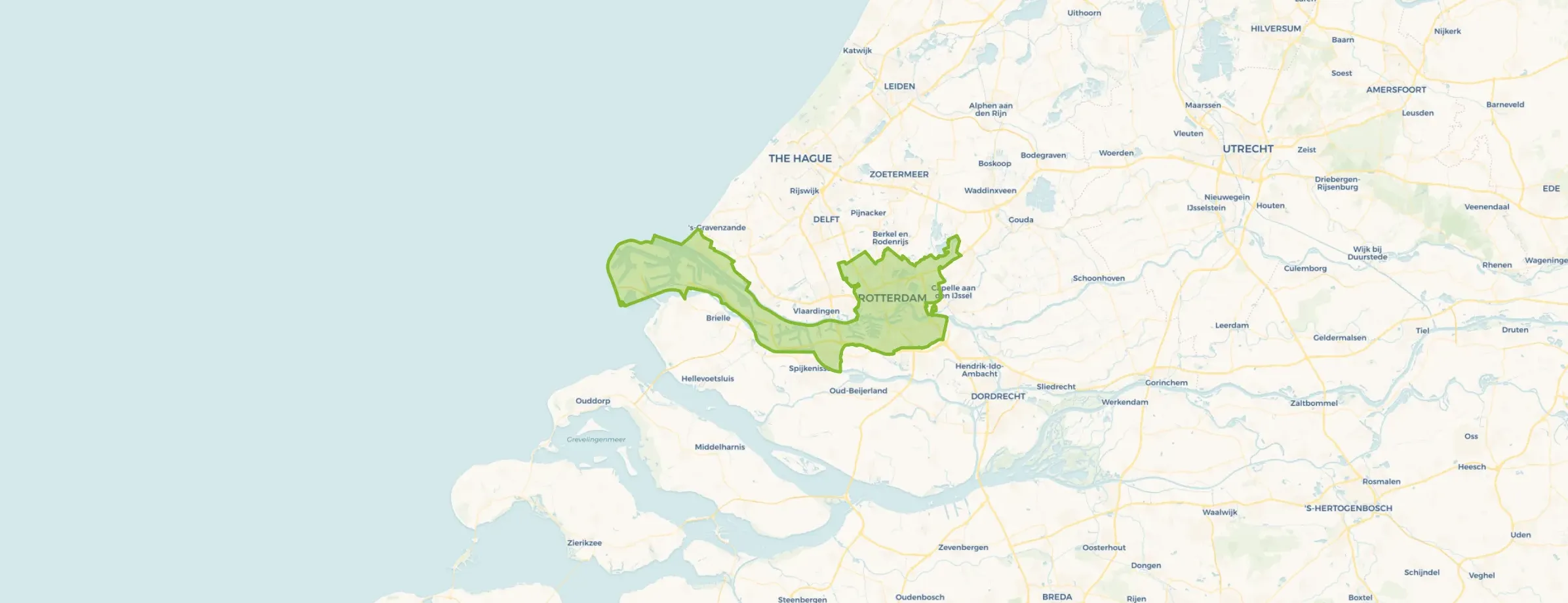



2 homes for sale in Instrumentenbuurt, Capelle aan den IJssel
Discover the current supply of homes for sale in Instrumentenbuurt and compare prices, neighbourhood data and resident reviews directly on this page.


House prices and market figures for Instrumentenbuurt, Capelle aan den IJssel
In Instrumentenbuurt, 56% of the housing stock is owner-occupied, giving the neighbourhood a predominantly home-ownership character. The average WOZ value is €274,000, noticeably lower than the district average of Schollevaar Zuid (€287,000) and clearly below the municipal average of Capelle aan den IJssel (€310,000). This price difference makes the neighbourhood relatively affordable within the municipality.
Based on the past twelve months, seven homes were sold at an average sale price of €377,143. Sale prices ranged from €275,000 to €475,000, with an average living area of 98 m². This works out to a price of around €3,850 per m². The supply mainly consists of ground-floor homes such as terraced houses and semi-detached houses from the 1970s and 1980s, supplemented by a limited number of apartments. Because the number of transactions per year is limited, supply changes quickly. Check the current supply and average asking price at the top of this page for the most recent updates.
Living in Instrumentenbuurt, Capelle aan den IJssel
Instrumentenbuurt is a quiet, well-organised residential neighbourhood in the southern part of Schollevaar. The street names refer to musical instruments, giving the neighbourhood a distinct identity that you won't easily forget once you've driven through it. The housing largely dates from the 1970s: terraced houses with front and back gardens, regular street patterns, and plenty of greenery between the houses. It is not a neighbourhood that stands out for architectural features, but rather for the peace and order that many residents appreciate.
For daily shopping, Schollevaar shopping centre is within cycling distance, housing a supermarket, pharmacy and a few shops. For larger groceries or a wider range of shops, you can go to the Alexandrium shopping centre, easily accessible by car or public transport. Primary schools in the neighbourhood itself serve families with young children well. For sports, facilities are available in the wider district, including sports clubs in nearby neighbourhoods.
In terms of accessibility, Instrumentenbuurt benefits from its location near the A20 and A16 motorways, making Rotterdam and The Hague quickly reachable by car. By public transport, bus lines take you to Capelse Brug or Kralingse Zoom metro stations, from where you can reach Rotterdam city centre by metro in about twenty minutes. Cycle routes to the centre of Capelle aan den IJssel are well-maintained.
Residents describe the neighbourhood as quiet and child-friendly, with plenty of green space nearby. One resident writes: "It's nice and quiet here, neighbours know each other, and children play in the street. Not spectacular, but that's fine." Points of criticism sometimes include the dated appearance of homes and the limited local amenities directly in the neighbourhood itself. See all reviews and full neighbourhood data on the Instrumentenbuurt overview page.
Compared to neighbouring areas such as Kunstenaarsbuurt and Dansenbuurt-noord, Instrumentenbuurt has a similar character: quiet 1970s housing, plenty of greenery, and a stable living environment. Burgenbuurt and Ervenbuurt also offer ground-floor owner-occupied homes in a similar price range. Those looking for a more urban lifestyle might also consider Capelle West en 's Gravenland or Middelwatering West. The municipality of Capelle aan den IJssel provides more information about living, permits and local facilities on its website: capelleaandenijssel.nl.
Who is a home in Instrumentenbuurt suitable for?
Instrumentenbuurt mainly attracts older people and middle-aged families, which is also reflected in the demographic figures: the 65-plus group is the largest. This means the neighbourhood is stable and quiet, but less dynamic than younger areas. For first-time buyers looking to purchase a home in Instrumentenbuurt, the lower end of the price range (from €275,000) offers some room, although supply is limited and goes quickly. Movers seeking space without paying top prices for a Rotterdam location will find a realistic alternative here. If you are unsure between buying and renting, you can also look at rental homes in Instrumentenbuurt, as 44% of the housing stock is rental. Keep in mind that the annual sales volume is low, so if something suitable comes up, acting quickly is wise.
What residents say about Instrumentenbuurt
Residents particularly appreciate Instrumentenbuurt for its peace, the green layout of the district, and the social cohesion on the streets. High scores are usually given for liveability and safety; the local amenities directly in the neighbourhood score somewhat lower. One resident puts it this way: "You live here quietly, know your neighbours, and have everything you need within cycling distance. Ideal if you don't like crowds." Read all reviews and see scores per category on the Instrumentenbuurt neighbourhood page.
Comparing homes for sale in and around Instrumentenbuurt
Buurtje.nl brings together housing listings from over 1,500 sources in one place, supplemented by resident reviews and district data that you won't find combined anywhere else. This allows you to compare not only homes but also neighbourhoods. View all homes for sale in Schollevaar Zuid for a broader picture of the district, or explore the full range via homes for sale in Capelle aan den IJssel. If you want to compare specifically with adjacent neighbourhoods, Dansenbuurt-zuid and Stadsdeelpark are good starting points.
What does a home cost in Instrumentenbuurt?
The average sale price in Instrumentenbuurt over the past year was €377,143, with a range of €275,000 to €475,000. The average living area was 98 m², resulting in a price of approximately €3,850 per m². This involves a limited number of transactions per year, so the market is tight and prices can vary quickly.
What is the WOZ value in Instrumentenbuurt?
The average WOZ value in Instrumentenbuurt is €274,000. This is below the average of the Schollevaar Zuid district (€287,000) and clearly below the municipal average of Capelle aan den IJssel (€310,000). The neighbourhood is therefore relatively affordable within the municipality.
What is it like to live in Instrumentenbuurt?
Living in Instrumentenbuurt means choosing peace, greenery and a stable living environment. The neighbourhood largely consists of 1970s terraced houses with gardens, and has a strong residential character without much commercial activity. Residents appreciate the social atmosphere and safety, although local amenities directly on the street are limited. For daily shopping, you rely on the nearby Schollevaar shopping centre.
Is Instrumentenbuurt suitable for seniors?
Yes, Instrumentenbuurt is in practice a popular neighbourhood for the elderly: the 65-plus group, with 365 people, is the largest age category. The quiet surroundings, the clear streets and the proximity of amenities within cycling distance make the neighbourhood attractive for people seeking a peaceful living environment. However, it is advisable to check in advance whether a specific home is suitable for lifetime living or whether adaptations are needed.
How accessible is Instrumentenbuurt?
Instrumentenbuurt is conveniently located relative to the A20 and A16 motorways, making Rotterdam and the surrounding area easily accessible by car. By bus, you can reach Capelse Brug or Kralingse Zoom metro stations, from where Rotterdam Central can be reached in about twenty minutes. Cycling to the centre of Capelle aan den IJssel is easily possible via existing cycle paths.
What type of homes are for sale in Instrumentenbuurt?
The supply of owner-occupied homes in Instrumentenbuurt mainly consists of ground-based terraced houses and semi-detached houses from the 1970s and 1980s, with an average area of approximately 98 m². Buying apartments in Instrumentenbuurt is also possible, although that share is smaller. The homes typically have a front and back garden and a garage or parking space on private property.
Is there much supply for sale in Instrumentenbuurt and how quickly do homes sell?
The annual sales volume in Instrumentenbuurt is limited: seven homes were sold in the past year. This means there is little choice and homes that become available find a buyer relatively quickly. Anyone seriously considering buying a home in Instrumentenbuurt would do well to set up search alerts and view properties quickly as soon as something becomes available.