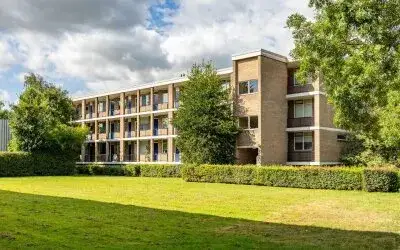





A third-floor flat in lively Oud-Zuid
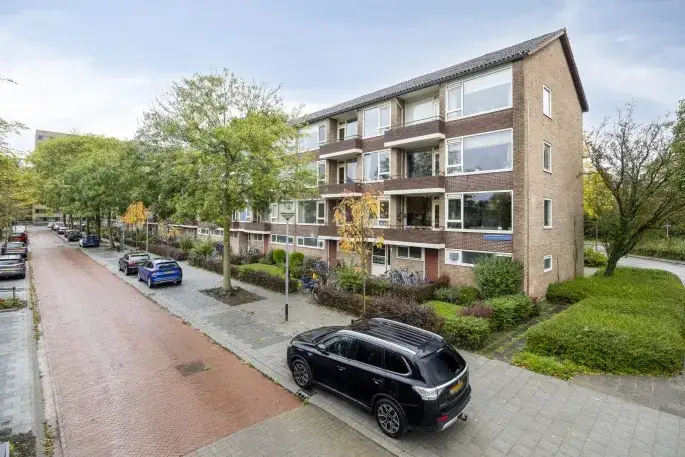
This apartment sits in the Zeeheldenbuurt, part of the Oud-Zuid district of Groningen, a corner of the city where students, young professionals and families mix easily. The area is very strongly urban, with a high address density, and the streets around the Peizerweg have a sociable, lived-in feel. The last known asking price of €248,000 was 19% below the neighbourhood average of €307,844, which put it on the sharp side for the area. For context, apartments in Groningen at the time average €4,344 per m², while this home came in at €3,937 per m² based on the agent's floor area. This home has not been online since 7 October 2026.
A compact home with a balcony
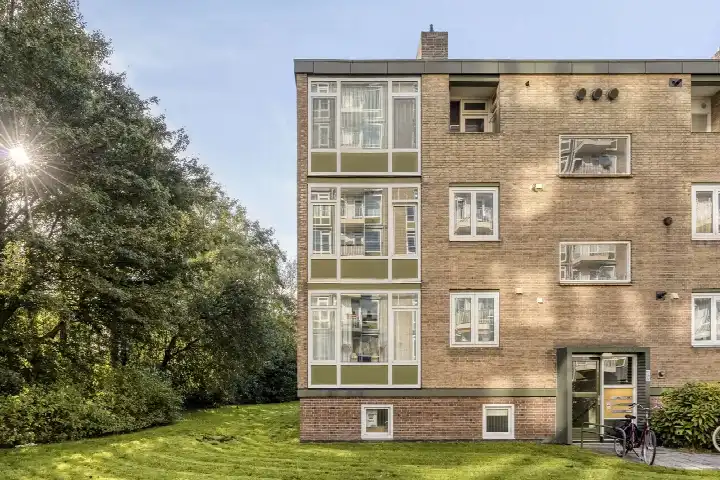
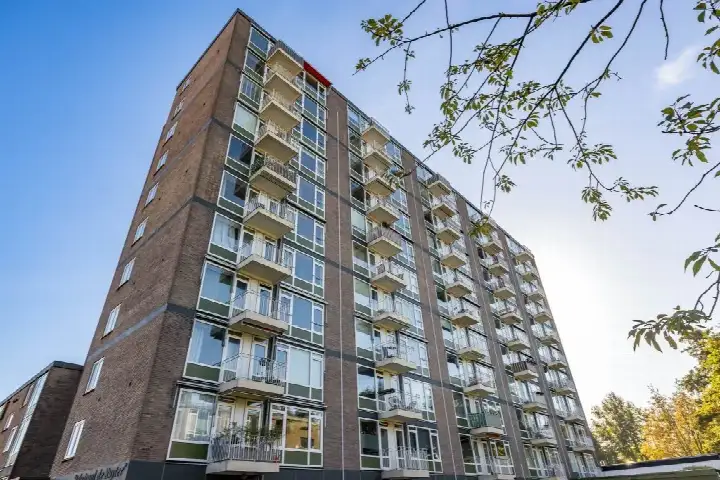
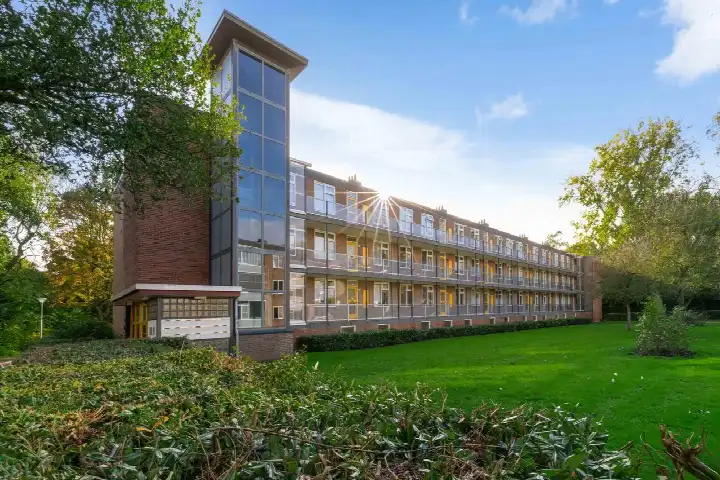
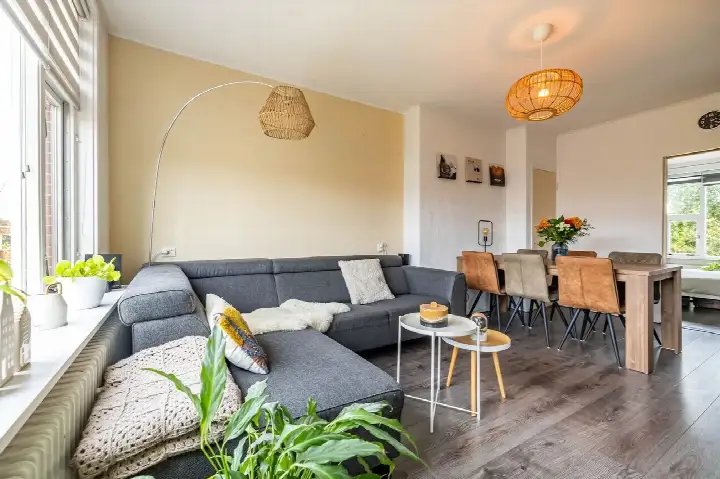
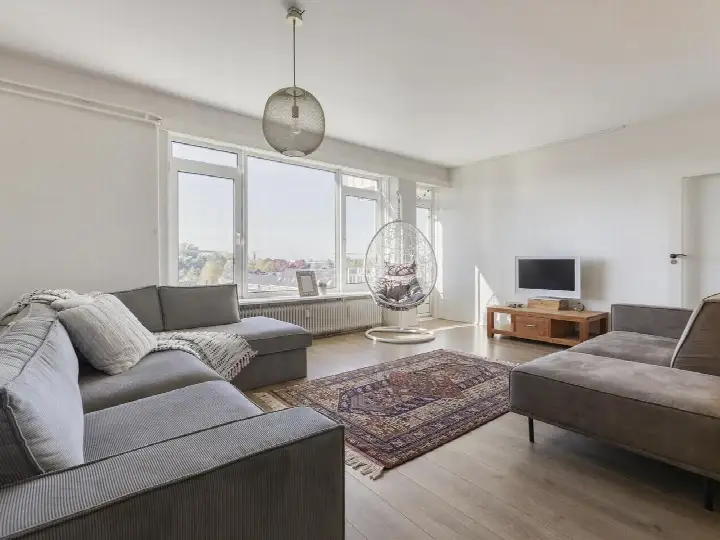
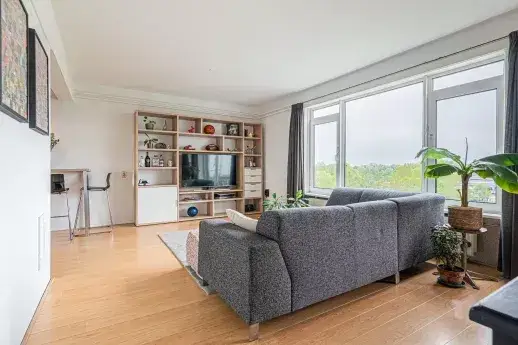
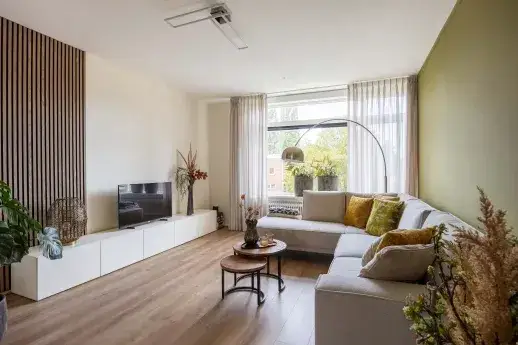
Built in 1961, this portiekflat sits on the third floor and offers one bedroom, one bathroom and two rooms in total across a single level. The living area was 63 m² according to the agent, while the BAG registration records 61 m². The home has double glazing, a central heating boiler and a gas fireplace, and comes with a balcony. It was offered in full ownership, with a monthly HOA fee of €138.50. The energy label was D, which meant moderate energy costs could be expected.
A sociable corner of the city
Residents across the district give their living environment an average score of 7.21, based on 19 reviews. One resident describes it as "a social neighbourhood of students, young people, families and many single people", adding that "people greet each other easily" and that the many pubs make it lively. Another says it is "a cosy and, in my opinion, fairly safe neighbourhood" where they have never felt uncomfortable, day or night. The district skews young, with 46% of residents aged 15 to 25 and 39% aged 25 to 45, and most households are single-person. The Zeeheldenbuurt neighbourhood itself is home to around 3,755 people.
Daily life and getting around
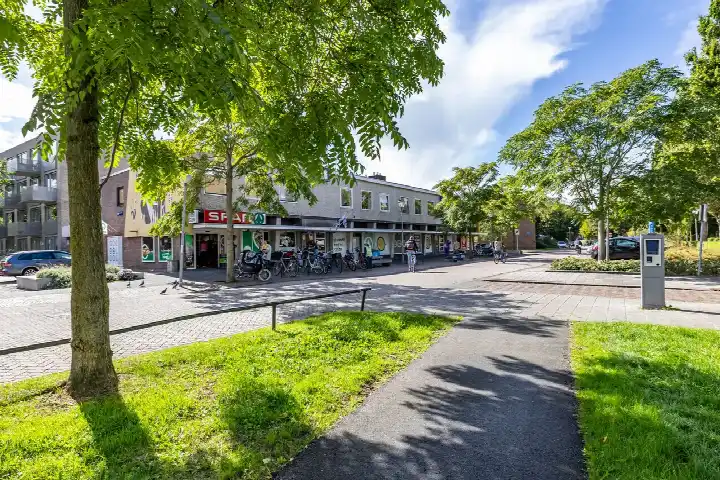
A Coop supermarket is just around the corner, with a SPAR a couple of streets away and an Albert Heijn within a ten-minute walk. For secondary education, CSG Augustinus is on your doorstep and the Willem Lodewijk Gymnasium just around the corner, while primary schools ODS De Starter and OJS De Petteflet are a ten-minute walk. The nearest GP and pharmacy, Gezondheidscentrum Arts en Zorg Hoendiep and Medsen Apotheek Hoendiep, are both a couple of streets away. Bus stop Groningen, Stadspark is on your doorstep with lines 3, 4, 133, 304, 314, 315, 324, 404 and 417, and Groningen train station is a ten-minute walk. The municipality of Groningen keeps the wider area well served.
WOZ value and address data
The WOZ value was €202,000 as of 1 January 2025, and the asking price sat 23% above that figure. Between 2020 and 2025 the WOZ value rose 17%, from €172,000 to €202,000. As for the address itself, the area-level indications show road traffic noise at 61 dB, railway noise at 59 dB and industrial noise at 54 dB, all above the norm, while aircraft noise at 18 dB stays below it. The foundation risk indication is medium, based on the home being built before 1970 and the postcode area being a KCAF attention zone. Pluvial flooding risk is low, as is current flood risk, while heat stress is expected to rise from low to medium by 2050. These are area-level indications, not an inspection of this specific home.
Source
When this home was still on the market, it was offered via three channels, including Sam Farès Makelaars on Funda and Huispedia.
This summary was generated with AI and may contain errors. Always verify the details with the provider.
Features
Details of this home
Transfer
Price
Energy
 Save up to € 400 on your energy billCompare now
Areas and volume
 Insure your home and belongingsGet insured
Layout
Construction
Outdoor space
The WOZ value is set annually by the municipality with 1 January as its reference date, and therefore lags the market by about a year. It is an estimated market value, not a sale price.
Frequently asked questions
About Peizerweg 70-24, Groningen
How did the asking price compare to other homes in the neighbourhood?
The asking price of €248,000 was 19% below the neighbourhood average asking price of €307,844. The median asking price in the Zeeheldenbuurt was €262,000, and homes at the time for sale range from €185,000 to €465,000. Based on the agent's floor area of 63 m², the price per m² was €3,937, compared to the neighbourhood average of €4,344 per m².
What is the layout of this apartment?
This portiekflat has two rooms in total, including one bedroom and one bathroom, spread across a single floor on the third floor. The agent listed the living area at 63 m², while the BAG registration records 61 m². The home has a balcony and a volume of 209 m³. It was offered in full ownership with a monthly HOA fee of €138.50.
What is the WOZ value of this home?
The WOZ value was €202,000 as of 1 January 2025. The asking price of €248,000 was 23% above that WOZ value. Over the past five years, the WOZ value rose 17%, from €172,000 in 2020 to €202,000 in 2025, though it had declined from a peak of €248,000 in 2023.
What are the noise levels around this address?
Area-level data indicates road traffic noise at 61 dB, railway noise at 59 dB and industrial noise at 54 dB, all above the norm. Aircraft noise is 18 dB, which stays below the norm. These figures come from public risk data at address level and are indications for the area, not a measurement inside this specific home.
What is the foundation risk for this property?
The foundation risk indication is medium. The home was built in 1961, before 1970, and the postcode area is a KCAF attention zone where 100% of properties were built before 1970. According to the Klimaateffectatlas, 2% of properties in this neighbourhood have an elevated risk of pile rot. This is an area-level indication, not an inspection of this specific home.
What supermarkets and schools are nearby?
A Coop supermarket is just around the corner at 468 metres, with a SPAR at 632 metres and another Coop at 721 metres. For schools, CSG Augustinus is 140 metres away and the Willem Lodewijk Gymnasium 190 metres, both secondary schools. Primary schools ODS De Starter and OJS De Petteflet are both around 720 metres away.
How is the public transport in this area?
Bus stop Groningen, Stadspark is 128 metres away and serves lines 3, 4, 133, 304, 314, 315, 324, 404 and 417. Two other stops, Groningen, Rembrandt v Rijnstr. and Groningen, Paterswoldseweg, are within 500 metres. Groningen train station is 938 metres away, about a ten-minute walk.
What do residents say about living in this district?
Residents across the district give their living environment an average score of 7.21 out of 10, based on 19 reviews. One resident describes it as a social neighbourhood where people greet each other easily and feel safe walking in the evening. Another calls it cosy and fairly safe, saying they have never felt uncomfortable, day or night.
What is the energy label and what does it mean?
The energy label is D. This was a mid-range label, so energy costs would be moderate compared to more efficient homes. The home does have double glazing, which helps with insulation. In the neighbourhood, 36.4% of homes for sale had an energy label of A+ or better, while 27.3% had a label of D or lower.
What is the neighbourhood like demographically?
The Zeeheldenbuurt has around 3,755 residents, with a very young profile: 46% are aged 15 to 25 and 39% are aged 25 to 45. Single-person households make up 76% of all households, and the average household size is 1.3 people. Only 4% of households have children. The area is very strongly urban with an address density of 4,169 per km².