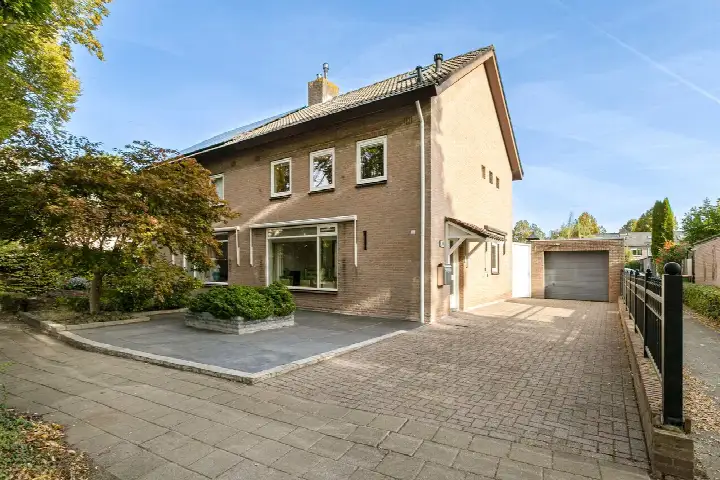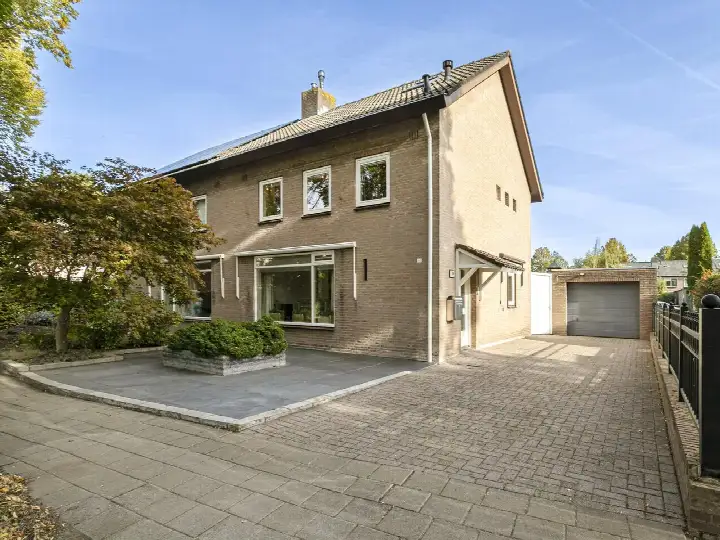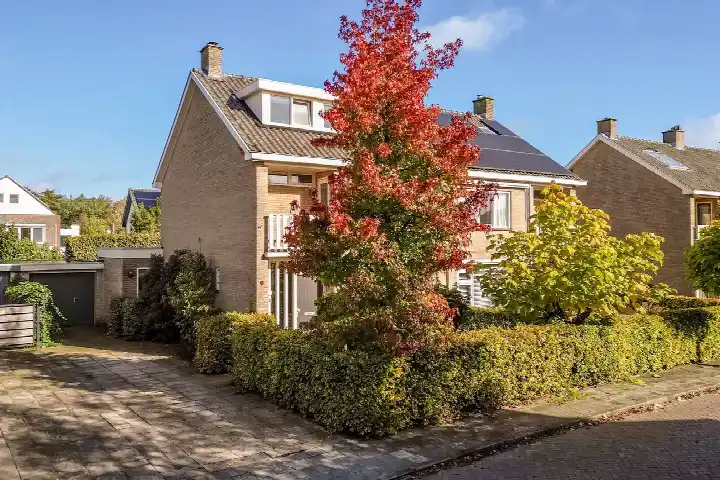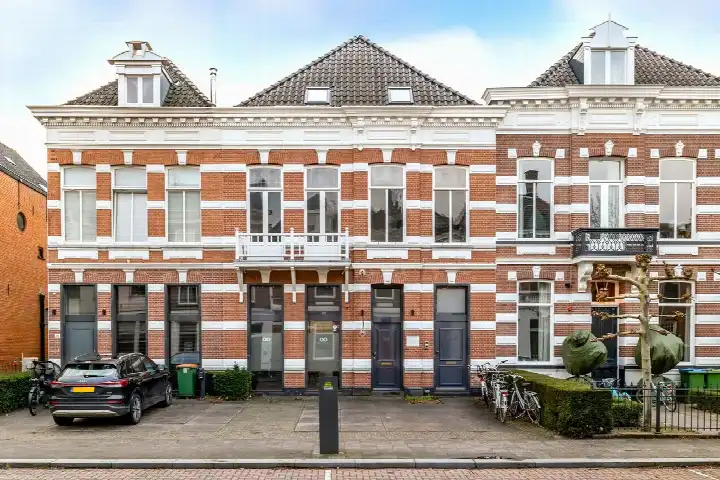






A quiet spot in Ulvenhout
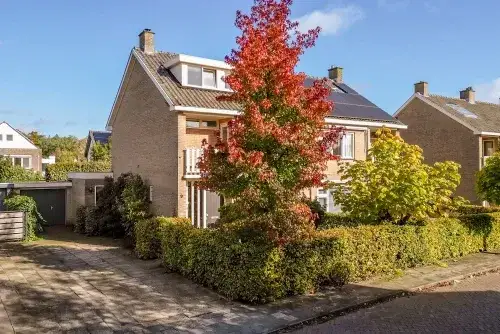
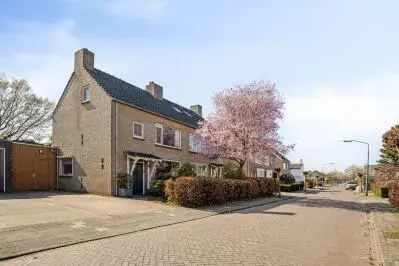
Haamstraat 10 sits in Ulvenhout, a village-like neighbourhood within the municipality of Breda. The semi-detached house dates from 1967 and carries energy label B. With a last known price of €695,000, the asking price sat 29% below the average asking price in the neighbourhood, which came to €980,708. That puts this home on the sharp side compared with semi-detached houses in Breda. This home has not been online since 30 September 2026.
The home itself
The living area measures 110 m² according to the BAG registration, on a plot of 285 m². That worked out at €6,318 per m². The listing did not go into detail about the layout, so the number of bedrooms and bathrooms was not stated. The home was built in 1967 and has energy label B.
Ulvenhout
Ulvenhout is home to around 4,640 people, and the housing stock is mostly owner-occupied, with 75% of homes in the hands of their owners. Residents across the municipality of Breda give their living environment an average score of 7.63, based on 60 reviews. One resident describes the area as quiet and spacious, noting that houses are spaced out and many gardens are green. Another resident says the neighbourhood is fine, with a yearly neighbourhood party, but adds that there are no schools or facilities nearby. A third resident, however, paints a very different picture, describing the situation as dangerous and saying the police do not listen. The reviews clearly vary, so it is worth reading them for yourself. For more context, have a look at the municipality of Breda.
Amenities and transport
For daily errands, Albert Heijn is just around the corner, with Jumbo a couple of streets away. Openbare Basisschool De Klokkebei is on your doorstep, and Kbs De Rosmolen is just around the corner. Huisartsenpraktijk Ulvenhout and BENU Apotheek Ulvenhout are both a ten-minute walk away. Bus line 375 stops at Ulvenhout, Dorpstraat, a five-minute walk from the home. The nearest train station is Breda, about 5.5 km away.
WOZ and address data
The WOZ value was €542,000, with a reference date of 1 January 2025. The asking price was 28% above the WOZ value. Between 2020 and 2025, the WOZ value rose by 39%, from €391,000 to €542,000. As for address-level risk data, the noise from road traffic is 46 dB Lden and from air traffic 28 dB Lden, both below the noise standard. The foundation risk indication is low, on sand soil. Pluvial flooding at heavy rain is medium, while flood risk is low now and in 2050. Heat stress is low now but medium by 2050. These are area-level indications, not an inspection of this specific home.
Source
When this home was still on the market, it was offered only via Bink & Partners Makelaardij.
This summary was generated with AI and may contain errors. Always verify the details with the provider.
Features
Details of this home
Transfer
Price

Areas and volume
 Insure your home and belongingsGet insured
Construction
The WOZ value is set annually by the municipality with 1 January as its reference date, and therefore lags the market by about a year. It is an estimated market value, not a sale price.
Frequently asked questions
About Haamstraat 10, Ulvenhout
How did the asking price compare with the WOZ value?
The WOZ value was €542,000, with a reference date of 1 January 2025. The asking price of €695,000 was 28% above that WOZ value. The WOZ was the municipal valuation, not the current market value, so the difference was a fact about the two figures rather than a judgement on the price.
What was the price per square metre for this home?
The living area is 110 m² according to the BAG registration, on a plot of 285 m². That gave a price per m² of €6,318. The average asking price per m² in the neighbourhood was €4,856, and the average living area of homes for sale here was 222 m², so this home was smaller than the neighbourhood average.
What was the energy label and what did it mean for costs?
The home has energy label B. That was an efficient label, so the energy costs were likely to be on the lower side compared with less efficient labels. The listing did not state any specific insulation features, so the label itself was the only indication of the home's energy performance.
What do residents say about living in Ulvenhout?
Residents across the municipality of Breda give their living environment an average score of 7.63, based on 60 reviews. One resident describes the area as quiet and spacious, with houses spaced out and gardens green. Another says the neighbourhood is fine, with a yearly party, but notes there are no schools or facilities nearby. A third resident gives a very different account, describing the situation as dangerous. The reviews vary considerably.
What are the nearest schools to this home?
Openbare Basisschool De Klokkebei is 217 metres away, and Kbs De Rosmolen is 333 metres away, both primary schools. For secondary education, the nearest options are further out, with Het Ginnekencollege at 1.8 km and SO Het Kasteel at 2 km, both special secondary education.
How far is the nearest supermarket and what options are there?
Albert Heijn is 646 metres away, and Jumbo is 887 metres away, so both are within a short walk. Lidl is 2.1 km away and Aldi is 2.2 km away. In total, there are 19 supermarkets within 5 km of the home, so there is a good range of options for daily groceries.
What public transport options are available near this home?
Bus line 375 stops at Ulvenhout, Dorpstraat, 481 metres away, and also at Ulvenhout, Molenstraat at 627 metres and Ulvenhout, Dorpsplein at 771 metres. The nearest train station is Breda, about 5.5 km away. The listing did not state where the bus line went or how frequently it ran.
What is the foundation risk for this address?
The foundation risk indication for this address is low, on sand soil. The home was built in 1967, before 1970, which is noted in the risk data. This is an area-level indication based on public data, not an inspection of this specific home.
What are the flood and heat stress risks at this address?
Pluvial flooding at heavy rain is medium, while flood risk is low now and remains low in 2050. Heat stress is low now but becomes medium by 2050. These are area-level indications from public climate data, not an assessment of this particular property.
How has the WOZ value developed over the past five years?
Between 2020 and 2025, the WOZ value rose by 39%, from €391,000 to €542,000. The value increased each year, from €391,000 in 2020 to €424,000 in 2021, €480,000 in 2022, €487,000 in 2023, €509,000 in 2024 and €542,000 in 2025.