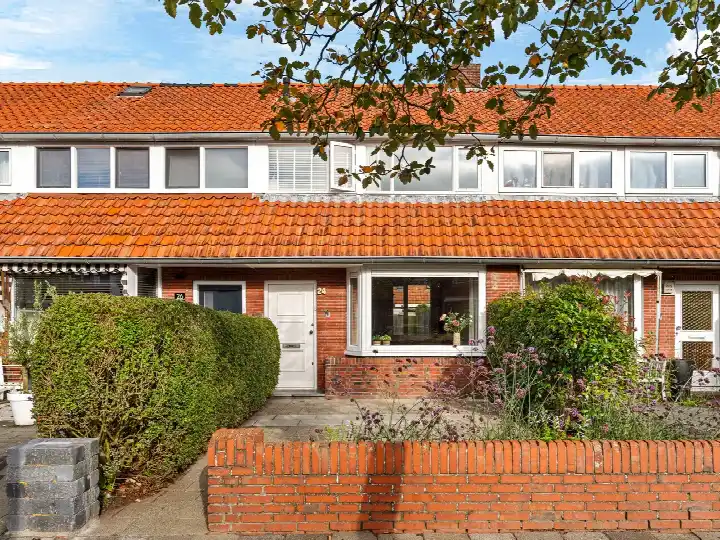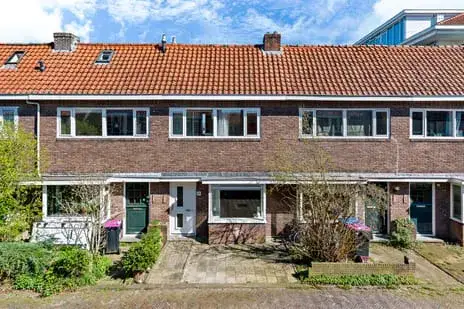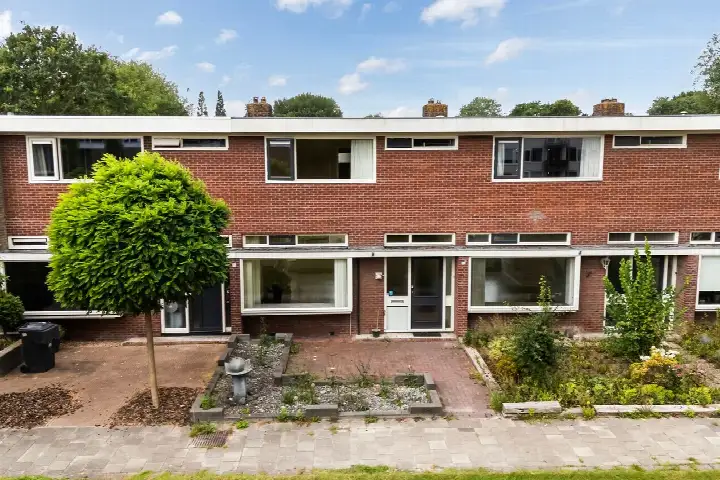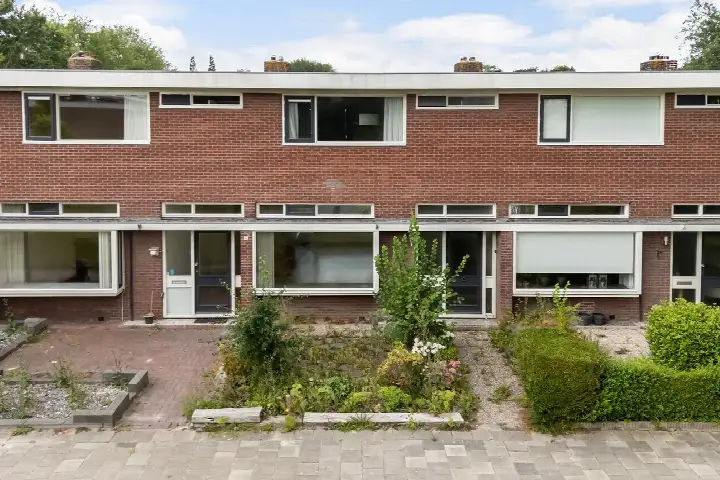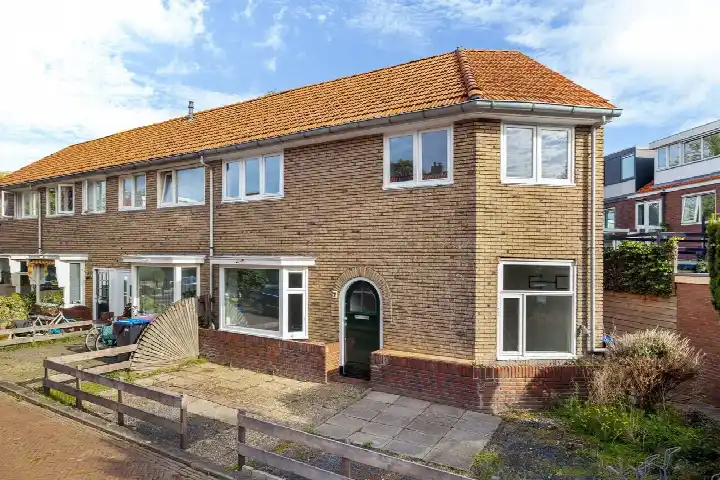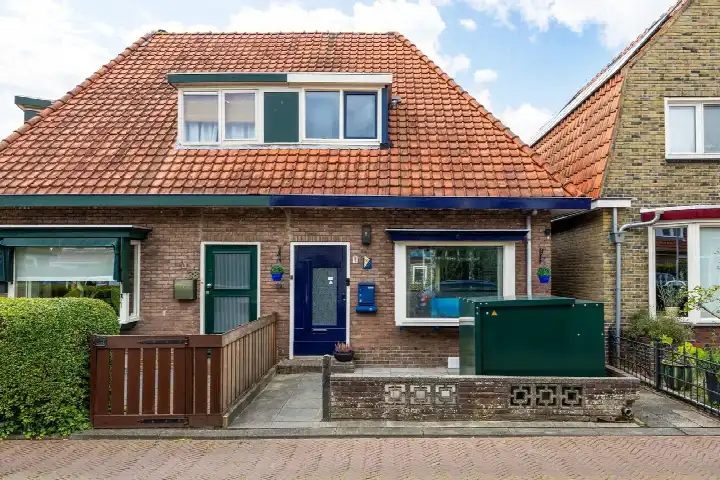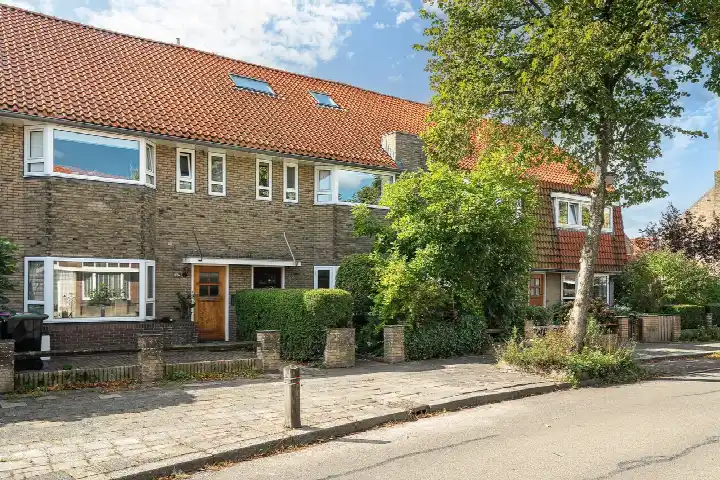





A classic terraced house in Julianapark
This 1935 terraced house sits in Julianapark, a leafy corner of Leeuwarden where the city feels like a village. With 3 rooms, 2 bedrooms and 1 bathroom spread over 2 floors, it is a compact home with character. The asking price of €245,000 is keen compared with the neighbourhood average of €383,250, and it sits well below the average for terraced houses in Leeuwarden.
The home itself
The agent lists the living area at 70 m², while the BAG registration records 86 m². The plot measures 128 m² according to both sources. The house has a volume of 303 m³ and an energy label F, which is the least efficient label, so expect higher energy costs. Built in 1935, it is a pre-war home with the charm that comes with the era.
Life in Julianapark
Residents of the district give it an average score of 7.95, based on four reviews. One resident, who has lived here for 45 years, says: "It's a beautiful neighbourhood, lots of greenery, yet close to the city, near the station, enough shops without having to go into the city centre. It's a very sought-after area; the houses have been made future-proof in recent years." Another adds: "The neighbourhood is a nice place to live, I feel safe, but I don't leave my bike outside. The supermarket in the area is super handy, and there's a nice skatepark and playground nearby for the children." The area counts 1,545 residents, with a mix of ages and household types. The Julianapark neighbourhood is a place where people tend to stay.
Amenities and transport
Daily errands are easy here. Lidl is just around the corner, with Jumbo and Albert Heijn a couple of streets away. For schools, IKC Sint Paulus and Michaelschool Leeuwarden are both within a five-minute walk, and Gomarus College Leeuwarden is close by for secondary education. The GP practice Huisartsenpraktijk Nylân and BENU Apotheek Huizumerpoort are a ten-minute walk, and Frisius Medisch Centrum Leeuwarden is nearby. Bus stops on Julianalaan (lines 1 and 95) and Borniastraat (lines 5, 20, 320 and 695) are just around the corner, and Leeuwarden station is a ten-minute walk. The municipality of Leeuwarden offers all this within easy reach.
WOZ and address data
The WOZ value on 1 January 2025 is €261,000, and the asking price sits 6% below that figure. Between 2020 and 2025, the WOZ value rose 60%, from €163,000 to €261,000. As for the address, road traffic noise is above the norm at 49 dB Lden, while rail and air traffic stay below their norms. The foundation risk indication is elevated, based on the 1935 build on clay soil, and pluvial flooding at heavy rain is medium. These are area-level indications from public data, not an inspection of this specific home.
Source
At the time of writing, the home is offered via multiple channels, including Scheenstra Makelaars.
This summary was generated with AI and may contain errors. Always verify the details with the provider.
Features
Details of this home
Transfer
Price

Areas and volume
Layout
Construction
Outdoor space
The WOZ value is set annually by the municipality with 1 January as its reference date, and therefore lags the market by about a year. It is an estimated market value, not a sale price.
Frequently asked questions
About van der Helststraat 60, Leeuwarden
How does the asking price compare with the neighbourhood average?
The asking price of €245,000 is 36% below the average asking price in Julianapark, which stands at €383,250. The price per square metre, based on the agent's listed living area of 70 m², is €3,500, which is 10% below the neighbourhood average of €3,870 per m². This makes the price keen relative to the local market.
What is the layout of this terraced house?
The house has 3 rooms, including 2 bedrooms and 1 bathroom, spread over 2 floors. The agent lists the living area at 70 m², while the BAG registration records 86 m². The plot measures 128 m². The volume is 303 m³. It is a compact, pre-war terraced house from 1935.
What is the WOZ value of this home?
The WOZ value on 1 January 2025 is €261,000. The asking price of €245,000 is 6% below this value. Over the past five years, the WOZ value has risen 60%, from €163,000 in 2020 to €261,000 in 2025. This reflects the municipal valuation, not the current market value.
What is the foundation risk for this address?
The foundation risk indication for this address is elevated, according to public area-level data. The home was built in 1935 on clay soil, which may mean wooden piles or a shallow foundation. In this postcode area, 100% of properties were built before 1970, and 2% of properties in the neighbourhood have an elevated risk of pile rot. This is an indication at area level, not an inspection of this specific home.
What amenities are within walking distance?
Lidl is just around the corner, with Jumbo and Albert Heijn a couple of streets away. For schools, IKC Sint Paulus and Michaelschool Leeuwarden are within a five-minute walk, and Gomarus College Leeuwarden is close by. The GP practice Huisartsenpraktijk Nylân and BENU Apotheek Huizumerpoort are a ten-minute walk, and Frisius Medisch Centrum Leeuwarden is nearby.
How is public transport in this area?
Bus stops on Julianalaan (lines 1 and 95) and Borniastraat (lines 5, 20, 320 and 695) are just around the corner. Leeuwarden station is a ten-minute walk away, offering rail connections. The nearest bus stop, Leeuwarden, Julianalaan, is about 400 metres from the home.
What do residents say about living in this district?
Residents of the district give it an average score of 7.95, based on four reviews. One resident says: "It's a beautiful neighbourhood, lots of greenery, yet close to the city, near the station, enough shops without having to go into the city centre." Another notes: "The neighbourhood is a nice place to live, I feel safe, but I don't leave my bike outside." These reviews describe the wider district, not just this specific street.
What is the energy label and what does it mean?
The energy label is F, which is the least efficient label. This means you can expect higher energy costs compared with more efficient homes. The label reflects the official registration, and no specific insulation details are stated in the listing. The home was built in 1935, which is typical for the area, where 80% of homes date from before 1945.