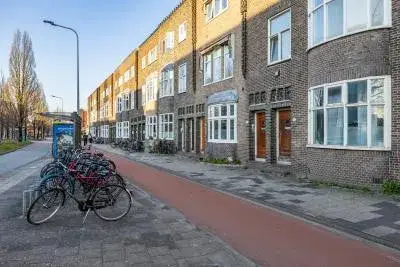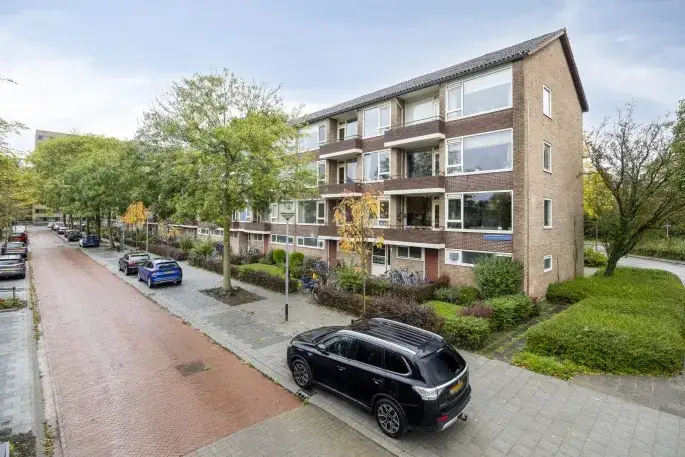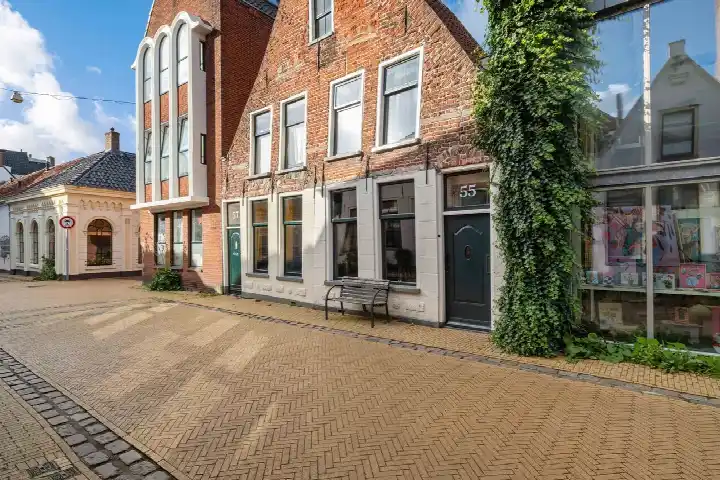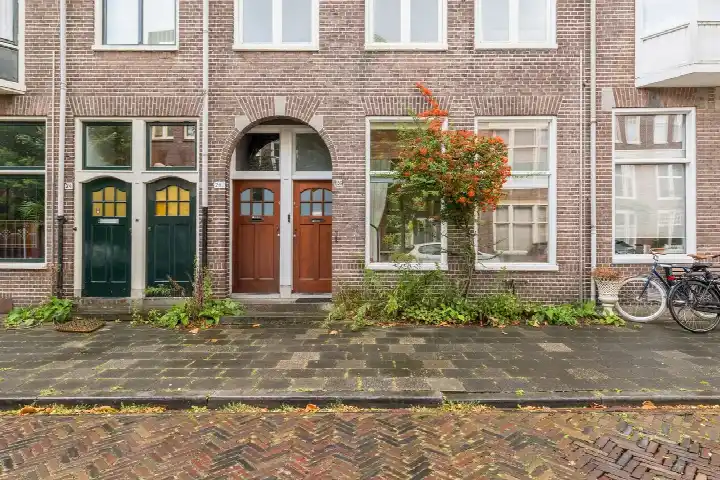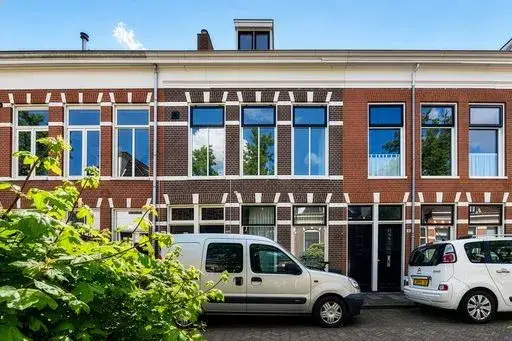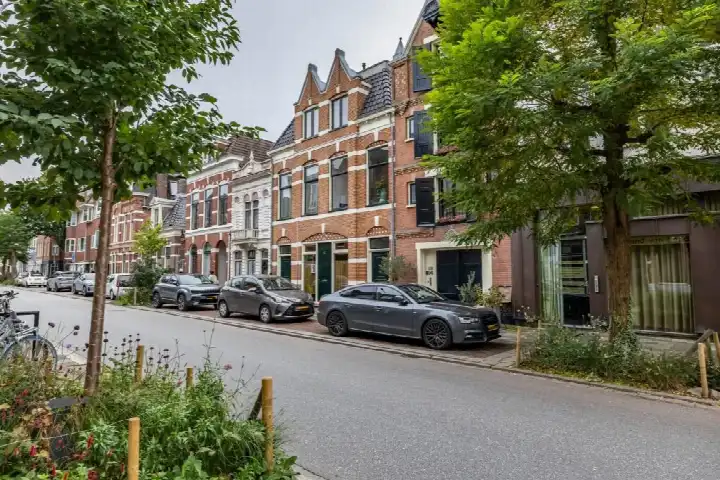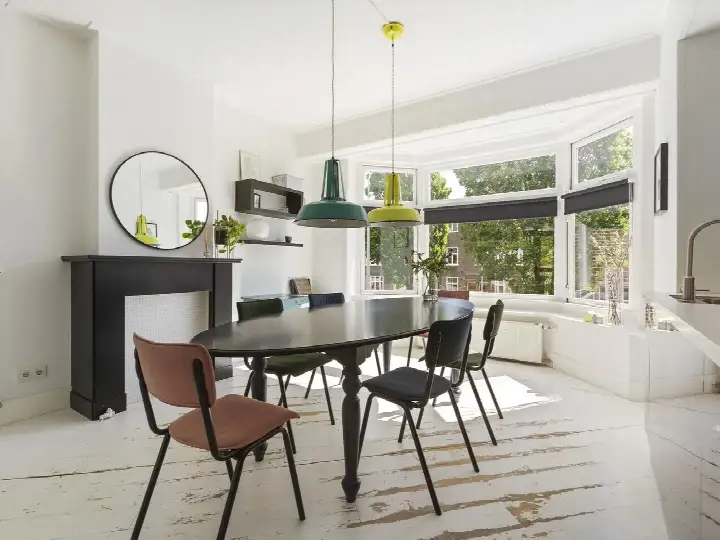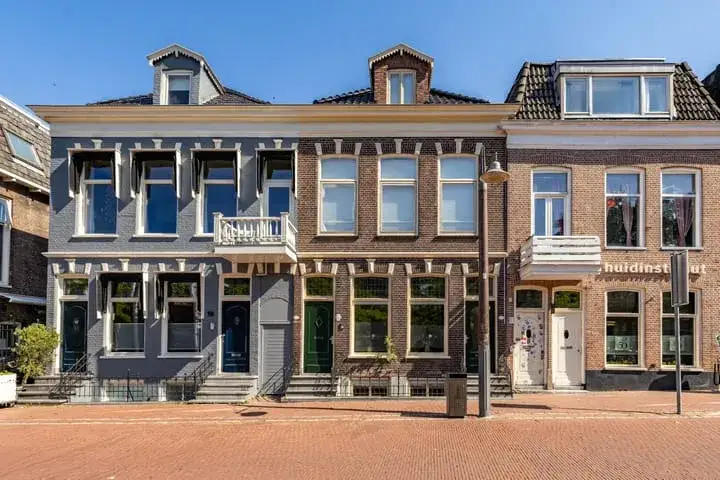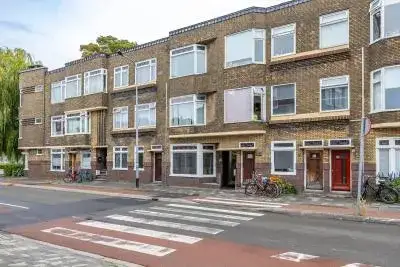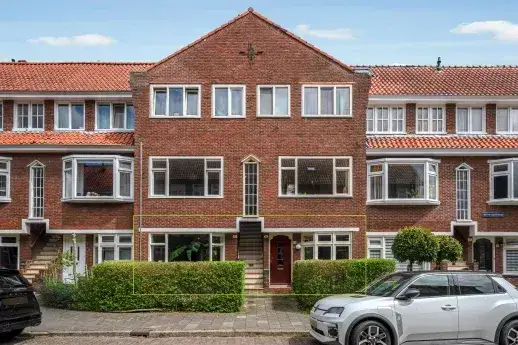





A 1927 apartment in the Oranjebuurt
This ground-floor apartment sits in the Oranjebuurt, a residential pocket of Groningen's Oud-West district where the streets feel calm but the city hums just beyond. The last known asking price of €369,000 worked out at €4,612 per m² based on the agent's floor area, which sat on the high side compared with the neighbourhood average of €4,113 per m². For context, apartments in Groningen at the time average €363,625, so this one asked a premium. This home has not been online since 16 September 2026.
Inside the home
The apartment spans three floors and includes three rooms, two bedrooms and one bathroom. The living area was listed at 93 m² according to the BAG registration, while the agent stated 80 m². The home had a rear garden facing west, reachable via the back alley, and was offered with full ownership. According to the agent, the insulation included roof insulation and double glazing, and the home was heated by a central heating boiler. The volume comes to 275 m³.
Life in the Oranjebuurt
Residents give the neighbourhood an average score of 8.27, based on five reviews. One resident says: "It's the first time I live in the city, so it took some getting used to, but the neighbourhood immediately feels like coming home. It's very quiet, yet there's always something going on." Another adds: "Despite the population density, quiet and pleasant." A third resident mentions a neighbourhood association with a building hosting connecting activities, plus a pond and playground that are well maintained. The area counts 2,610 residents, and 66% of households are single-person. The Oranjebuurt neighbourhood is home to 1,381 dwellings, of which 42% are owner-occupied.
Amenities and transport
Daily errands are easy from here. The PLUS supermarket is just around the corner, with Jumbo a couple of streets away and SPAR, Albert Heijn and Coop within a ten-minute walk. The Nassauschool primary school is a couple of streets away, and Ref Basisschool de Zaaier is just beyond. The nearest GP, Huisartsen Zonnelaan, is a ten-minute walk, and Medsen Apotheek Hoendiep is just past that. Bus stops on Stadhouderslaan and Nassauplein, both on your doorstep, serve lines 9 and 19, and Groningen Noord train station is a ten-minute walk. The municipality of Groningen offers the UMCG hospital about 2 km away.
WOZ value and address data
The WOZ value was €316,000 as of 1 January 2025, and the asking price sat 17% above that figure. Between 2020 and 2025 the WOZ value rose 44%, from €220,000 to €316,000. As for the address itself, road traffic noise is measured at 63 dB Lden, above the noise standard, while rail and air traffic stay below their standards. The foundation risk indication is elevated, based on area-level data: the home was built in 1927 on clay soil, and 4% of properties in this postcode area carry an elevated risk of pile rot. Pluvial flooding at heavy rain is rated medium, with flood risk low now and in 2050. These are area-level indications, not an inspection of this specific home.
Source
When this home was still on the market, it was offered via Pandomo Makelaars and through Pandomo on Funda, so it was listed through multiple channels.
This summary was generated with AI and may contain errors. Always verify the details with the provider.
Features
Details of this home
Transfer
Price


Construction
The WOZ value is set annually by the municipality with 1 January as its reference date, and therefore lags the market by about a year. It is an estimated market value, not a sale price.
Frequently asked questions
About Prinsesseweg 48, Groningen
How did the asking price compare with the WOZ value?
The WOZ value was €316,000 as of 1 January 2025. The asking price of €369,000 sat 17% above that figure. Between 2020 and 2025 the WOZ value rose 44%, from €220,000 to €316,000. The WOZ is the municipal valuation for tax purposes, not the current market value.
What is the layout of this apartment?
The apartment spans three floors and includes three rooms, two bedrooms and one bathroom. The living area was listed at 93 m² according to the BAG registration, while the agent stated 80 m². The home had a rear garden facing west, reachable via the back alley, and was offered with full ownership.
What insulation and heating does the home have?
According to the agent, the insulation included roof insulation and double glazing. The home is heated by a central heating boiler. The home was built in 1927.
What is the foundation risk for this address?
The foundation risk indication is elevated, based on area-level data. The home was built in 1927 on clay soil, and 4% of properties in this postcode area carry an elevated risk of pile rot. The groundwater level is expected to drop towards 2050, which increases the risk for wooden foundations. This is an area-level indication, not an inspection of this specific home.
What is the noise situation at this address?
Road traffic noise is measured at 63 dB Lden, which is above the noise standard. Rail traffic noise is 42 dB Lden and air traffic noise is 18 dB Lden, both below their respective standards. These figures come from public data at address level and are indications, not measurements taken at the property itself.
What supermarkets are nearby?
The PLUS supermarket is about 385 metres away, with Jumbo at 434 metres. SPAR, Albert Heijn and Coop are all within about a kilometre. That gives you several options for daily groceries within a short walk.
Which schools are close to this home?
The Nassauschool primary school is about 322 metres away, and Ref Basisschool de Zaaier is at 386 metres. Katholieke Daltonschool Bisschop Bekkers is at 679 metres. For secondary education, the nearest school is about 1.8 km away.
How is the public transport from here?
Bus stops on Stadhouderslaan and Nassauplein are both within about 170 metres, serving lines 9 and 19. Groningen Noord train station is about 1 km away, a ten-minute walk. The nearest GP, Huisartsen Zonnelaan, is at 823 metres.
What do residents say about the Oranjebuurt?
Residents give the neighbourhood an average score of 8.27, based on five reviews. One resident says it feels like coming home, very quiet yet with something always going on. Another mentions a neighbourhood association with connecting activities, plus a well-maintained pond and playground. A third notes the sense of community is diminishing as new residents keep to themselves.
What is the neighbourhood like demographically?
The Oranjebuurt counts 2,610 residents, with 66% of households being single-person. The average household size is 1.5. The area is very strongly urban, with an address density of 5,728 per km². Of the 1,381 dwellings, 42% are owner-occupied.