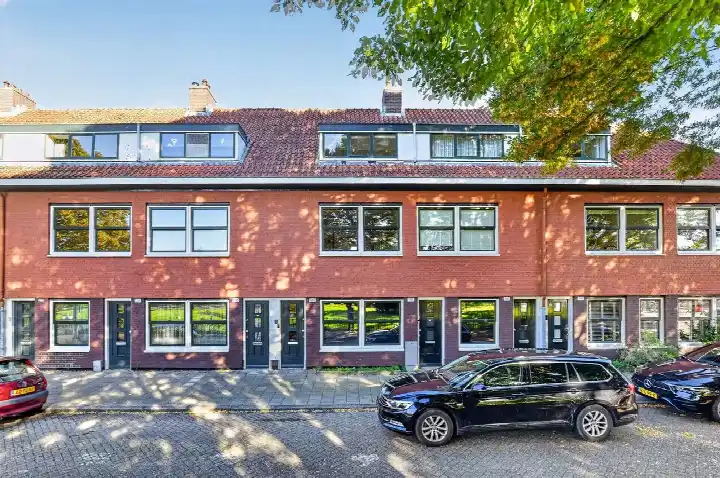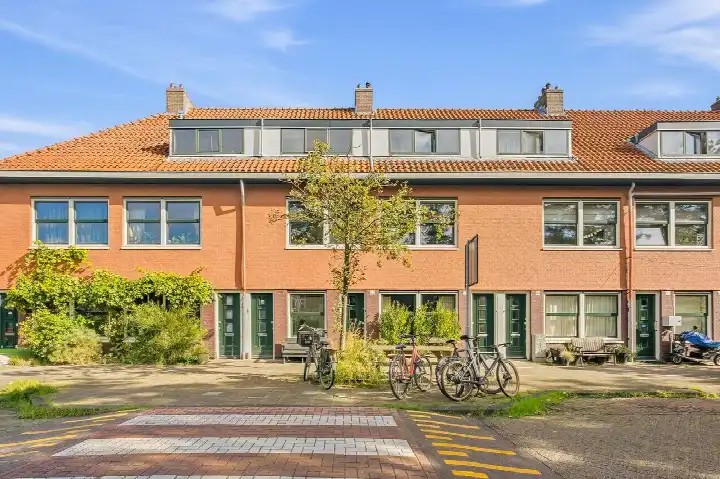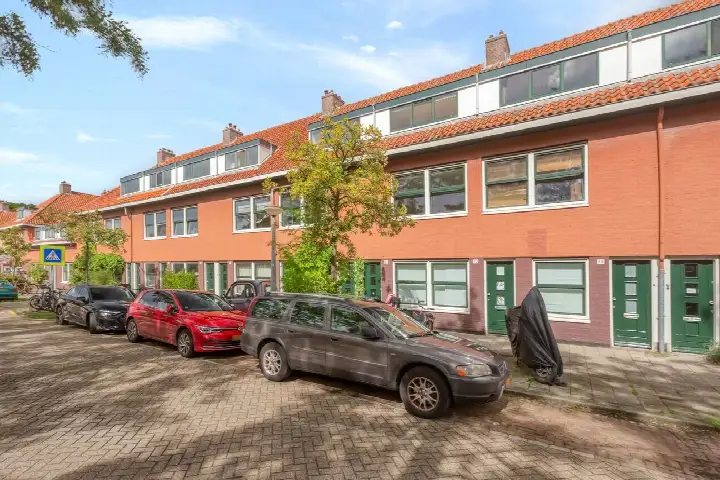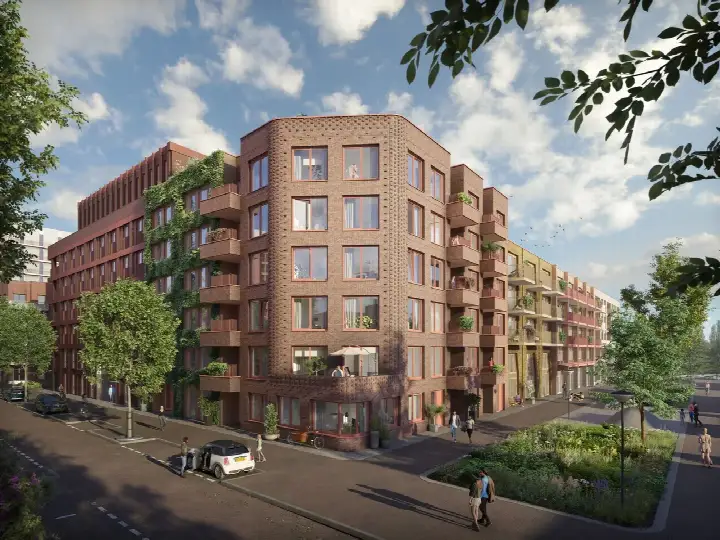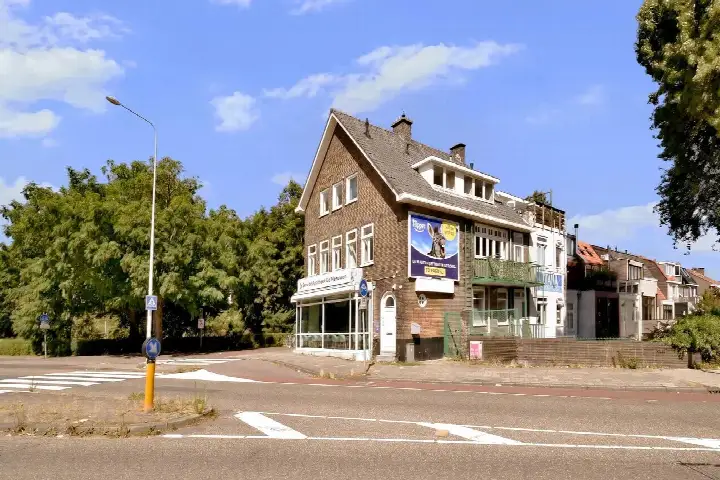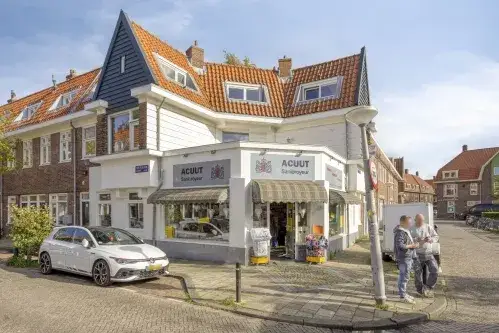





A pre-war apartment in Bloemenbuurt-Noord
This 1925 apartment sits in Bloemenbuurt-Noord, a quiet corner of Amsterdam's Volewijck district. The home has an energy label C, which means you can expect moderate energy costs. At €550,000, the asking price is in line with the market, according to the neighbourhood average. For context, the average asking price in the area is €490,000, and the home's 84 m² living area is 38% larger than the neighbourhood average of 61 m². If you're weighing options, it's worth comparing with other [apartments in Amsterdam].
The home itself
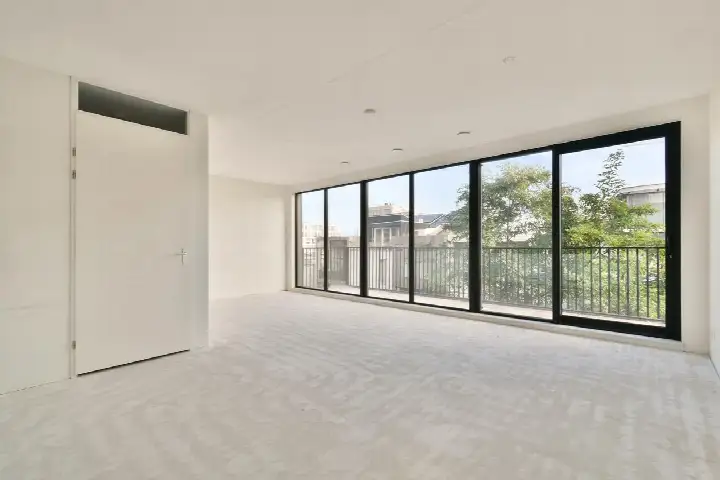
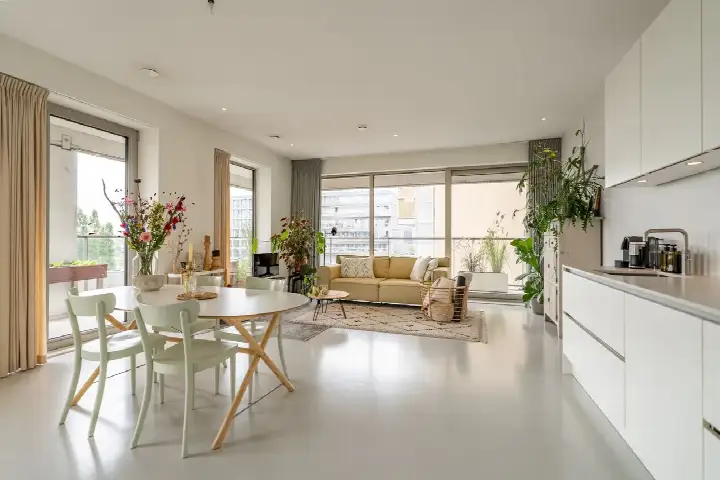
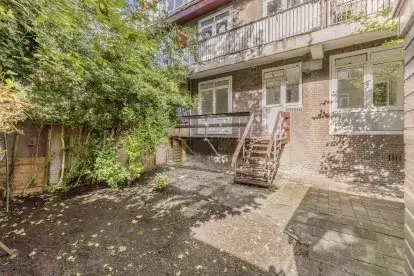
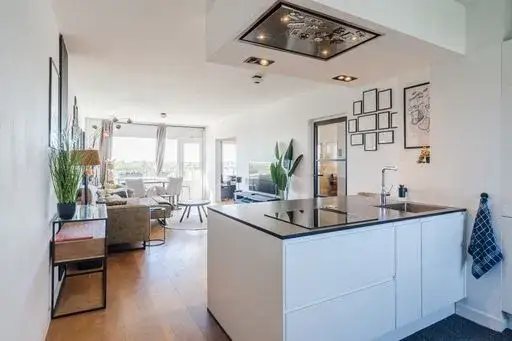
The listing provides limited detail on the interior, but the home dates from 1925 and carries an energy label C. The living area is 84 m² according to the BAG registration. No further specifications on rooms, layout, or outdoor space are given in this listing.
Bloemenbuurt-Noord
Residents across the municipality of Amsterdam give their living environment an average score of 7.37, based on 256 reviews. One resident describes the area as "extremely nice and cozy," noting "lots of amenities around, parks, shopping areas, bars, daycares etc." Another says: "It's calm, safe and green, and although it could still improve and could get more support from the local government, it's still affordable (compared to the rest of the city) and constantly changing for the better." A third resident mentions the neighbourhood is "well reachable with metro 54" and that amenities are within walking distance at shopping centre de Poort, though they also flag daily mess around the waste containers. The neighbourhood has around 2,460 residents, with a mix of ages and household types. For more context, see [the Bloemenbuurt-Noord neighbourhood].
Amenities and transport
Daily errands are well covered. Montessorischool Azalea is just around the corner, and Over-Y College is a five-minute walk away. The nearest pharmacy, BENU Kamperfoelie Apotheek, is a ten-minute walk, while the GP practice Medisch Kwartier is further out. For groceries, Vomar and Albert Heijn are both a couple of streets away. Public transport is handy: bus stop Sneeuwbalstraat is on your doorstep with lines 34 and N93, and Mosplein offers lines 34, 36, 38 and N93. Amsterdam Centraal station is about 2.2 km away. The area falls under [the municipality of Amsterdam].
WOZ and address data
The WOZ value is €519,000 as of 1 January 2025, and the asking price sits 6% above that valuation. This is a municipal valuation, not a market price. As for address-level risk data, these are area-level indications rather than an inspection of this specific home. The foundation risk indication is medium, given the home was built before 1970. Noise from road traffic, rail and aircraft is measured below the relevant standards. Pluvial flooding risk at heavy rain is medium, while flood risk is low now and in 2050; heat stress is low now but medium by 2050.
Source
At the time of writing, the home is offered via multiple channels, including Inter Immo Makelaars Amsterdam and Inter Immo Makelaars Amsterdam on Vastgoed Nederland.
This summary was generated with AI and may contain errors. Always verify the details with the provider.
Features
Details of this home
Transfer
Price

Areas and volume
Layout
Construction
The WOZ value is set annually by the municipality with 1 January as its reference date, and therefore lags the market by about a year. It is an estimated market value, not a sale price.
Frequently asked questions
About Nigellestraat 28, Amsterdam
How does the asking price compare to the WOZ value?
The WOZ value is €519,000 as of 1 January 2025. The asking price of €550,000 is 6% above that municipal valuation. The WOZ is a formal valuation used for tax purposes, not a direct reflection of the current market value. The asking price is in line with the market when compared to the neighbourhood average asking price of €490,000.
What is the energy label and what does it mean for costs?
The home has energy label C. This is a mid-range label, so you can expect moderate energy costs for heating and electricity. The label reflects the home's energy performance as registered, but it does not tell you about the condition of the construction or installations. The home was built in 1925, which is a fact about its age rather than a statement about its current state.
What is the foundation risk for this property?
The foundation risk indication for this address is medium, based on public data from KCAF. This is an area-level indication, not an inspection of this specific home. The home was built in 1925, before 1970, which is the period that KCAF flags as an attention area. In this postcode area, 100% of properties were built before 1970. This is information to be aware of, not a diagnosis of this particular property.
What public transport options are nearby?
Bus stop Sneeuwbalstraat is on your doorstep, served by lines 34 and N93. Mosplein, a couple of streets away, offers lines 34, 36, 38 and N93. Amsterdam Centraal station is about 2.2 km away.
What schools are close to this home?
Montessorischool Azalea, a primary school, is just around the corner at about 138 metres. Over-Y College, a secondary school, is a five-minute walk away at about 521 metres. There are also other options within a short distance, including Oecumenische basisschool Oranje Nassau and Vonk Amsterdam, both within about 700 metres.
What do residents say about living in this area?
Residents across the municipality of Amsterdam give their living environment an average score of 7.37 out of 10, based on 256 reviews. One resident calls the area "extremely nice and cozy" with "lots of amenities around, parks, shopping areas, bars, daycares etc." Another says it's "calm, safe and green" and affordable compared to the rest of the city. A third resident praises the greenery and trees but complains about daily mess around the waste containers.
How large is this apartment?
The living area is 84 m² according to the BAG registration. This is 38% larger than the neighbourhood average of 61 m². The listing does not state the number of rooms, bedrooms, or bathrooms. The price per square metre, based on the BAG area, is €6,548.
What is the neighbourhood like in terms of demographics?
Bloemenbuurt-Noord has around 2,460 residents. The age spread is fairly even: 18% are under 15, 31% are between 25 and 45, and 19% are 65 or older. About 44% of households are single-person households, while 33% are households with children. The housing stock is predominantly pre-war, with 83.3% of homes built before 1945.