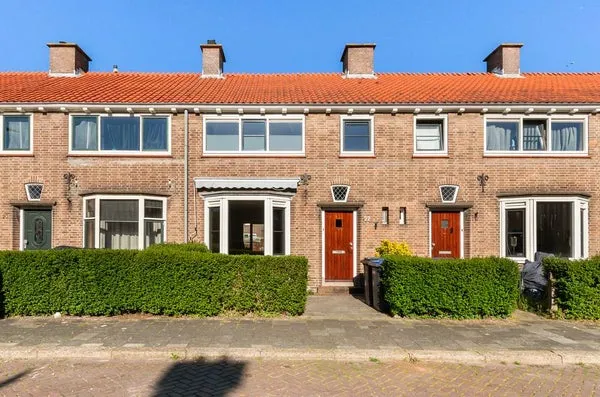
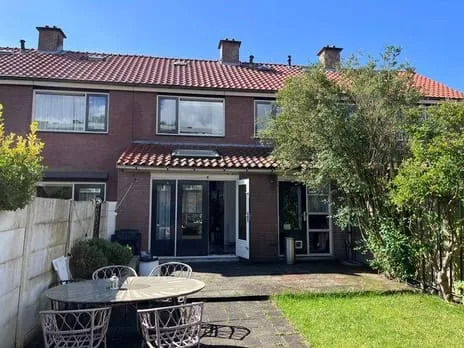
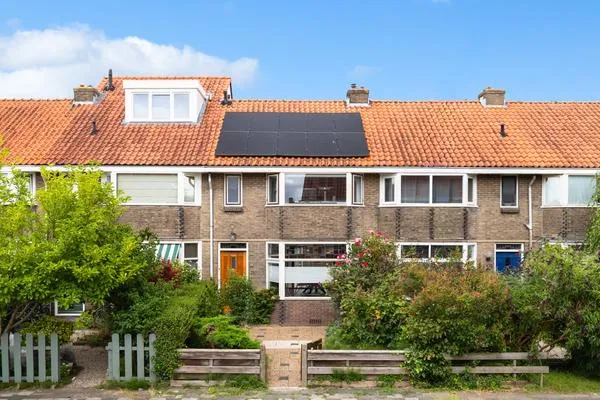
Lodewijkstraat 31
Prins Bernhardstraat en omgeving, Dordrecht
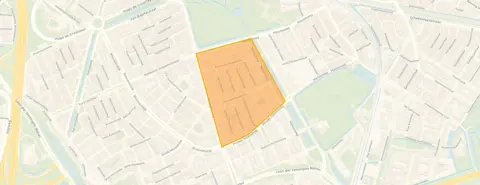 Neighbourhood
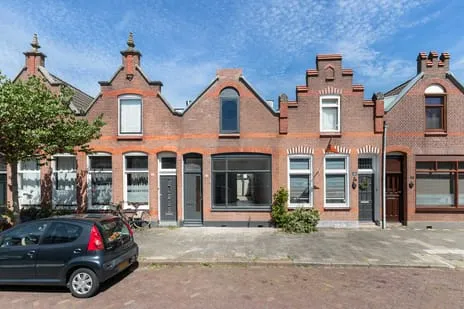
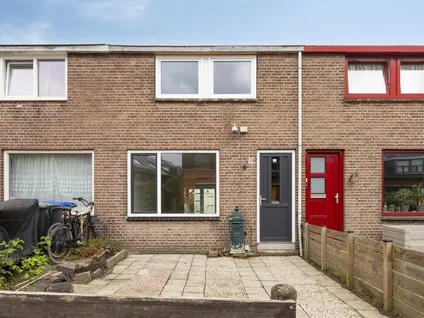
A terraced house with a surprisingly large plot
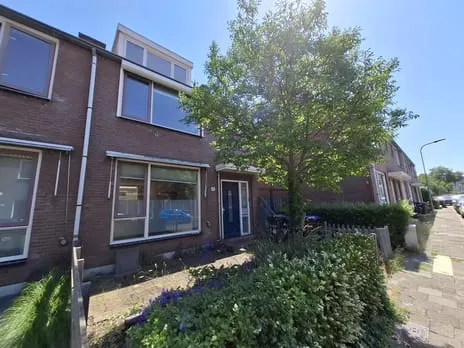
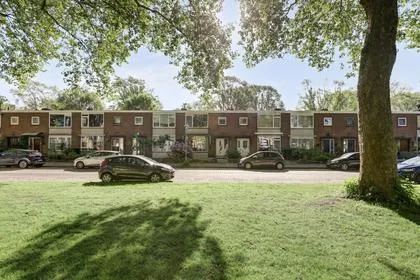
This terraced house on Lodewijkstraat 31 sits in the Pr. Bernhardstraat en omgeving neighbourhood, a lively part of Dordrecht. The asking price of €272,000 is on the high side compared with the average for terraced houses in Dordrecht, which currently stands at €283,150. Built in 1949, the home has an energy label B, which is an efficient label.
Inside the home
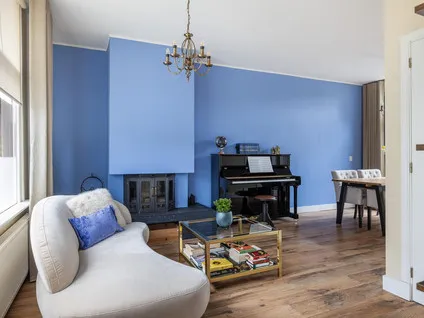
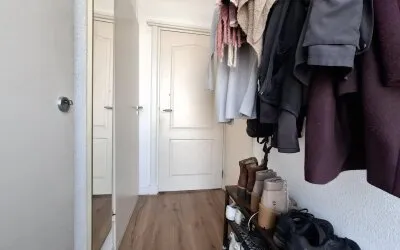
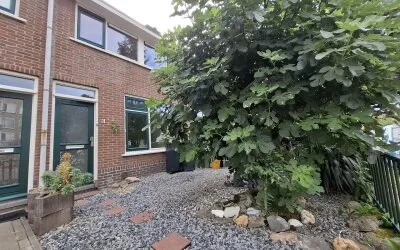
According to the agent, the house has four rooms, three bedrooms, one bathroom, and two floors. The living area is listed as 92 m² by the agent, while the BAG registration records 100 m². The plot is notably large: the agent states 100 m², but the BAG registration gives 5,245 m². The home has a garden to the west, accessible via the back. It is fully owned, has roof insulation, double glazing, and wall insulation, and is heated by a central heating boiler.
The neighbourhood
Residents across the municipality of Dordrecht give their living environment an average score of 7.79, based on 45 reviews. One resident says: "Social residents who are there for each other. The children have plenty of playgrounds, supermarket nearby and affordable homes." Another notes: "In itself a nice place to live with many amenities and good accessibility. But there is litter and dog poop everywhere." The neighbourhood has about 1,710 inhabitants, and the address density is high, making it a very strongly urban area. For more on the area, see the Pr. Bernhardstraat en omgeving neighbourhood.
Amenities and transport
For daily groceries, Jumbo is on your doorstep, with Dirk just around the corner. IKC Prinses Julianaschool is a couple of streets away, and MKC Mozaïek is a five-minute walk. The nearest GP is Huisartsengroep Eureka, praktijk Osanmaz, a ten-minute walk, and the pharmacy is just around the corner. Bus line 5 stops at Dordrecht, J.P. Heijeplein, on your doorstep, and Dordrecht train station is a ten-minute walk. For more on the wider area, see the municipality of Dordrecht.
WOZ and address data
The WOZ value is €290,000 as of 1 January 2025, and the asking price is 6% below that value. Between 2020 and 2025, the WOZ value rose by 61%, from €180,000 to €290,000. As for address risks, these are area-level indications, not an inspection of this home. The foundation risk indication is elevated, and the soil is clay. Pluvial flooding at heavy rain is medium, and the current flood risk is medium, dropping to low by 2050. Noise from road traffic is 46 dB Lden, which is not above the norm.
Source
At the time of writing, the home is offered via CORPOwonen and CORPOwonen on Funda.
This summary was generated with AI and may contain errors. Always verify the details with the provider.
Features
Details of this home
Transfer
Price
Energy
 Save up to € 400 on your energy billCompare now
Areas and volume
 Insure your home and belongingsGet insured
Layout
Construction
Outdoor space
The WOZ value is set annually by the municipality with 1 January as its reference date, and therefore lags the market by about a year. It is an estimated market value, not a sale price.
Frequently asked questions
About Lodewijkstraat 31, Dordrecht
How does the asking price compare to the WOZ value?
The asking price of €272,000 is 6% below the WOZ value of €290,000, which was set on 1 January 2025. The WOZ value is the municipal valuation, not the current market value. Between 2020 and 2025, the WOZ value increased by 61%, from €180,000 to €290,000.
What is the layout of this terraced house?
According to the agent, the house has four rooms, three bedrooms, one bathroom, and two floors. The living area is listed as 92 m² by the agent, while the BAG registration records 100 m². The plot is notably large: the agent states 100 m², but the BAG registration gives 5,245 m². There is a garden to the west, accessible via the back.
What is the energy label and what does it mean?
The energy label is B, which is an efficient label. The agent also mentions roof insulation, double glazing, and wall insulation. The home is heated by a central heating boiler. The energy label is a measure of the home's energy performance, and a B label indicates relatively low energy costs compared to less efficient labels.
What is the foundation risk for this address?
The foundation risk indication for this address is elevated, according to public risk data. This is an area-level indication, not an inspection of this specific home. The soil type is clay, and the home was built in 1949. In this postcode area, 100% of properties were built before 1970, and 1% of properties in the neighbourhood have an elevated risk of pile rot.
What are the flood risks for this property?
According to public risk data, the current flood risk is medium, and the risk for 2050 is low. Pluvial flooding at heavy rain is medium. These are area-level indications, not an inspection of this specific home. The heat stress is currently low, but is expected to be medium by 2050.
Which supermarkets are nearby?
Jumbo is on your doorstep, just 125 metres away. Dirk is 503 metres away, and AH to go is 691 metres away. Aldi is 763 metres away, and PLUS is 912 metres away. These distances are straight-line distances from the property.
What schools are in the area?
IKC Prinses Julianaschool is 286 metres away, and MKC Mozaïek is 356 metres away, both primary schools. Hans Petri School, a secondary school, is 453 metres away. There are also special education options nearby, such as SBO De Toekomst at 546 metres.
How is the public transport connection?
Bus line 5 stops at Dordrecht, J.P. Heijeplein, just 79 metres away. Other stops on the same line are at Weizigtpark (338 metres) and Patersweg (370 metres). Dordrecht train station is 638 metres away, about a ten-minute walk.
What do residents say about living in this area?
Residents across the municipality of Dordrecht give their living environment an average score of 7.79, based on 45 reviews. One resident says: "Social residents who are there for each other. The children have plenty of playgrounds, supermarket nearby and affordable homes." Another notes: "In itself a nice place to live with many amenities and good accessibility. But there is litter and dog poop everywhere."
What is the average price of homes in this neighbourhood?
In the Pr. Bernhardstraat en omgeving neighbourhood, the average asking price for homes currently for sale is €283,150, with a median of €298,000. The average price per square metre is €3,453. This home is listed at €272,000, which is below the neighbourhood average.
Experiences from Prins Bernhardstraat en omgeving
How residents experience their neighbourhood
My neighbourhood is often dismissed by outsiders as a deprived area. That word alone conjures up images of problems, statistics and stigma. But those who actually live here know that the story is much more layered than that. The flats and terraced houses are not new, sometimes even a bit worn. Stairwells bear the marks of years of use and in some places maintenance leaves something to be desired. Yet people live here who do their best every day to make something of it. Families who have lived on the same street for generations, young people playing football on the square until it gets dark, and elderly people watching everything from their balcony, missing nothing. You hear multiple languages mixed together here. Not because people live alongside each other, but because the neighbourhood is a mix of cultures, backgrounds and stories. Sometimes it clashes, sometimes it rubs, but often a form of togetherness emerges that you see less in 'nicer' neighbourhoods. Everyone knows who lives on the street, who needs help and who you'd better avoid. There are problems too. That cannot be denied. Unemployment, money worries and occasional nuisance are part of daily life. Police and enforcement patrol the area more often than in other neighbourhoods. But that doesn't mean there are no norms or values here. Calling each other out on behaviour doesn't always happen by the book.
Auto-translated to English by AIStatistics for Prins Bernhardstraat en omgeving
Figures on residents, liveability and the housing market
| Sale price | €283,150 | €298,000 |
|---|---|---|
| Sale per m² | €3,453 | – |
Experiences from Nieuw-krispijn
How residents experience their district
My neighbourhood is often dismissed by outsiders as a deprived area. That word alone conjures up images of problems, statistics and stigma. But those who actually live here know that the story is much more layered than that. The flats and terraced houses are not new, sometimes even a bit worn. Stairwells bear the marks of years of use and in some places maintenance leaves something to be desired. Yet people live here who do their best every day to make something of it. Families who have lived on the same street for generations, young people playing football on the square until it gets dark, and elderly people watching everything from their balcony, missing nothing. You hear multiple languages mixed together here. Not because people live alongside each other, but because the neighbourhood is a mix of cultures, backgrounds and stories. Sometimes it clashes, sometimes it rubs, but often a form of togetherness emerges that you see less in 'nicer' neighbourhoods. Everyone knows who lives on the street, who needs help and who you'd better avoid. There are problems too. That cannot be denied. Unemployment, money worries and occasional nuisance are part of daily life. Police and enforcement patrol the area more often than in other neighbourhoods. But that doesn't mean there are no norms or values here. Calling each other out on behaviour doesn't always happen by the book.
Auto-translated to English by AII've been living in this neighbourhood with pleasure for 19 years. Over the years, most feel like family. The nice thing is that we help each other when someone is renovating. If you need something, you can always ask each other. And if you've forgotten some groceries, there's always someone who has them. And if the door is open, you don't have to ring, you just walk in. Everyone looks out for each other here. And we're close to the park and the train and bus. In 15 minutes' walk you're in the city centre.
Auto-translated to English by AIStatistics for Nieuw-krispijn
Figures on residents, liveability and the housing market
| Sale price | €303,983 | €306,667 |
|---|---|---|
| Sale per m² | €3,677 | – |
| Rent price | €600 p/m | €600 p/m |
Experiences from Dordrecht
How residents experience their municipality
Social residents who are there for each other. The children have plenty of playgrounds, supermarket nearby and affordable homes. Few bad tenants so little nuisance. Nature and Wantij within a stone's throw. Couldn't be better.
Auto-translated to English by AIIn itself a nice place to live with many amenities and good accessibility. But there is litter and dog poop everywhere, making it very grimy.
Auto-translated to English by AIMany homeless people in this neighbourhood.
Auto-translated to English by AIPeople get along well with each other and also look out for one another
Auto-translated to English by AIBeautiful walking area along the river the Wantij on the Maasstraat. Supermarket and primary school within walking distance. The community centre with the adjacent playground looks shabby, especially because of the old pole with satellite dishes, and there is also a very outdated asphalt square next to the community centre, which gives a desolate impression when you first enter the neighbourhood. That is a shame and gives a wrong impression of the cosy and beautiful neighbourhood. The renovated houses in the adjacent Noorderkwartier are of a beautiful architectural style from the 1920s and 1930s. Most people still say hello to each other here, as if you live in a village, especially the older residents who like to chat create a cosy and friendly atmosphere.
Auto-translated to English by AICentre so very accessible for young and old
Auto-translated to English by AIMy neighbourhood is often dismissed by outsiders as a deprived area. That word alone conjures up images of problems, statistics and stigma. But those who actually live here know that the story is much more layered than that. The flats and terraced houses are not new, sometimes even a bit worn. Stairwells bear the marks of years of use and in some places maintenance leaves something to be desired. Yet people live here who do their best every day to make something of it. Families who have lived on the same street for generations, young people playing football on the square until it gets dark, and elderly people watching everything from their balcony, missing nothing. You hear multiple languages mixed together here. Not because people live alongside each other, but because the neighbourhood is a mix of cultures, backgrounds and stories. Sometimes it clashes, sometimes it rubs, but often a form of togetherness emerges that you see less in 'nicer' neighbourhoods. Everyone knows who lives on the street, who needs help and who you'd better avoid. There are problems too. That cannot be denied. Unemployment, money worries and occasional nuisance are part of daily life. Police and enforcement patrol the area more often than in other neighbourhoods. But that doesn't mean there are no norms or values here. Calling each other out on behaviour doesn't always happen by the book.
Auto-translated to English by AII don't know everyone in my neighbourhood but most are friendly. The neighbourhood is close to the central station and close to the city centre, there is also a park and a dog park nearby. There is a special primary school at the end of the street. They organise something fun every year for Halloween. It is safe, almost nothing ever happens.
Auto-translated to English by AIStatistics for Dordrecht
Figures on residents, liveability and the housing market
| Sale price | €451,715 | €404,593 |
|---|---|---|
| Sale per m² | €4,116 | – |
| Rent price | €1,683 p/m | €1,664 p/m |
| Rent per m² | €16 p/m | – |
Location and amenities
Lodewijkstraat 31, Dordrecht







Risks and environmental factors
Noise, foundation and climate around this address
Noise levels
Foundation risk
Rainwater flooding
Flooding
Heat stress

Similar homes
View more homes nearby