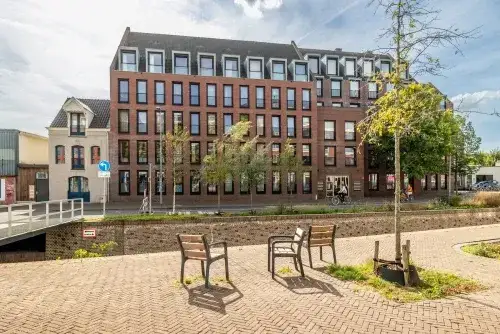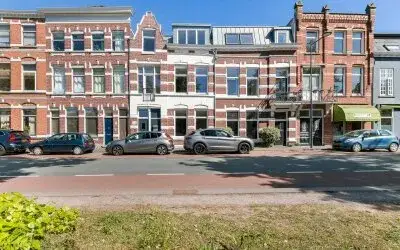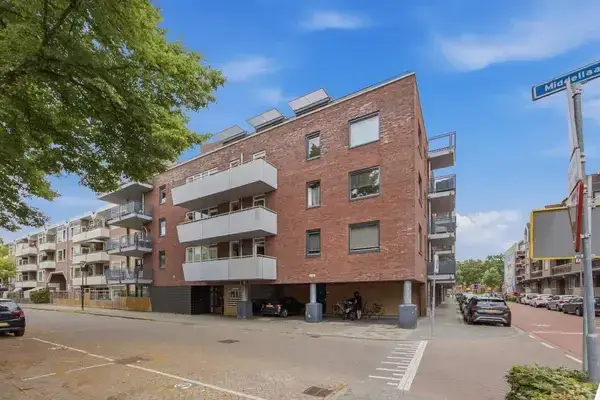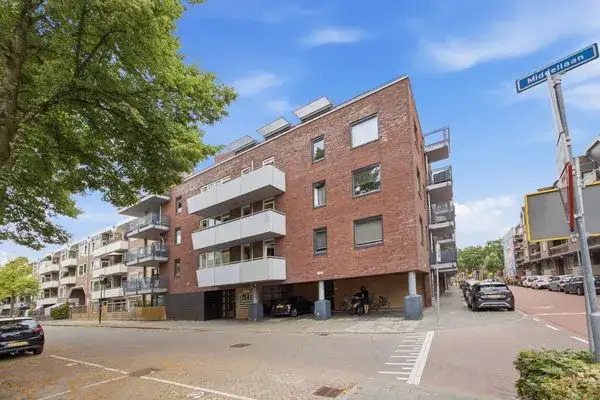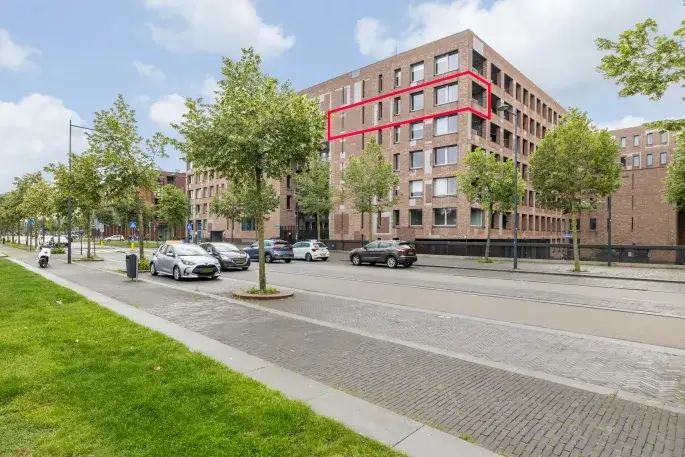





A historic apartment in the heart of Breda
This apartment on the Veemarktstraat sits in the City neighbourhood, right in the middle of Breda's bustling centre. Built in 1897, it carries the character of a bygone era while being surrounded by the energy of the city. At €300,000, the asking price is well below the neighbourhood average of €1,411,903, making it the most affordable of the 19 homes currently for sale here. It is also the cheapest option among apartments in Breda at this moment.
Inside the home
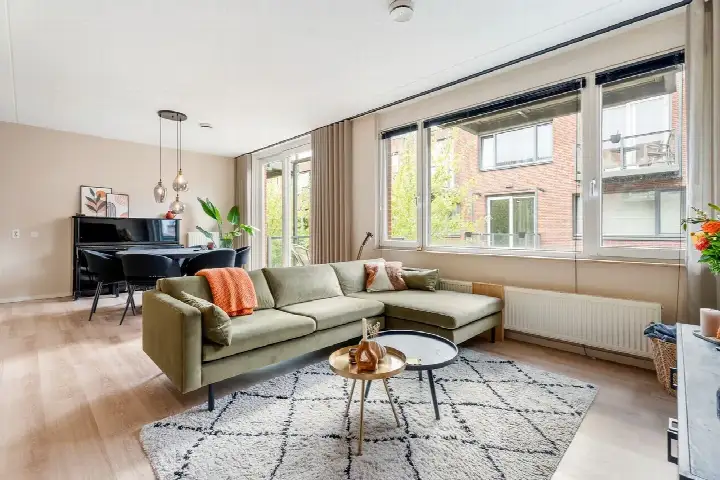
This one-bedroom apartment spans a single floor on the first storey, with a living area of 69 m² according to the agent, while the BAG registration records 62 m². The home comes with double glazing and a central heating boiler, and you have full ownership of the property. A balcony is present, adding a little outdoor space to the city living.
The City neighbourhood
Life here is compact and lively. The neighbourhood counts 2,730 residents, and a large share of households are single-person, reflecting the urban, central character of the area. Residents of the district give an average score of 7.06, based on seven reviews. One resident describes it as a beautiful neighbourhood with good experiences, while another mentions issues with drug addicts and homeless people hanging around, and a third notes a lack of bicycle parking and noise at night, especially during holidays and festivals. The home sits in the City neighbourhood, where the urban vibe is unmistakable.
Amenities and transport
Daily errands are easy from here. An Albert Heijn is on your doorstep, and a Coop is just around the corner. For schools, De Singel SO is a couple of streets away, and the Onze Lieve Vrouwelyceum is a ten-minute walk. The nearest GP, Huisartsenpraktijk Majdandzic, is a ten-minute walk, and Apotheek Motké-Poels BV is just around the corner. Bus stop Breda, Vlaszak is a couple of streets away with lines 2, 3, 4, 5, 9, 170, 171, 176, 370, 371, 372, 373, 374, 375 and 502, and Breda train station is a ten-minute walk. The municipality of Breda offers all this within easy reach.
WOZ value and address data
The WOZ value of this home was set at €281,000 on 1 January 2025, and the asking price sits 7% above that figure. Between 2020 and 2025, the WOZ value rose by 42%, from €198,000 to €281,000. As for the area, the noise levels from road, rail and air traffic are all below the applicable standards. The foundation risk indication is low, and the soil type is sand. For climate, pluvial flooding at heavy rain is indicated as medium, while flood risk is low both now and in 2050, and heat stress is medium both now and in 2050. These are area-level indications based on public data, not an inspection of this specific home.
Source
At the time of writing, the home is offered via multiple channels, including DietvorstBorman Makelaars.
This summary was generated with AI and may contain errors. Always verify the details with the provider.
Features
Details of this home
Transfer
Price
Energy
 Save up to € 400 on your energy billCompare now
Areas and volume
Layout
Construction
Outdoor space
The WOZ value is set annually by the municipality with 1 January as its reference date, and therefore lags the market by about a year. It is an estimated market value, not a sale price.
Frequently asked questions
About Veemarktstraat 22A, Breda
How does the asking price compare to the neighbourhood average?
The asking price of €300,000 is 79% below the average asking price of €1,411,903 for homes currently for sale in this neighbourhood. It is also the cheapest of the 19 homes on offer here. The average price per square metre in the neighbourhood is €5,270, while this home is listed at €4,348 per square metre based on the agent's stated living area.
What is the layout of this apartment?
According to the agent, this apartment has two rooms in total, including one bedroom and one bathroom, spread over a single floor on the first storey. The living area is listed as 69 m² by the agent, while the BAG registration records 62 m². The home also has a balcony and a volume of 229 m³.
What is the WOZ value of this home?
The WOZ value was set at €281,000 with a reference date of 1 January 2025. The asking price of €300,000 is 7% above this value. Over the five years from 2020 to 2025, the WOZ value increased by 42%, from €198,000 to €281,000. The WOZ value is the municipal valuation, not the current market value.
What are the risk indications for this address?
The area-level risk data shows that noise from road, rail and air traffic is below the applicable standards. The foundation risk indication is low, with sandy soil. For climate, pluvial flooding at heavy rain is indicated as medium, while flood risk is low both now and in 2050. Heat stress is medium both now and in 2050. These are indications at area level, not an inspection of this specific home.
What amenities are nearby?
An Albert Heijn supermarket is on your doorstep, and a Coop is just around the corner. For schools, De Singel SO is a couple of streets away, and the Onze Lieve Vrouwelyceum is a ten-minute walk. The nearest GP, Huisartsenpraktijk Majdandzic, is a ten-minute walk, and Apotheek Motké-Poels BV is just around the corner. The Amphia Breda hospital is about a 1.5 km walk.
What is public transport like from this home?
The bus stop Breda, Vlaszak is a couple of streets away, served by lines 2, 3, 4, 5, 9, 170, 171, 176, 370, 371, 372, 373, 374, 375 and 502. Breda Centrum stop is also nearby with additional lines. Breda train station is about 777 metres away, roughly a ten-minute walk.
What do residents say about the district?
Residents of the district give an average score of 7.06, based on seven reviews. One resident calls it a beautiful neighbourhood with good experiences. Another mentions issues with drug addicts and homeless people hanging around, and a third notes a lack of bicycle parking, theft, and noise at night, especially during holidays and festivals. These reviews describe the wider district, not just this specific neighbourhood.
How old is this building and what does that mean?
The building dates from 1897, making it notably old for this neighbourhood, where 35% of homes were built before 1945. The energy label is D. The age of the building is a fact about its history, and the energy label indicates expected energy costs, with label D being less efficient than the higher labels.