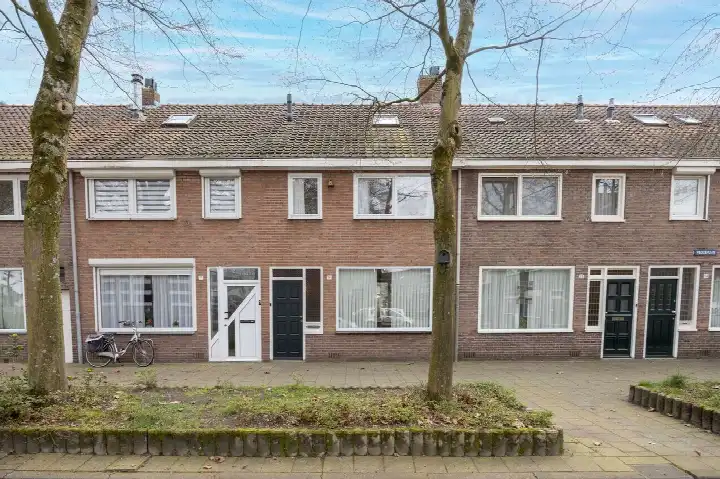
Deken Sandersstraat 7
Pastorieklamp West, Tilburg
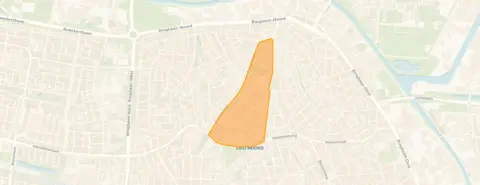 Area
AreaA 1930s terraced house in Tilburg
On Deken Sandersstraat 7 in the Pastorieklamp West neighbourhood, this terraced house from 1931 sits in a part of Tilburg where the streets have a settled, lived-in feel. The home has an energy label D, which means energy costs will be moderate rather than minimal. With a living area of 113 square metres according to the BAG registration, the asking price of €345,000 works out at €3,053 per square metre. Compared with the average asking price in the neighbourhood, this price is keen, coming in about 11 percent below the neighbourhood average of €387,283. For context, [terraced houses in Tilburg] vary widely in price depending on age and condition.
The home itself
The listing gives the essentials: a terraced house built in 1931 with a plot of 133 square metres. The energy label is D, so expect heating costs in the middle range. No further details about the interior layout, garden or installations are stated in the listing.
Pastorieklamp West
Pastorieklamp West is a compact neighbourhood within the Het Goirke district, home to around 2,335 people. It is a quiet and accessible area, according to residents of the district, who give it an average score of 7.14 based on eight reviews. One resident describes it as "a quiet and accessible neighbourhood", while another calls it "quiet and easygoing". A third resident mentions "helpful, safe and good contact" with neighbours. The district has a high share of single-person households at 62 percent, and the average household size is 1.6 people. [The Pastorieklamp West neighbourhood] itself is small, with 1,160 homes in total.
Amenities and transport
Daily errands are well covered here. The PLUS supermarket is just around the corner, with Coop a couple of streets away and Jumbo. Basisschool De Stappen is a five-minute walk, and the GP practice Huisartsenpraktijk de Nijs & van Heugten is, with BENU Apotheek Wilhelminapark nearby. Bus stops on the Goirkestraat and at the Textielmuseum are within a five-minute walk, served by lines 5 and 6. Tilburg train station is a ten-minute walk. [The municipality of Tilburg] offers further amenities within easy reach.
WOZ and address data
No WOZ value is stated for this property. The address-level risk data from public sources (Atlas Leefomgeving, KCAF, Klimaateffectatlas) gives area-level indications rather than an inspection of this specific home. Road traffic noise is measured at 52 dB Lden, above the noise standard, while railway noise is 36 dB Lden, below the standard. The foundation risk indication is low, with the home built before 1970 on sandy soil. For climate risks, pluvial flooding at heavy rain is medium, while flood risk is low both now and in 2050. Heat stress is low currently but medium by 2050.
Source
At the time of writing the home is offered only via Lupker Makelaardij.
This summary was generated with AI and may contain errors. Always verify the details with the provider.
Features
Details of this home
Transfer
Price
Energy
 Save up to € 400 on your energy billCompare now
Areas and volume
 Insure your home and belongingsGet insured
Layout
Construction
Outdoor space
The WOZ value is set annually by the municipality with 1 January as its reference date, and therefore lags the market by about a year. It is an estimated market value, not a sale price.
Frequently asked questions
About Deken Sandersstraat 7, Tilburg
How does the asking price compare with other homes in the neighbourhood?
The asking price of €345,000 is keen compared with the neighbourhood average asking price of €387,283, coming in about 11 percent below that figure. Per square metre the price is €3,053, which is about 17 percent below the neighbourhood average of €3,658 per square metre. The median asking price in the neighbourhood is €325,000, so this home sits above that but below the average.
What is known about the layout of this home?
The listing states that this is a terraced house built in 1931 with a living area of 113 square metres according to the BAG registration and a plot of 133 square metres. No further details about the number of rooms, bedrooms or bathrooms are stated in the listing. The energy label is D.
What is the WOZ value of this property?
The WOZ value is the municipal valuation used for tax purposes and is set annually by the municipality of Tilburg. Without this figure, it is not possible to compare the asking price with the official valuation.
What are the noise levels around this address?
According to public address-level data, road traffic noise at this address is measured at 52 dB Lden, which is above the noise standard. Railway noise is measured at 36 dB Lden, which is below the standard. These are area-level indications from public sources, not measurements taken at the property itself.
Which supermarkets are closest to this home?
The nearest supermarket is PLUS at 429 metres, followed by Coop at 513 metres and Jumbo at 673 metres. An AH XL and an Aldi are both at 853 metres. Within a five-kilometre radius there are 41 supermarkets in total, so grocery shopping is well covered.
What is the foundation risk for this property?
The foundation risk indication for this address is low, according to public data. The home was built in 1931, before 1970, and the soil type is sand. This is an area-level indication based on public sources, not an inspection of this specific property.
How do residents rate the district?
Residents of the district give an average score of 7.14 based on eight reviews. One resident describes the area as "a quiet and accessible neighbourhood", another calls it "quiet and easygoing", and a third mentions "helpful, safe and good contact" with neighbours. These reviews cover the wider district rather than this specific neighbourhood.
What public transport options are available nearby?
Bus stops at Tilburg Textielmuseum (330 metres), Tilburg Goirkestraat (435 metres) and Tilburg V. Hogendorpstraat (484 metres) are all served by lines 5 and 6. Tilburg train station is at 941 metres, about a ten-minute walk away.
What is the climate risk for this address?
Public climate data indicates that pluvial flooding at heavy rain is medium for this address, while flood risk is low both now and in 2050. Heat stress is low currently but is expected to be medium by 2050. These are area-level indications from the Klimaateffectatlas, not an assessment of this specific home.